This is part of PEN America’s ongoing “Snapshots of Censorship” project. Read more and share your story here.
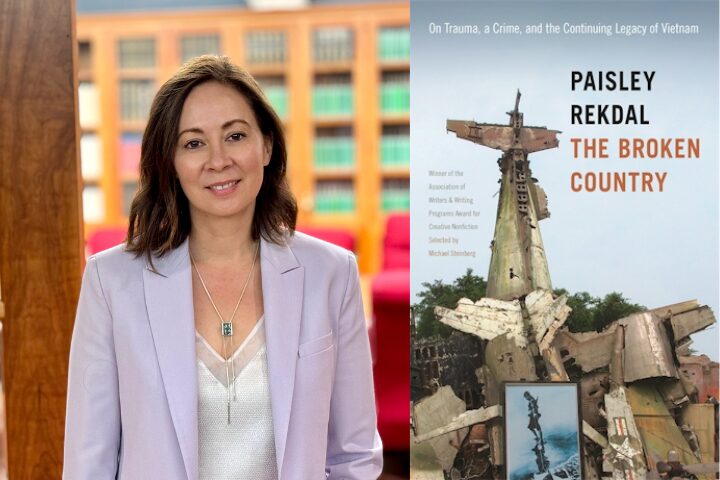
As a professor at Ohio’s flagship public university, where I teach nonfiction writing, my job is to teach students how to write about their lives, their worlds, and the conditions that formed them. That means helping them understand the contexts – historical, structural, and cultural – that have shaped the places they’re from. My pedagogy flows into the public-facing work I do as director of American Indian Studies, connecting the university community and the public with the work of our faculty. That’s my small part in advancing the mission of my university, which aims to “improve the well-being of our local, state, regional, national and global communities.”
American Indian Studies is an academic discipline that has everything to do with place, people, and in the case of OSU – a university funded by the sale of seized Indian land – their removal, absence, and work of return. I’ve delivered land acknowledgments in opening remarks at events to contextualize what will follow and to affirm why American Indian Studies is important work we do in a state with no federally recognized tribes – a place where Indigenous presence can be harder to see, but is no less essential to teach.
Faculty at OSU have recently been prevented from using land acknowledgements in many academic settings, including public events and university websites. Our administration says that these restrictions are required for compliance with Ohio SB 1, a mammoth bill passed in 2025 that includes many provisions to censor higher education, including a requirement that universities adhere to a policy of “institutional neutrality.” And that’s the rub. Not only does the OSU interpretation seem to be going much further than the law requires – no other Ohio university has taken such a step – but the university’s ban on land acknowledgements can itself be understood as an instance of the institution taking a position by framing land acknowledgment as a controversial topic.
The university’s prohibition has been all the more disturbing because of the lack of historical knowledge and the confusion around what constitutes a land acknowledgment. As American Indian Studies director, I have tried multiple times, sometimes in conjunction with colleagues, to open up dialogue with university decision-makers in order to dispel this confusion, with limited success. At a minimum, a land acknowledgment names the Native peoples who have lived in a place. Some acknowledgments include calls to action, but many others do not: they’re informational statements about land history. “We acknowledge Central Ohio as the traditional homeland of the Shawnee, Miami, Wyandotte and other Indigenous Nations,” reads a statement commonly seen within land acknowledgments made at OSU. “As a land grant institution, this university’s foundational resources came from the sale of tribal lands.” These are both acknowledgements of historical facts.
Under the current OSU guidance, giving strictly historical background about tribes, treaties, and the origins of OSU as a land-grant institution risks being treated as prohibited advocacy. Such a ban singles out facts of Native history as uniquely “controversial” or taboo. Treating certain facts as though they are partisan stances undermines our mission of public education in Ohio.
My faculty role and my responsibilities to my students require a greater openness to lived facts and histories. Seeking to understand the place where I live and its history is integral to my writing, and I have a responsibility to encourage my students’ curiosity and to model a willingness to grapple with painful truths. My foundational promise to my students is that I will help them write the truth of the world as they know it, and I refuse to model silence about the histories that structure the world they’re working to understand.