After a talk on health equity, a cancer researcher became the target of online harassment
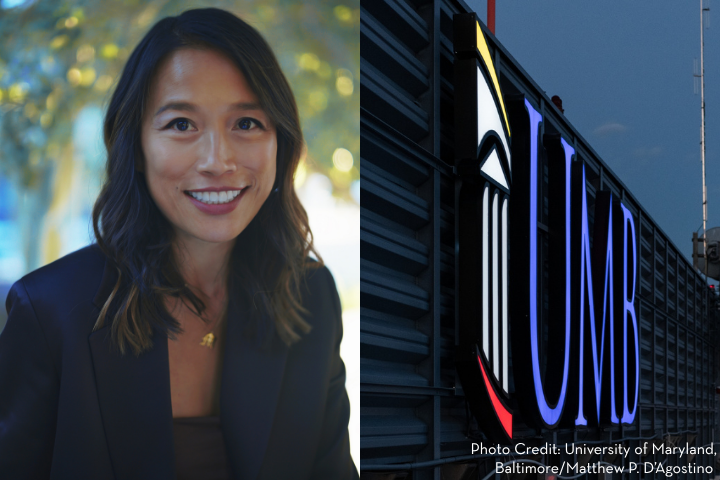
Shortly after giving a lecture on health equity for young cancer patients in March 2023, Dr. Christabel Cheung began to receive phone calls and emails from people who claimed to be reporters but wouldn’t identify their news organizations. They said they were reaching out for more information about her lecture.
“I knew something was going to happen,” said Dr. Cheung. “I’ve been trained that when a reporter approaches you and doesn’t identify who they are with, you ignore it.” The calls were the first sign that something was off.
Conservative advocacy group Turning Point USA’s Professor Watchlist catalogs college instructors that they say discriminate against conservative students or promote “leftist propaganda” in the classroom. Dr. Cheung, a cancer researcher who advocates for better inclusion of marginalized communities in cancer care and an associate professor at the University of Maryland, Baltimore, found herself on Professor Watchlist in 2023 for “racial ideology”. Like many others on the watchlist, she landed at the center of national media attention and a virulent online harassment campaign as a result.
Her experience did not occur in isolation. During the Trump era, scholars researching race, gender, health equity, and structural inequality increasingly find themselves publicly cataloged, surveilled, and framed as ideological threats. PEN America’s Digital Safety and Free Expression team spoke with Dr. Cheung about what it’s like to be placed on a watchlist, how it affected her career, and her advice for others facing online abuse and their allies.
National Coverage And Threats: “I realized that the story had spread like wildfire across the country.“
A few weeks after the unidentified phone calls, Dr. Cheung’s university’s public relations office sent her articles about her lecture written by national outlets, including Fox News and the New York Post. Searching for the coverage herself, she found similar articles in countless other local publications. “I realized that the story had spread like wildfire across the country.”
Soon after, the messages in her inbox changed. “I started getting death threats in my academic email,” she said. “Death and rape and explicit threats of violence.” Although she had previously received hostile messages about her work on social media, this was the first time threats appeared in her professional email account (for PEN America’s guidance on navigating threats, see how to assess threats and safety protocols for your email inbox).
As a queer Asian woman who researches sexuality and race in medicine, she said that the harassment often reflected racist and sexualized assumptions. Outside of documenting and reporting the abuse, Cheung did not want to repeat and potentially amplify these messages. One piece of advice she now shares with allies of those who are targeted: avoid repeating the exact language used in the harassment in casual conversation and instead focus on its impact. “When you repeat it, even to say how awful it is, you give it a platform,” she said.
She also discovered that she had been added to Turning Point USA’s Professor Watchlist. “In my opinion, the Professor Watchlist sometimes functions like a press release, here are the people you want to target,” she said. In a number of instances, being added to a watchlist like Turning Points USA’s has led to extensive online abuse campaigns against professors and faculty members–undermining their scholarship and even causing some to temporarily leave their positions.
Changing How She Lives And Works: “I tried not to make it easy for people to find me.“
The consequences extended beyond personal distress. “The experience altered how I traveled, communicated publicly, introduced myself at conferences, and engaged online. It changed not only how I moved through the world but how I occupied academic space. The cost was not simply individual. It narrowed my participation in public scholarship and constrained academic freedom itself.”
The experience altered how I traveled, communicated publicly, introduced myself at conferences, and engaged online. It changed not only how I moved through the world but how I occupied academic space. The cost was not simply individual. It narrowed my participation in public scholarship and constrained academic freedom itself.
While the initial wave of coverage and threats eventually died down, it never completely went away. Three years after the initial incidents, Dr. Cheung still experiences bursts of harassment following high-profile political or social moments. She shut down most of her social media accounts after getting continuously hacked, including on platforms she once used to connect with other researchers. “Twitter was my primary research community,” she said. “That’s the one I’m most bummed about.” She noticed her posts being shown to fewer and fewer people before she stopped posting altogether. “It felt like almost overnight I was being shadow banned.” She now avoids sharing her location in real time and posts with long delays, if at all.
She started to take precautions offline as well. While traveling for work, especially in the months after she was placed on the watchlist, she asked event organizers to remove her full name from promotional materials and to book travel arrangements under their names instead of hers. At conferences, she sometimes introduced herself only as “Dr. Cheung” and avoided naming her specific campus. “I tried not to make it easy for people to find me,” she said.
Even routine professional decisions became more complicated. When she came up for tenure review, she wasn’t sure whether to mention the media attention at all. Ultimately, she included a single, carefully written line noting that her work has been covered by major outlets and that she had remained “committed and productive” despite subsequent harassment. “It’s such a precarious situation to be in,” she said. “You’re trying to survive in a publish-or-perish environment.”
The Role Of Allies And The Harm Of Doubt: “That’s how a safe space is created.”
Alongside the threats, Dr. Cheung said another layer of harm came from the reactions of people around her. “The immediate response is often, ‘Really?’” she said. “There’s a kind of gaslighting that happens.” Well-meaning colleagues sometimes asked for details or treated the situation as a curiosity rather than a safety issue. For Cheung, those questions signaled denial and indifference that added insult to injury.
When someone becomes the target of online harassment, emotional support from peers can play a powerful role in mitigating the harms of online abuse and building resilience. In addition to checking in, colleagues and bystanders can volunteer to help manage documentation, coordinate responses, or report abusive accounts.
Organizations can also step up as allies. Cheung shared how the Robert Wood Johnson Foundation took her concerns at face value and put protections in place. At one meeting, the foundation hired physical security without asking her to relive what happened. “They never asked for the details and they never second-guessed,” she said. “Because they don’t do that, you realize they are listening. That’s how a safe space is created.”
Living With It And Moving Forward: “No one wants online abuse to overshadow their scholarship.“
While Cheung’s experience with harassment has left her more cautious, she refuses to be silent. She continues her research and still speaks publicly, though with more strategic planning and security measures. “No one wants online abuse to overshadow their scholarship,” she said.
She shares practical advice to others who may find themselves targeted: seek guidance from trusted peers who understand your field and your risks, and don’t feel pressure to treat harassment as a “badge of honor.” “Maybe 10 years from now,” she said. “But not in the moment when you’re just trying to figure out what to do.” For now, Cheung says her focus remains where it has always been: improving cancer care for patients who are overlooked in the medical field.
Christabel K. Cheung, PhD, MSW is an Associate Professor with tenure at the University of Maryland School of Social Work (UMSSW) and Member of the University of Maryland Greenebaum Comprehensive Cancer Center. An award-winning scholar and two-time cancer survivor, she is the architect of Embodied Research Methods, a qualitative and mixed-methods approach to scientific investigation that integrates experiential knowledge as a transparent and systematic component of the behavioral sciences and medicine.