This is part of PEN America’s ongoing “Snapshots of Censorship” project. Read more and share your story here.
Earlier this year, I was sanctioned by the college where I teach on the basis of a single anonymous complaint alleging that I had criticized the university for its restrictions on speech and spoken “negatively about Israel” in the classroom.
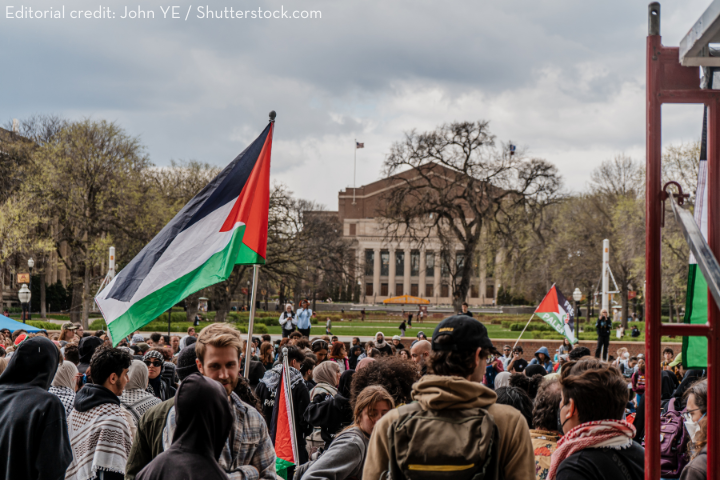
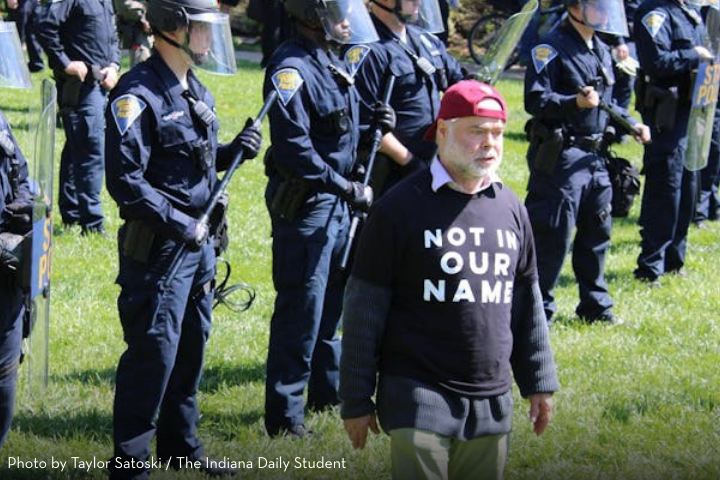
I’ve been a faculty member at Indiana University for 21 years, a tenured professor of German Studies. My teaching encompasses German philosophy and ethics, and it was in the context of a discussion of Hegelian ethics that I mentioned my experience participating in protests related to the war in Gaza. I mentioned my experience as an example of the sort of ethical choices we each face as we navigate life. It was a way to anchor the abstract topic we were discussing in something students could potentially relate to.
The anonymous complaint was originally submitted using a “Bias Incident” report form, which is explicit that complaints filed in this way would not lead to a formal investigation or discipline. In my case, however, the complaint was subsequently elevated by someone in the administration and refiled as an Indiana SEA 202 complaint. SEA 202 is a “viewpoint diversity” law passed in 2024; it requires that professors “foster a culture of free inquiry, free expression, and intellectual diversity” in the classroom; it also requires universities to establish a way for students to submit complaints, which can lead to punishing faculty who represent disfavored views. While the bill’s text purports its aim to be increasing intellectual diversity in Indiana, it vaguely asserts that faculty must not “subject students to political or ideological views and opinions that are unrelated to the faculty member’s academic discipline or assigned course of instruction.”
In my classroom I routinely cite relevant personal experiences in the context of discussions of course material, to help the students to make connections to their experiences. In this case, however, it was the nature of my personal experience that caused the school administration to come down on my classroom speech. My situation is a chilling example of how those in power can use “viewpoint diversity” as an excuse to go after viewpoints that they do not agree with.
As the process played out, it was clear to me that there’d been no investigation into the anonymous complaint, which was the sole evidence presented to justify my sanction – a letter in my employment file that threatens my tenure at the university. While the complaint did no more than allege conduct protected by both First Amendment precedents and canons of academic freedom, the allegation alone was taken by the university as sufficient justification to sanction me.
The intent of SEA 202 is to reshape instruction on Indiana’s campuses and, according to its sponsors, address the perception that conservative students feel uncomfortable expressing political viewpoints. But the sanction I received does nothing to address the anxiety of conservative students, nor does it increase viewpoint diversity in the classroom. What it does is chill my speech and that of my colleagues across the state. I am continuing to fight the sanction and I encourage my colleagues to respond to similar threats not with fear, but with indignation. Our academic freedom is worth fighting for.