
Fairness in Publishing
The State of Literary Translation in the U.S.
Introduction
In 1969, PEN America’s Translation Committee, an expert working group by and for literary translators, released its Manifesto on Translation, stating that while “the duties of a translator are well known,” their “rights have never been satisfactorily formulated.” Setting out a list of recommendations for the field, the committee argued that “the time has come for translators to come out into the open and to agree on a common course of action. . . . Their names are usually forgotten, they are grotesquely underpaid, and their services, however skilfully rendered, are regarded with the slightly patronizing and pitying respect formerly reserved for junior housemaids.”
Nearly sixty years later, in 2023, the committee released an updated version of the manifesto, declaring that “despite . . . an increase in attention paid to translators in recent decades, the broader public and the publishing industry still misconstrue, obscure, and undervalue translation.” Today, the committee warned, “translators remain underpaid, often absent from book covers, and regarded as adjuncts to literary production.”
Despite more than a half century of separation between the publications, the problems that both manifestos sought to address remain, in many ways, stubbornly the same. The publishing industry at large continues to underestimate and pigeonhole literary translations, both buying into and feeding a perception that translations serve only niche readerships—with the exception of the occasional breakout hit. Translators, the professionals who make such work possible, often feel undervalued, underpaid, underrecognized, and underappreciated for their unique role in the publishing world.
Drawing from our translation manifestos and the ongoing work of our Translation Committee, PEN America has set out with this white paper to examine the current state of play for translators working within the U.S. literary market. With it, we hope to advocate for the role of the translator in literature, and to sketch out several specific ways that the publishing industry and its professionals can better support the invaluable work of translators.
In doing so, we recognize that we are not the sole organization to take on this issue; far from the only voice to sound this alarm, PEN America joins groups like the Authors Guild, the American Literary Translators Association (ALTA), and the University of Rochester, who have done pioneering work in pushing for greater equity for translators. The Authors Guild in particular has provided a strong foundation for advocacy on this issue through its surveys of literary translators, identifying and assessing variables including standard pay rates and contract provisions. These surveys are referenced throughout this report.
To research this issue, PEN America spoke to translators and publishers, corresponded with publishing houses and translation programs, worked with members of our own Translation Committee, and examined publicly available information on the state of the industry. Between January 2025 and February 2026, we interviewed 17 translators and 20 editors at publishing houses that work with translations, with interviews commonly conducted over Zoom, by phone, or through emailed correspondence.1Two of the interviewed translators are also independent publishers—those two interviews have thus been counted for both categories. Within this report, where a quote is unattributed, it represents a quote from one of these interviews. It is worth noting that some interviewees asked to remain anonymous.
Today, translators are still fighting for fair treatment for themselves and their colleagues, alongside fair recognition of their role as creators and partners in the literary process. They face new threats, like the mainstreaming of AI as a translation tool, in addition to perennial challenges, like the constant need to insist on their intellectual property rights. They also find themselves navigating the societal and industry hierarchies embedded in how American publishers value different languages, cultures, and modes of expression. Through it all, they are fighting for the role of translator as creator and as intercultural communicator.
Or as one translator, Sandra Smith, put it, “Translation is not just about words. It’s about culture, about knowledge, about how people think. As translators, we are introducing different cultures to one another. Without translation, without that interchange, culture withers.”
A Snapshot of Translation Publishing
One can think of literary publishing for books in translation as two related but distinct ecosystems.2While this report focuses primarily on the publishing industry, it should be acknowledged that there is a separate ecosystem of literary magazines that publish translation. These magazines serve a vital role in showcasing translators’ work and can additionally serve as a stepping stone for translators to break into the book publishing space. There are the Big Five publishers—Penguin Random House, HarperCollins, Hachette, Simon & Schuster, and Macmillan—which lean toward publishing commercial fiction in translation that they predict will be big hits (for example, Nordic noir, or South Korean literary fiction). This is the system that often sets the trend for which translated fiction is hot at any given moment, and that disproportionately launches the names of specific translated authors—though not necessarily their translator colleagues—into the celebrity author stratosphere.
In the other ecosystem, there is the constellation of nonprofit, academic, or small to midsized independent presses that are individually much smaller than the large publishers but that offer a wider array of translated fiction or have translations as a much larger part of their catalog.3For a 2012 version of this list, see https://pen.org/publishers-of-works-in-translation.
The second ecosystem is, in key ways, far larger than the first—at least when it comes to translation. Publishers Weekly reported in 2023 that, of the 60 presses or imprints with the most translations over the previous 14 years, 49 were from independent or nonprofit publishers.4Chad Post, “London Book Fair 2023: The U.S. Translates a Huge Range of Books,” Publishers Weekly, April 20, 2023, https://www.publishersweekly.com/pw/by-topic/international/london-book-fair/article/92072-london-book-fair-2023-the-u-s-translates-a-huge-range-of-books.html. Four years earlier, in 2019, Publishers Weekly released a related statistic, finding that independent and nonprofit presses publish the vast majority of works in translation—86 percent, compared to only 14 percent from Big Five publishers.5Chad Post, “The Plight of Translation in America,” Publishers Weekly, March 1, 2019, https://www.publishersweekly.com/pw/by-topic/industry-news/publisher-news/article/79407-the-plight-of-translation-in-america.html. These metrics are almost a complete inversion of the larger publishing industry, in which the Big Five are estimated to control over 80 percent of the book market in the United States.6PEN America, “Reading Between the Lines: Race, Equity, and Book Publishing,” October 17, 2022, https://pen.org/report/reading-between-the-lines/.
Yet translated works of literature from these smaller publishers often enter the broader public consciousness only when they make it as big hits—for example, when Europa Editions began publishing the works of Italian author Elena Ferrante, translated by Ann Goldstein, in 2005. Otherwise, the relatively low public profile of these independent, nonprofit, and academic presses feeds into the preconceived notion that a translated fiction title either succeeds as a breakout hit or muddles along as an underappreciated indie darling.
Nonprofit publishers alone may account for the majority of published books in translation, especially when one includes university-affiliated presses within this number, meaning that the literary translation industry is largely held up by nonprofits.
Works of translation make up a small percentage of the works of literature published in the United States in any given year. The most widely referenced statistic is that approximately 3 percent of all books published in the United States are works of translation. That specific number dates back to data collected in the 2000s, and some experts think it may underestimate the popularity of translations—yet the “3 percent rule” or even the “3 percent spell” remains widely used among translators and their advocates as shorthand for translation’s tiny slice of the literary pie.7See Three Percent, “About,” University of Rochester, https://www.rochester.edu/College/translation/threepercent/about/.
And other statistics paint a similar picture: For example, from 1931 to 2020, just 2.4 percent of The New York Times’ bestseller lists in fiction were translations.8Jed Kudrick and Sean DiLeonardi, “How Translations Sell: Three U.S. Eras of International Booksellers,” Public Books, September 16, 2025, https://www.publicbooks.org/how-translations-sell-three-u-s-eras-of-international-bestsellers.
The picture seems more optimistic among other English-majority markets. In the United Kingdom, for example, a 2016 study from the International Booker Prize found translated fiction selling better than English-language fiction over the previous fifteen years.9Alison Flood, “Translated Fiction Sells Better in the UK Than English Fiction, Research Finds,” The Guardian, May 9, 2016, https://www.theguardian.com/books/2016/may/09/translated-fiction-sells-better-uk-english-fiction-elena-ferrante-haruki-murakami. Additional studies have found that readers of translated fiction in the United Kingdom are significantly younger than readers of literary fiction overall, boding well for future works of translation.10“Generation TF: Who Is Really Reading Translated Fiction in the UK,” Booker Prize Foundation, April 13, 2023, https://thebookerprizes.com/the-booker-library/features/generation-tf-who-is-really-reading-translated-fiction-in-the-uk.
Within the United States, literary translators may end up working on a literary work in one of three ways: A publisher may reach out to a favored translator directly with a work that needs translation; a translator’s agent finds a project for their client; or a freelance translator pitches an idea for a work to translate, similar to how an author would pitch their work to publishers. All three avenues require translators to ultimately be accepted by publishers as the right person for the job at hand, making publishing house editors the gatekeepers for their work.
Recognizing, Paying, and Valuing Translators
The 2023 Manifesto on Literary Translation calls for translation to be recognized as skilled artistic labor and remunerated accordingly. The lived reality is far more uneven. Translators may receive wildly different rates of compensation, recognition, and professional treatment, depending on who they are, what they translate, and who they contract with. Below, we analyze the state of play for some of the most common contractual conventions affecting translators and their work—from payment rates, to copyright and royalty terms, to naming rights. One through line amid all these areas is that when it comes to how translators are treated, the dollars and cents of such arrangements are inextricably bound to the recognition and respect publishers and authors afford translators. Today, translators still must advocate forcefully for a field that values them fairly—both financially and reputationally.
Paying Translators
We call on publishers, institutions, and translation organizations to recognize translation as a highly skilled form of artistic labor and to remunerate it accordingly, in a manner that makes translation financially viable as a profession.
Manifesto on Literary Translation, 2023
For literary translation, there are common suggested rates of payment. Translators are often paid either a flat fee or a rate per 1,000 words, with a common payment convention being 12–16 cents per word. The Authors Guild, in their 2022 survey, put the average rate at 13 cents per word, with the largest segment of respondents indicating they were paid 10 cents or less per word. Overall, the guild noted, payment could vary substantially among translators—with responses from 1 cent per word to more than 40 cents per word.11“New Authors Guild Survey Examines State of Literary Translators’ Working Conditions,” Authors Guild, November 16, 2023, https://authorsguild.org/news/new-survey-examines-state-of-literary-translators-working-conditions.
One major reason why payment rates are so highly variable: Because translators are freelancers—not employees—they do not have collective bargaining rights like one would find in, for example, the screenwriting world. As a result, there is no labor body that is able to insist on, or even advocate in a targeted way for, a model or minimum rate of payment for literary translators.
In our research, PEN America found conflicting feedback as to how prevalent—and how sacrosanct—industry standards for payment are. Publishing houses weigh an array of factors when deciding on payment. Several editors indicated that they determined payment rates through royalties, reputation of the translator, length of the translation, and difficulty of the translation. Others added that they sometimes use a per-word rate, or that the payment is affected by the translation category (novel versus poetry, for example).
One Big Five editor stated that their per-word rate would be an “advance against royalties,” depending on the contract with the author—that is, the translators would receive a royalty if the author took less. Other editors said that, once deciding to publish a book, they will often sign on to the rate that a translator proposes—illustrating the importance of translators advocating for themselves.
Some publishers emphasized a case-by-case approach. One publisher told PEN America that, while there are industry standards, “there are always different factors at play. Every contract for every book we publish gets negotiated individually.” An editor at an independent press similarly commented that “when it comes to translators working on contemporary literature, or on nonfiction, we negotiate individually.”
Kendall Storey of Catapult Books explained how the imprint typically operates: “We still approach payment in more or less the same way that we have done since I joined the company. That was what was believed to be the industry standard of paying between 12 and 16 cents per word as an advance upon royalties—the royalty being 1 percent. But it’s something that we’re constantly discussing in terms of universality. Because, of course, you’ve got translators who are more experienced, less experienced, emerging translators, established translators, translators who have their own set of rates and policies that they insist upon. So it kind of has to be case by case.”
Several publishers from the independent presses took pains to emphasize their perspective that, often, they could pay only what their finances allowed, rather than strictly adhering to industry conventions. As the head of one independent press told PEN America, “As a for-profit company, where we don’t have any outside funding, we have not been in the position to pay translators what they deserve. . . . I’ll approach a translator, and I’ll say straight up: ‘This is what we’re able to pay you per translated story. I know it’s not very much, but it just reflects what we’re likely to sell of the book, and what we can afford.’” Where publishers are driven by these assessments, it makes the relationship of trust between publishers and translators all the more important.
One consideration that was often cited, by translators and publishers alike, was the reputation and experience of the translator. Almost every publishing house, regardless of size or kind of output, stated that the reputation of the translator was often considered when determining the rate. One publisher even stated that they had two separate rates—one for the majority of their translators, one for their “stars.”
Some publishers and translators even hinted at a dichotomy—between the “rock star” translators who had achieved substantial professional success and everyone else. One editor from an independent publisher wrote to PEN America, “Sometimes we will pay more for a translator with an exceptional reputation and platform—just as we do with authors generally.” Translators reinforced this idea. “It is difficult to find new projects unless one is a star with an international name,” Armenian-to-English translator Christopher Atamian said. “If one works with ‘minor’ languages—Armenian, for example—it is even more difficult.”
The notion of paying more experienced translators more money is a logical one. Still, we must also recognize that the concept of so-called superstar translators risks advancing the biases that certain languages, and certain translator identities, are worth more than others. D.P. Snyder, English-Spanish translator and former co-chair of PEN America’s Translation Committee, used this analogy: “Let’s say we are both making watches. I’m known for my excellent watches. However, you are a bright young thing who has made a gorgeous watch that keeps time well. Should you not be able to charge as much for your watch as I do for mine?”
For Snyder, the issue boils down to a need for increased clarity: “We need to have publishers define the nature of ‘reputation of the translator’ as a metric for payment rate. Is it decided by prizes won? Number of books published? How is this being decided? There are people who have big reputations, or there are people who are less marketing-savvy about their careers, or are independent – not publisher-facing – and therefore have to struggle harder to publish. We also have to understand that winning prizes often depends on publishers investing in copy editors to refine our work, on them submitting our work for prizes, and, not infrequently, on who we know. In short, neither number of books published nor awards won are an entirely objective metric, and I say that as someone currently serving on an awards panel. Finally, translators have only really seen their names on book covers in the last decade. So, in accordance with which parameters are translators and their reputations being assigned more or less value by publishers?”
Overall, the industry must ultimately take caution not to allow this case-by-case approach adopted by so many publishers to be used to limit payment for translators seen as less “experienced” or who translate languages seen as less “prestigious” or commercially valued. Industry conventions around payment should be seen as a floor, not as a median.
Copyright, Royalties, and Naming Rights
Too often, translators are still fighting for the copyright to their own creation to be registered in their name, to receive continuing royalties and subsidiary rights for various editions of their work, and for their name to be printed on the front cover of books they have translated.
Manifesto on Literary Translation, 2023
Besides pay, there are several conventions in the publishing industry that translators and their allies commonly point to as highly determinative in establishing an equitable relationship.
As the PEN manifesto notes, and as other observers including the Authors Guild have also reported,12See “Literary Translation Model Contract,” Authors Guild, https://go.authorsguild.org/translator_contract_sections/1. translators’ demand for fair recognition of their work commonly takes three specific forms:
- Copyright: Translators should have their rights to their work as a creator codified in copyright.
- Royalties and Subsidiary Rights: Translators should receive a percentage of royalties for their work as well as for subsequent use of their work in related products.
- Naming Rights: Translators should have their names listed on the book’s cover, as well as in other prominent locations.
We examine each of these three conventions in turn. .
Copyright
As a matter of law, translators automatically own the copyright to their translations as an original creative work—dependent on the author’s permission to conduct the translation in the first place. However, there is an important caveat: In the circumstances where a publishing house commissions a translation, it is still not uncommon for the publisher to retain the copyright, relying on contract provisions that treat the translator as a worker for hire.
In 2022, the Authors Guild found that 73 percent of surveyed translators reported “always” or “usually” retaining the copyright to their translations, with 13 percent saying they sometimes retained them and another 13 percent saying they usually did not. Of those who did not retain the copyright to their work, almost half said it was because the publisher refused.13“Survey of U.S. Literary Translators’ Working Conditions in 2022,” Authors Guild, https://authorsguild.org/app/uploads/2023/11/Authors-Guild-2022-Literary-Translators-Survey.pdf. Thankfully, those numbers were an improvement from the guild’s 2017 survey, which found only 66 percent of surveyed translators reporting that they always or usually retained copyright to their translations.14“Survey of U.S. Literary Translators’ Working Conditions in 2017,” Authors Guild, https://authorsguild.org/app/uploads/2022/12/2017-Authors-Guild-Survey-of-Literary-Translators-Working-Conditions.pdf.
This seems to indicate that the practice of recognizing translators’ copyright is becoming ever stronger as a standard—but that there is still a long way to go. Translators still warn one another to be prepared to fight for their intellectual property rights. Sandra Smith, a French-to-English translator, gave the tip to other translators to always put “COPYRIGHT // [THEIR NAME]” at the bottom of every page of a manuscript. The head of one independent press told PEN America that “I think getting translators actual copyright and royalties is the actual issue we should be focused on, because it’s the only way to protect artistic work rather than treat everything like work for hire.”
Intellectual property rights are not merely a measure of recognition; they can have major financial ramifications. For example, whether a translator keeps or relinquishes their subsidiary rights—that is, their rights as a creator if the translated book is used as source material for a movie, television show, or another medium—is potentially a million-dollar distinction.
Royalties and Subsidiary Rights
Royalties—a portion of the profits from sales—are an even more contested convention for translators. As mentioned above, some publishers link royalties and payment rates, either linking their flat fee as an advance against royalties or offering royalties as part of a compensation package with payment rates adjusted accordingly. As the Manifesto on Translation states, “Even if the royalty is very small . . . such an arrangement is eminently necessary in order to guarantee [the translator’s] continuing rights.”
For a translated book that sees substantial success, royalties can represent a financial boon for translators. Yet several of our interviewees characterized royalties as both a financial and reputational issue. Tynan Kogane, editor at New Directions, said, “We always try to pay a royalty to our translators—often it is more of a symbolic gesture than a real financial windfall for a translator, though sometimes it does turn out to be a lot of extra money depending on the project.”
Dan Simon of Seven Stories Press hit a similar note, saying, “Of course having royalties on translation contracts is a financial issue. But it only really comes to bear when a book is a success. The publisher who has, as we do, a contract where the translation fee is counted as an advance against future royalty earnings, is only going to be paying royalties on books that break even. . . So, in the end, yes, these are financial matters, but also very much an issue of respect even more essentially, since the translator begins their work knowing that they have a contractually protected right to participate in the future success of the work.”
Of course, as with many of these conventions, the payment of royalties is an issue of both financial and reputational equity for translators. The inclusion of royalty rights for translators is, at its heart, an expression of the publisher’s belief in the work and in the value of the translator’s contribution.
Naming Rights
One convention that does not translate directly into dollars and cents, but that nonetheless strikes at the heart of the translator’s place within the literary world, is that of including the translator’s name on the cover of the book, as well as any other important placements.
The issue of naming rights is not merely symbolic— a title page without the translator’s name reinforces broader inequities for translators in relation to the authors they translate and their publishers. As translator D. P. Snyder analyzed in a 2023 article, the absence of translators’ names from public visibility—from book covers, book reviews, and other references—is a form of “stealing from us the bargaining power that comes from visibility, lowering the profile of our art, and denying the reading public its right to know whose words they are reading.”15D. P. Snyder, “Stuck at 3%: Why Can’t We Have More Literature in English Translation?,” Lit Mag News, April 20, 2023, https://litmagnews.substack.com/p/stuck-at-3-why-cant-we-have-more.
Several of the translators we spoke to affirmatively brought up naming rights as one of their concerns. As one French-to-English translator said, “I think the respect of the publisher is always something that we are having to deal with. Whether it’s getting names on the cover of books, or publishers advertising books with no mention of who translated them.” German-to-English translator Shelley Frisch told PEN America, “Having my name on the cover makes me feel that I am being recognized, that there is a recognition that I am part of the creative process. It also encourages reviewers to notice that it’s actually my words in the book.”
This is an area that has seen substantial coordinated advocacy from translators—but unfortunately, most of it has happened overseas. In 2021, translators in the United Kingdom launched a social media–driven advocacy campaign, #TranslatorsOnTheCover to call on U.K. publishers to commit to publishing their translators’ names on book covers. Writer and translator Jennifer Croft, best known for translating Olga Tokarczuk’s International Booker Prize-winning Flights, is credited with providing the spark for the campaign with her social media post resolving that “I’m not translating any more books without my name on the cover. Not only is it disrespectful to me, but it is also a disservice to the reader, who should know who chose the words they’re going to read.”16Sophia Stewart, “Translators Fight for Credit on Their Own Book Covers,” Publishers Weekly, October 15, 2021, https://www.publishersweekly.com/pw/by-topic/industry-news/publisher-news/article/87649-translators-fight-for-credit-on-their-own-book-covers.html. See also Jennifer Croft, “Why Translators Should Be Named on Book Covers,” The Guardian, September 10, 2021, https://www.theguardian.com/books/2021/sep/10/why-translators-should-be-named-on-book-covers.
In response to the campaign, Pan Macmillan, one of the United Kingdom’s largest publishers, announced that translators would be acknowledged “on the book cover and all promotion materials” for their publications moving forward.17“Pan Mac to Acknowledge Translators on Covers as Campaign Support Soars,” The Bookseller, October 11, 2021, https://www.thebookseller.com/news/pan-mac-acknowledge-translators-book-covers-1282992.
“What happened in the United Kingdom is really a model. It has elevated translators, and it’s really been a game-changer,” said Dan Simon, founder of Seven Stories Press. “Less than a decade ago, almost nobody put the translator’s name on the cover. So in terms of translation, the attitude of the British has been very helpful, and they’ve done something very good for all of us.”
Simon also pointed to the stewards of the International Booker Prize, the U.K. literary award, which in 2016 made the decision to award its prize—and the prize money—equally between the translator and author of its translated fiction recipients. “That made a statement. And it’s done a lot to help elevate translation not just in England but here.”
As Simon’s point indicates, the prestige of such international awards and prizes represents their own sort of name recognition for translators, one that can pay continuing dividends. “I worked in publishing long enough to know how a profit-and-loss spreadsheet works,” Chinese-to-English literary translator Annelise Finegan said. “And when you’re doing a translation, there’s a whole new line with this whole extra cost that makes it less appealing. But,” she continued, “that is why the ecosphere of literary awards is so important” in encouraging publishers to continue to invest in translated literature.
Besides publishers, online distributors of books—the most important of which is Amazon, alongside its subsidiary book review platform Goodreads—also have a role to play in crediting translators. When it comes to how translators are listed on these platforms, the devil is in the details. Whether a translator’s name appears on a book page depends almost entirely on how carefully a publisher fills out the metadata when uploading the book. If that information is entered correctly, readers may see “Translated by [name]” somewhere below the author’s name. But translators’ names almost never show up in search results, bylines, or author pages, and a reader cannot reliably search for books by a specific translator. Because both platforms treat translators as optional “contributors” rather than as co-authors, their visibility varies substantially from one title to the next.
What this means is that there are several specific steps Amazon and Goodreads could take to increase visibility for translators, either on their own authority or by nudging publishers. Amazon could experiment by encouraging publishers to more conscientiously input translator information when filling out the metadata for a submitted book. Beyond that, Amazon could improve their search methods to include a function by which readers can search for a specific translator’s works. Such an approach would be consistent with the point of view that translators are co-creators of a translated piece of literature, not just adjuncts to the author’s voice.
Differences in Views Between Full-Time and Part-Time Translators
The reality of literary translation is that only a minority of professional translators translate full-time or rely on translation as their only means of income..
The 2022 Authors Guild report found that only 11.5 percent of responding translators derived all of their income from their translation work. In contrast, more than two-thirds of respondents earned less than 50 percent of their income from literary translation. Similarly, the guild found that less than 10 percent of respondents worked full-time as translators, whereas more than half devoted less than 50 percent of their time to translation.18“Survey of U.S. Literary Translators’ Working Conditions in 2022,” Authors Guild, https://authorsguild.org/app/uploads/2023/11/Authors-Guild-2022-Literary-Translators-Survey.pdf. The takeaway is that the great majority of translators do this work part-time, as one of several revenue streams, and only a small proportion of translators pursue this work as their full-time job.
PEN America’s own interviews reinforce these findings: Of the 12 translators interviewed, only three identified themselves as primarily translators from a professional perspective. Part-time translators most often hold full-time positions in academia or trade translations or prioritize their own authorship as their primary work.
This sets up a dichotomy, between a small group of full-time translators whose primary source of income comes from literary translation and a larger group of part-time translators who are less reliant on this work as an income stream. Members of these two groups may feel differently about what they prioritize—whether it be the financial compensation or the respect and reputation accorded to them as creators.
For example, Annie Tucker, who is both a Bahasa Indonesia–English translator and a UCLA-affiliated academic, emphasized that for her, relationships and reputation take priority over compensation. saying, “Since I long ago realized that I wouldn’t really be able to use this as a way of supporting myself, I tend to prioritize respectful relations rather than the amount of money I’m going to be earning. So I would much rather have really cordial, timely, respectful, clear communication and make less money than be offered more money. I’d rather have that than to have to hunt down the publisher to actually get paid.”
Of course, a desire for better pay and a desire for respectful relations are not mutually exclusive. But many part-time translators have additional careers, not out of their own preferences but out of necessity. “If you can manage to translate and make a living, that would be the ideal situation,” said Sandra Smith, a French translator and French professor at New York University. “It would be great if translators had the opportunity to publicly embody and model the actual cultural significance of translation as necessary cross-cultural communication. But sadly, most people can’t make a living from translation alone.”
Still, these differences within the translation world illustrate how translators evaluate their “value” not only by what they are paid but by how they are treated, with different translators placing their own weight on each consideration. “I often translate after I finish my other bread-and-butter work,” said Christopher Atamian, an Armenian translator and writer. “I don’t translate full-time, so I feel some people perhaps view me with justified suspicion.”
What is still needed is more solidarity between these different camps of translators. The fact that translators are so commonly freelancers for different publishing houses not only puts them at the bottom of the professional ladder but also can preclude the type of relationships among translators that builds solidarity. “Translation is a form of writing, and it should be sustainable as a livelihood,” said one translator who preferred to remain anonymous. “Those who don’t do it as a profession have a responsibility not to accept terms that are detrimental to those who do.”
Professional and literary groups—like PEN America, but also many others—can use their programming and events to build a sense of internal solidarity among translators, starting with transparency around the financial and reputational realities of translation.
The “Translation Doesn’t Pay” Narrative
Most publishers do not prioritize the promotion of texts in translation, thus perpetuating an underperforming cycle of comparatively low print runs and sales along with the narrow readership that follows. Translators must continue to push for infrastructural change so that this crucial intellectual and artistic work is financially viable.
Manifesto on Literary Translation, 2023
The notion that translations don’t sell remains a powerful narrative within the publishing industry. This narrative, translators and their allies have long argued, becomes a self-reinforcing one: When publishers believe that translations are a losing bet, they invest less in marketing, distribution, or publicity for translated titles. Then, when these underpromoted translations inevitably underperform, publishers consider it to be more “proof” of translations’ lack of financial viability.
This idea that the average reader is scared off by translations trickles down into other publishing conventions that translators protest—such as the efforts to “hide” a book’s status as a translation by omitting the translator’s name from the cover.
“It’s a myth,” said Tynan Kogane. “It’s something that corporate publishers say to themselves to justify not doing the work of translation. Or, publishers may try something once, see that it doesn’t work, and not be willing to try again.” Carson Moss, the chief operating officer of the Strand Bookstore in New York City, stated, “I was a buyer for 17 years, up until this year, and I would say, the greatest successes I can think of almost all end up being translated literature—because they were unexpected, because they were books that nobody saw coming.”
In her 2023 analysis, D. P. Snyder wrote out six of the common tropes publishers leaned on for dismissing translated fiction pitches, each of which is tied to the larger narrative that translation doesn’t sell:
- “The market for literary translation is very limited.”
- “I am not convinced the writer’s voice/style will communicate to readers.”
- “Short story collections don’t sell.”
- “No one here knows who [insert name of crucial historical figure or author] is.”
- “We already published a [insert nationality here] author.”
- “It doesn’t quite speak to the present moment for me.”19D. P. Snyder, “Stuck at 3%: Why Can’t We Have More Literature in English Translation?,” Lit Mag News, April 20, 2023, https://litmagnews.substack.com/p/stuck-at-3-why-cant-we-have-more.
Each of these arguments looks very similar to the arguments that publishers all too commonly advance to limit publications by authors of color—a series of myths that PEN America examined and deconstructed in our 2022 report Reading Between the Lines: Race, Equity, and Book Publishing. As we noted then, each of these arguments implicitly rests on the concept of one monolithic, monocultural reader, someone who can only relate to people who look or speak like them—even as demographic and readership data explodes this assumption.
When it comes to publishing a diversity of writer identities, the publishing world has faced substantial internal and external pressure to challenge these myths. Yet when it comes to translations, publishers—particularly the Big Five, who publish so much of American literature but so little of its translated literature—have not faced as much scrutiny.
Valuing Languages Equitably
We must also be vigilant about how we influence U.S. attitudes toward translation and non-Anglophone cultures through our work, as well as how we represent our work in public life.
Manifesto on Literary Translation, 2023
Any discussion of how we treat translators necessarily dovetails with the discussion of which languages are prioritized by the U.S. literary publishing industry and which are not.
Both globally and domestically, certain languages are far more frequently translated than others. Publishers, academics, and international bodies sometimes refer to the most commonly translated languages as “major” or “pivot” languages. This list includes English, French, German, Spanish, and Japanese, with Korean and Russian commonly included as well.20See generally the Index Translationum, maintained by the United Nations Educational, Scientific and Cultural Organization, for more information: https://www.unesco.org/xtrans/bsstatlist.aspx?lg=0.
On the other side of the continuum are languages often euphemistically referred to as “underrepresented”—a term that encompasses not only languages with a small number of speakers but also those that are marginalized in terms of access to global cultural industries and tastemakers.21Academics may also use related but distinct terms to refer to different aspects of language access—such as “peripheral languages,” “languages of low diffusion,” and “low-resource languages.” See, for example, Tamara Mikolič Južnič, Marija Zlatnar Moe, and Tanja Žigon, “Literary Translators for Languages of Low Diffusion: Market Needs and Training Challenges in Slovenia,” The Interpreter and Translator Trainer 15, no. 2 (2021): 243–59, https://www.tandfonline.com/doi/full/10.1080/1750399X.2020.1868174. See also Mika Hämäläinen, “Endangered Languages Are Not Low-Resourced!,” Multilingual Facilitation, 2021, https://arxiv.org/pdf/2103.09567. The result is an informal hierarchy of languages in the translation world: Spanish is more greatly valued than Swahili, while Japanese stands above Javanese.
There is no formal definition for “underrepresented” languages. PEN America’s own PEN/Heim Translation Fund, which prioritizes literary work from underrepresented languages and cultures, has supported over the years translations from Amharic, Burmese, Kurdish, Mongolian, Nepali, and Yoruba, among others.22See PEN/Heim Translation Fund grants at https://pen.org/literary-grants/pen-heim-grants/.
Additionally, the fact that so many different languages can be viewed through the same prism of underrepresentation flattens the differences among them. Tagalog, a language with almost 100 million speakers, and Tetum, a language with approximately one million speakers, are both “underrepresented” when it comes to their visibility among English-language readers. Yet the demographic realities of these two languages are starkly different.
The informal hierarchy among languages in translation trickles down to an informal hierarchy among their translators. Translators of color who translate French, for example, may face barriers to success that their French-translating white counterparts do not—particularly as the literary translation field remains, to cite the findings of the 2022 Authors Guild survey, over 80 percent white.23“Survey of U.S. Literary Translators’ Working Conditions in 2022,” Authors Guild, https://authorsguild.org/app/uploads/2023/11/Authors-Guild-2022-Literary-Translators-Survey.pdf. But, to continue the example, for translators of color who translate Haitian Creole, these inequities are compounded when the very language they translate is itself seen as a less valuable investment. Translators whose expertise is connected to their national or ethnic heritage find themselves in the unenviable position of advocating both for themselves as professionals and for their culture as worthy of literary representation.
Indeed, the narrative that translations don’t sell applies particularly strongly to underrepresented languages. There are, even so, some real structural challenges. Several editors PEN America spoke to indicated that there are several barriers to publishing more work in underrepresented languages. Among them is a lack of funding options to subsidize the costs of such translations, alongside a lack of visibility into the literary communities writing and publishing in these languages.
One editor told PEN America, “When it comes to underrepresented languages, [publishing] does come at more of a cost. It’s harder, because there are fewer agents representing those languages and writers. And the publishers are not thinking about global markets as aggressively as their counterparts in Western countries would be. For us, it is not about an unwillingness to take on the financial burden of publishing these writers; it is more that it’s hard for us to figure out how to access literature from those areas. You have to do a lot more research to find these projects.” They elaborated, “I am thinking specifically of South Asia, sub-Saharan Africa, and even Arabic language writing. You have to do a lot of the research and outreach proactively. Whereas, in my inbox, there is a French or German submission every day.”
Even among more-commonly-translated languages, only a fraction of such translations become breakout hits–meaning that many works translated from even the most well-represented languages have little exposure to American audiences. Chad Post, publisher of Open Letter Books and compiler of the University of Rochester’s Translation Database, told us that “It’s unreal how many books have come out from French and how few of them are ever acknowledged at all. They are just under the radar…These titles are available for people to read, but audiences aren’t finding out about them. ” One of the consequences, he lamented, was in how American readers remain exposed to a flattened vision of world literature. “French literature is not just Marguerite Duras, it’s also books from Madagascar and from Algeria and from authors that you might not have heard of before and translated from authors you might not have heard of before and from presses you may not have heard of. Those all need acknowledgement to keep the industry going.” He concluded: “It’s hard for the number of books in translation to increase significantly if the whole system is set up to reward one book at a time significantly and all the rest are just pushed into obscurity.”
The U.S. publishing industry needs to do two things: first, recognize the need to publish more works in underrepresented languages, including languages with very few entry points outside their own communities, and second, more critically interrogate the fact that our notions of underrepresentation have as much to do with access to the corridors of cultural power as with demographic considerations.
Undoing these inequities requires a sustained commitment to spotlighting these underrepresented languages, including work to connect literary and publishing networks across borders. Publishers need to forge greater connections with their counterparts in countries that don’t have the same access to global centers of culture. Admittedly, this is easier to recommend than to undertake—particularly when one considers that most publishers of translated fiction are small presses. Cultural and literary groups in the United States can do their part by bringing writers and translators who work with underrepresented languages to American literary spaces.
Financially Supporting Translated Literature
To understand the contemporary publishing realities for literature in translation, it is necessary to recognize that the field is highly dependent on grants from philanthropies or foreign government initiatives.
Nonprofit publishers often find funding from foreign governments (discussed further below), American philanthropic and even government grants, and universities in the case of university presses. The term for such funding is subvention: a grant or financial subsidy provided to offset the costs of producing a translated work. Subventions may be paid directly to the translator or to the publisher. Even in the latter case, subvention payments are commonly structured to help defray the costs of compensating the translator.
American governmental funding for translations has historically been tiny—in keeping with the broader trend of American governmental funding for arts and culture lagging far behind its global counterparts. Still, it has subsidized both programming from translation-focused literary organizations and specific translation projects through subventions.
The National Endowment for the Arts’ Translation Fellowship program has supported the work of dozens of translators over the years, with an estimated average of 18–25 fellowships per year at $10,000–$25,000 per fellowship. In January 2025, the NEA announced its annual cohort of fellows: 22 translators, translating works from 17 languages and 21 different countries into English, for grant amounts totaling $325,000.24“Meet the Translation Fellows,” National Endowment for the Arts, 2025, https://www.arts.gov/impact/literary-arts/translation-fellows?title=&field_year_value=2025&page=0. The NEA’s announcement noted that these translation projects would include books from Guinea, Mali, and the Philippines, countries not previously represented through NEA fellowship grants.25“National Endowment for the Arts Supports the Arts with Nearly $36.8 Million in Funding Nationwide,” National Endowment for the Arts, January 14, 2025, https://www.arts.gov/news/press-releases/2025/national-endowment-arts-supports-arts-nearly-368-million-funding-nationwide.
Today, however, the space for federal funding for literary translation is rapidly shrinking, as the Trump administration works aggressively to end federal arts and humanities funding across the board. It is estimated that after issuing statements of cancellation in May 2025, the National Endowment for the Arts has already rescinded or terminated more than $27 million in grants, including numerous grants for publishers and literary institutions that publish translated works.26James Folta, “Trump’s NEA Is Terminating Hundreds of Grants in Literature, Theater, and the Arts,” Literary Hub, May 5, 2025, https://lithub.com/trumps-nea-is-terminating-hundreds-of-grants-in-literature-theater-and-the-arts; NEA Grant Termination Tracker: NEA Terminations, https://docs.google.com/spreadsheets/d/1cHCTXssMWuMweRLUjGQKtsck_rg7v4tMg7cpfzDQil8/htmlview#. Examples of terminations include a $15,000 grant for Words Without Borders, a $45,000 grant for the Center for the Art of Translation, $50,000 to publisher Milkweed Editions, and $40,000 to publisher Transit Books.27NEA Grant Termination Tracker: NEA Terminations, https://docs.google.com/spreadsheets/d/1cHCTXssMWuMweRLUjGQKtsck_rg7v4tMg7cpfzDQil8/htmlview#. PEN America reached out to several translators who were named as recipients of the 2025 Translation Fellowship to see whether their grants were similarly affected. The responses we received indicate that the 2025 Translation Fellowship payouts, being structured as onetime grants, have not been affected. The 2026 Translation Fellows have not been announced as of publication of this report, and there is no public information to date indicating whether the administration’s efforts will impact the Translation Fellowship moving forward.
Shoring up the National Endowment for the Arts against the political efforts to defund and destroy the agency is one obvious step toward better supporting translators—one that requires sustained political advocacy from the arts and culture sector. In the absence of government support, additional funding from the non-profit sector in the form of grants and fellowships, such as the PEN/Heim Translation Fund grants, becomes even more vital.
Grants from National Governments
One clear theme that emerged from PEN America’s interviews was the importance of subvention grants from foreign governments as a major source of support for publishers looking to translate literary work from other countries’ authors into English. All of the publishers interviewed indicated that subventions played a role in their publishing process.
Daniel Slager of Milkweed Editions recounted his experience publishing a poetry collection in translation. “When the translator approached me with the project, he assured me that the Ministry of Culture [of the author’s home country] would underwrite the cost of his work—to the tune of five to ten thousand dollars. That was a factor for me in considering the book. The financial aspects of the decision are really challenging for books of that size and type. So had the Ministry of Culture not been there, offering those grants—I’d like to think I would have taken the book anyway, but I’m not sure I would have.”
Another independent publisher hit a similar note, explaining, “If someone approaches us saying, ‘I’d like to edit [an edition from your series] or something like that, one of the first things we think about is — will there be any funding available to help with the translation? And often, if there is no funding, we know going into that we’re going to lose money.”
Subventions are so impactful, in fact, that some publishers PEN America spoke with expressed concern over their outsized ability to shift the translation landscape. Dan Simon of Seven Stories Press said, “Subventions and grants from governments are important because they can reduce the friction created by the translation cost. If a translation is costing the publisher $8,000 and a government grant comes in for $4,000, this changes the economics dramatically. So governments that don’t have sophisticated literary grant programs are hurting themselves, since compared to other types of cultural programs the cost to those governments of translation grant subsidies is relatively infinitesimal.” Other discussions on subventions also highlighted the fact that authors who are not favored by the government in question might lose out on funding and support.
The head of one independent press warned that reliance on this funding stream can put publishers in hot water if they take on a book on the assumption they will receive a subvention. “Sometimes, you’ve applied for a subvention, and you don’t get it, and you’re stuck.” At that point, the publisher explained, publishers have a painful choice before them—pull the book deal, or publish at a projected loss. “This is only a problem for small publishers, but when you look at the data, small publishers are doing the vast majority of translation.”
Publishers often took pains to stress to PEN America that the subvention factor did not replace their editorial judgment regarding the literary caliber of a project, but still acknowledged that it influenced their decisions.
Tynan Kogane of New Directions described an upcoming collection of stories from Austrian writer Ingeborg Bachmann totaling more than 600 pages, explaining, “We are having two translators work on it, and there is a huge word count, and we want to pay the translators fairly. We took on that financial burden because she’s such an important and amazing writer but it is also true that we were thinking that we’d be able to get some support from Austrian or German grants. We never take on the project because of that support, but we do feel more confident we can afford to pay the translators a fair rate when we think we are likely to receive some form of grant in the sense that we are more likely to at least break even.”
Indeed, publishers’ reliance on subvention grants often impacts compensation for translators. The 2022 Authors Guild survey found that a little over a third (36 percent) of surveyed translators relied on their publisher receiving a grant in order to be paid.28“Survey of U.S. Literary Translators’ Working Conditions in 2022,” Authors Guild, https://authorsguild.org/app/uploads/2023/11/Authors-Guild-2022-Literary-Translators-Survey.pdf. This number was higher in the guild’s 2017 version of the survey, at 41 percent. “Survey of U.S. Literary Translators’ Working Conditions in 2017,” Authors Guild, https://authorsguild.org/app/uploads/2022/12/2017-Authors-Guild-Survey-of-Literary-Translators-Working-Conditions.pdf. This can also influence which projects translators end up taking on in the first place.
Subventions have had such an outsized impact on the literary translation field that specific foreign grant-making programs can post to an entire roster of literary accomplishment.
Norway’s government-funded NORLA, or Norwegian Literature Abroad program, for example, has helped launch over 5,000 translated titles since 1978. In 2024, NORLA awarded 529 translation grants, with the maximum amount for an individual grant set at approximately US$10,000.29“NORLA’s Translation Subsidies in 2024,” Norwegian Literature Abroad (NORLA), June 10, 2025, https://norla.no/en/news/news-from-norla/translation-subsidies-in-2024. The program has helped extend the audience for Norwegian authors including Jon Fosse, who received the 2023 Nobel Prize in Literature, and literary phenomenon Karl Ove Knausgård, whose works are translated primarily by Don Bartlett.30Scott Esposito, “Translating Knausgaard: An Interview with Don Bartlett,” The Paris Review, April 28, 2015, https://www.theparisreview.org/blog/2015/04/28/translating-knausgaard-an-interview-with-don-bartlett/.
The largest category of subvention grants comes from European government bodies, with Norway’s NORLA standing beside France’s Ministry of Culture, Germany’s Goethe-Institut, Spain’s Instituto Cervantes, and other dedicated cultural institutions. Though these statistics may have shifted in the decade and a half since, a 2011 analysis found that a remarkable 88 percent of European cultural institutions provided support for translation projects.31Budapest Observatory, “Survey of Key National Organisations Supporting Literary Exchange and Translation in the EU,” 2011, https://www.lit-across-frontiers.org/wp-content/uploads/2013/03/Survey-of-Key-National-Organisation-Supporting-Literary-Exchange-and-Translation-in-the-European-Union.pdf. Another large subsection comes from government institutions within East Asia, such as the Japan Foundation, Books for Taiwan, and, most significantly, South Korea’s Literature Translation Institute (LTI), which have helped to fund thousands of translations.
For the funders, these programs can often pay out in massive recognition for their countries’ literary communities. South Korea’s LTI, for example, had openly pursued a strategy to net a Nobel Prize in Literature for their authors. In 2024, this strategy paid off—with South Korean novelist Han Kang receiving the Nobel Prize in Literature. LTI had supported Kang’s work for years, investing a reported ₩1 billion ($720,000) into translating her work and funding her participation in literary events—Deborah Smith was Kang’s primary translator, and her works have also been translated by Paige Aniyah Morris and e. yaewon.32See Hwang Dong-hee, “Where Is LTI Korea Headed After Han Kang’s Nobel Win?,” The Korea Herald, November 11, 2024, https://www.koreaherald.com/article/3851659. “They were advocating for the Nobel Prize, and they got it, in less than a decade,” said the head of one independent press. “It’s an extraordinary feat. It should be looked at by international translation funding programs around the world.”
The pattern of these subventions helps explain why certain languages continue to be translated more often than others. One independent publisher gave an example from their own press: “We haven’t been able to find any translation support for Arabic literature. In 2018, we published [a translation from Arabic], which is a great book, but we lost thousands of dollars on it. If I had to go back, I would still publish it. . . . But if we’re publishing a book already knowing that we’re likely to lose money, we just can’t do that very many times.”
This all raises the question: can additional institutions, particularly those looking to promote underrepresented languages, replicate the subvention model and build their own successful programs? It is well beyond the normal operations of the American publishing industry to lobby additional foreign governments to do so. But when one considers the constellation of private foundations operating in the United States who fund arts and culture work, especially those foundations focusing on the needs of a specific immigrant or ethnic group, the possibilities become greater.
The head of one independent publisher pointed to a program from PEN America’s own sister center as a powerful example of NGO support for translation, saying, “English PEN does their PEN Translates program where publishers apply for funding for translation. That is a very important program, because it encourages publishers to do translation from languages that don’t have subvention grants supporting them. It is an amazing way to broaden a field of translation to allow more translations in, to allow more diversity of translators and authors and published works.”
The average of subventions from a foreign government is in the range of $5,000–$15,000 per work, with the subventions for longer novels usually sitting higher than the subventions for poetry or shorter works of fiction and nonfiction.33As examples, the Goethe-Institut often awards $5,000–$12,000; the Institut Français often awards $5,000–$15,000; the Spanish Ministry of Culture often awards €3,000–€8,000; the Italian Ministry of Foreign Affairs often awards €3,000–€6,000; the Korean Literature Translation Institute often awards $7,000–$15,000; and the Japan Foundation often awards $3,000–$10,000. This cost is well within the capacity of most U.S.-based private foundations. And the resulting product is a tangible one—a published literary work.
Of course, the landscape for U.S.-based private foundations replicates many of the imbalances of foreign funding. There are more and better-resourced foundations for Greek American culture than there are for Kenyan American culture, for example. Still, if more U.S.-based arts and culture funders were to take even small steps toward replicating the success of foreign governmental translation programs, the results would be potentially transformative for the literary translation space. Particularly if the National Endowment for the Arts’ support continues to be diminished, private organizations in the arts and culture sector must prepare to step up to fill the gap.
Literary Translation and Artificial Intelligence
We call for translation to be understood as a specialized form of writing. The lack of this acknowledgment has led not only to erasure of the translator’s labor, but also to a suppression of the social and political nature of the translator’s cultural work. . . . To resort to notions of translation as purely mechanical reproduction or as “capturing” or being “faithful” to some aspect of the “original” eliminates the consideration of this cultural practice, thus reducing its artistic and intellectual possibilities—and also, necessarily, political ones—by attempting to confine the result to a single meaning.
Manifesto on Literary Translation, 2023
The advent of artificial intelligence has dominated the news and raised society-wide questions about its effect on various professional landscapes. The media has already declared that the careers of translation professionals are particularly at risk. Recent studies have increased the alarm. For example, a 2024 survey in the United Kingdom, run by the U.K. Society of Authors, found that
- more than a third of translators reported losing work because of generative AI;
- more than 40 percent of translators reported that their income had decreased because of generative AI; and
- more than 75 percent of surveyed translators believed that AI would negatively impact their future earnings.34“SoA Survey Reveals a Third of Translators and Quarter of Illustrators Losing Work to AI,” Society of Authors, April 11, 2014, https://societyofauthors.org/2024/04/11/soa-survey-reveals-a-third-of-translators-and-quarter-of-illustrators-losing-work-to-ai/.
A 2025 study run by Microsoft researchers identified various career sectors for which AI would have the greatest “occupational impact.” Top of the list: translators and interpreters, with the study’s authors declaring that “98% of their work activities” overlapped with tasks that Microsoft’s clients requested of the company’s Copilot AI.35Kiran Tomlinson et al., “Working with AI: Measuring the Applicability of Generative AI to Occupations,” Microsoft Research, October 17, 2025, https://arxiv.org/pdf/2507.07935.
Currently, AI’s effects in the translation field are largely being felt by translators outside the literary space: from commercial translators who translate professional documents, to video game translators who localize game narrative text and dialogue. Importantly, some of this work is far removed from literary translation, while professionals like video game localizers occupy a space that shares characteristics with both commercial and literary translation work.
As any reader of translated fiction can appreciate, literary translation relies on an understanding of contextual nuances, the rhythms of language, and the idiosyncrasies of literary tone and style—all aspects of translation that artificial intelligence has so far been incapable of capturing. Annelise Finegan, who serves as the Clinical Associate Professor of Translation and Academic Director for NYU’s Master’s program in Translation and Interpreting, shared with PEN America that she has already begun teaching her students to recognize the difference in quality between a literary translator and an AI attempt, saying, “We help the student who is an emerging translator get to the point where they realize that what they do is so much better than what AI does.”
Still, the rise of artificial intelligence can threaten literary translators in certain key ways. Firstly, as AI replaces human translators for commercial translation projects, this can threaten a key source of income for translators who perform both literary and commercial translation work, making it even more important that literary translation pay them a fair wage. This lack of commercial translation opportunities may particularly impact young translators, who may rely more on these jobs for income as they build up their body of literary work.
Secondly, even if AI cannot replace literary translators, that won’t necessarily stop some publishers from trying. “In the field,” translator Annie Tucker told PEN America, “I don’t think there’s a sense that AI could replace what we do.” But, she continued, “I think people worry that perhaps potential clients will be turning to AI instead . . . it’s like AI is encroaching.”
Indeed, there has been a drumbeat of news in the past two years alone of publishers taking increasingly bold steps in this direction.
- In 2023, Turkish publisher Dedalus announced that it had used machine translations for nine books in its catalog.36Dedalus Kitap (@dedaluskitap), X, July 14, 2023, https://x.com/dedaluskitap/status/1679852936527060992; Kaya Genç, “Desperate for Work, Translators Train the AI That’s Putting Them out of Work,” Rest of World, February 20, 2025, https://restofworld.org/2025/turkeys-translators-training-ai-replacements/. See PEN America’s response to this news at PEN America, “Concern over Reported Artificial Intelligence Use to Translate Books,” November 18, 2024, https://pen.org/press-release/concern-over-reported-artificial-intelligence-use-to-translate-books/.
- In November 2024, Veen Bosch & Keuning, the largest book publisher in the Netherlands and a subsidiary of Simon & Schuster, announced that it was using AI to “assist in the translation of a limited number of books.”37Ella Creamer, “Dutch Publisher to Use AI to Translate ‘Limited Number of Books’ into English,” The Guardian, November 4, 2024, https://www.theguardian.com/books/2024/nov/04/dutch-publisher-to-use-ai-to-translate-books-into-english-veen-bosch-keuning-artificial-intelligence.
- In March 2025, academic publisher Taylor & Francis announced plans to use AI to translate English books into more than 30 languages that, in their view, otherwise had too small an audience to justify translation costs. They did not specify which languages.38Ed Nawotka, “Taylor & Francis to Translate Books into English Using AI,” Publishers Weekly, March 26, 2025, https://www.publishersweekly.com/pw/by-topic/industry-news/publisher-news/article/97417-taylor-francis-to-translate-books-into-english-using-ai.htm.
- In May 2025, Audible announced that it would be launching AI translation services for publishers later this year, including for Spanish, French, Italian, and German languages.39Ed Nawotka, “Audible Expands Catalog with AI Narration and Translation Services,” Publishers Weekly, May 13, 2025, https://www.publishersweekly.com/pw/by-topic/digital/content-and-e-books/article/97756-audible-expands-catalog-with-ai-narration-and-translation-services.html.
- In July 2025, it was reported that GlobeScribe.ai had launched an AI translation service for self-publishers and publishing companies alike, offering $100 book translations.40“AI Translation Service Launched for Fiction Writers and Publishers Prompts Dismay Among Translators,” American Translators Association, July 31, 2025, https://www.atanet.org/industry-news/ai-translation-service-launched-for-fiction-writers-and-publishers-prompts-dismay-among-translators.
In January 2026, it was reported that Harlequin, a romance publisher, had fired many of their in-house French translators in favor of a model combining AI-based translation tools and freelance translators.41Michael Kozlowski, “HarperCollins Is Using AI for Book Translations,” Good e-Reader, January 2, 2026, https://goodereader.com/blog/digital-publishing/harpercollins-is-using-ai-for-book-translations#google_vignette. The normalization of AI in translation spaces risks further devaluing the work of literary translators, giving publishers additional leeway to revise payments downward. It is a concern that several of our interviewees raised.
French-to-English translator Kate Deimling, speaking to PEN America, shared her view that “AI and machine learning are a big threat to our profession. . . . The more people rely on AI, the less original content gets produced, which will then lead to the decrease of the perceived value of the originality of translation, as well as the value of the profession as a whole.”
Another French-to-English translator shared her frustration that “editors think they can just use AI and click a button to translate, and so they think that’s what we, as translators, are doing too—we just click a button and that’s what we send to them as our work. And I think that that shows a clear lack of respect for the work that we do. Maybe a lack of understanding for the work we do.”
Daniel Slager of Milkweed Editions similarly warned, “I’m sure there are many such people who would think that Google Translate can do the same job a literary translator can, or that AI will soon be able to do translation much more efficiently and cost-effectively, which reflects a fundamental misunderstanding about the way language is used in literary texts.” The director of another independent publishing house struck this note in their conversation with PEN America, saying, “I think that AI is going to have a really significant impact, just as it has in film, on translation. But it’s not like anyone is going to be like, ‘Let’s protect all the translators!’ That’s not on anyone’s radar.”
Journalist Brian Merchant, who has reported on the effects of AI on the translation industry, put it this way in an August 2025 article: “The real AI jobs crisis is that the drumbeat, marketing, and pop culture of “powerful AI” encourages and permits management to replace or degrade jobs they might not otherwise have. More important than the technological change, perhaps, is the change in a social permission structure. . . . After all, an AI system does not have to be super-powerful for management to use it to degrade, deskill, and kill jobs.”42Brian Merchant, “AI Killed My Job: Translators,” Blood in the Machine, August 21, 2025, https://www.bloodinthemachine.com/p/ai-killed-my-job-translators.
Video game localization specialist Lucile Danilov, one of the translators Merchant cites in his reporting, warns that “many translation agencies have been increasingly switching to a business model revolving around MTPE (Machine Translation Post Editing), slashing rates and often compromising the quality of the final product. . . . Now, the concept of “polishing” a machine output is bleeding across all industries, and many are starting to realize that translators were the proverbial canaries in the creative coal mines.”43Brian Merchant, “AI Killed My Job: Translators,” Blood in the Machine, August 21, 2025, https://www.bloodinthemachine.com/p/ai-killed-my-job-translators.
Although it will already be obvious to translators themselves, it must be said: The use of AI for literary translation is an attempt to transform an exercise in co-creation into a completely technical process. With such efforts, the fundamental alchemy of translation—transforming a work of literature from one language to another—will inevitably be lost. As Danish-to-English translator Katrine Øgaard Jensen put it in a 2021 interview with Columbia Magazine, “You write the same book but in a different language, which means it’s not the same book anymore. It’s a sibling. It’s not a twin. . . . A word-for-word translation can work for a recipe, but it can’t work for literature.”44Paul Hond, “The Peculiar Perils of Literary Translation,” Columbia Magazine, Winter 2021–22, https://magazine.columbia.edu/article/peculiar-perils-literary-translation.
Even using AI to translate languages that supposedly would otherwise not be financially viable poses problems. Such an approach risks advancing the idea that only certain languages are “worth” human translation, implying a hierarchy of languages that reinforces exoticization and stereotypes. As professor and translator Liesl Yamaguchi, whose work includes Finnish language translation, warned in a 2025 interview with The Markup, “A bad translation is worse than no translation because it’s going to block the way to a good translation being produced. . . . That effectively kills the work in the target language. That’s an extremely cruel and unfortunate thing to do to lesser-translated languages and literatures.”45Anne Li, “Are AI Models Advanced Enough to Translate Literature? The Debate Is Roiling Publishing,” The Markup, April 2, 2025, https://themarkup.org/artificial-intelligence/2025/04/02/are-ai-models-advanced-enough-to-translate-literature-the-debate-is-roiling-publishing.
It is perhaps impossible to accurately predict the extent to which the increasing use of generalized AI will threaten the livelihoods of literary translators. Regardless, it is clearly a risk worth taking seriously, one that points to the need for translators and their allies to insist on fair payment and employment practices from publishers now.
AI Training and Remuneration for Translators
One key area where these practices are already needed, identified by several of our interviewees, involves the issue of large language models already being trained on literary translations as part of their corpus, without the remuneration or even consent of translators.
Equity for translators regarding this practice is best encompassed by the ART principle:
- Authorization: Translators should have the right to authorize—or refuse to authorize—the use of their translations to train AI models.
- Remuneration: Translators should receive remuneration for the use of their work for LLM training.
- Transparency: Translators should know whether and how their work is used.46See, for example, “The ART of AI: Authorisation, Remuneration and Transparency,” Society of Audiovisual Authors, https://www.saa-authors.eu/the-art-of-ai-authorisation-remuneration-and-transparency, and “Statement on Artificial Intelligence,” European Council of Literary Translators’ Associations, https://www.ceatl.eu/wp-content/uploads/2023/11/CEATL-AI-statement-EN.pdf.
The Authors Guild has proposed language within its Literary Translation Model Contract whereby translators prohibit the use of their work for translating generative AI without their express permission.47“Literary Translation Model Contract,” Authors Guild, https://authorsguild.org/resource/translation-model-contract/. But such contracts, even where adopted, are between the contractor and the publisher—not the AI developer. For translators to be protected, it falls on publishers to assert their contributors’ rights against these developers. Authors can similarly play a role, by insisting on the inclusion of contract language that refuses AI translation of their work.
Translators and the groups that represent them must begin to insist on ART as an equitable framework for translators’ work as used by AI models, and to push publishers to assert these rights on behalf of their contributors.
Publishers are likely to begin this type of advocacy on behalf of their authors first—they must be reminded to do so on behalf of all their contributors, with translators’ rights being advocated for just as vigorously.
Conclusion
We call on the U.S. publishing industry to radically alter its relationship with translators, treating them not as ancillaries to literary production, but as authors in their own right and as collaborators who should be supported, respected, nurtured, and enlisted at all stages of the process of publishing literature in translation. . . . We call for the entire literary community to move forward with a critical approach that recognizes translation as the engaged, collaborative, and creative writing practice that it is.
Manifesto on Literary Translation, 2023
It remains the case that translators occupy an essential yet structurally undervalued position within the publishing ecosystem. They are creators, but they are too often treated as peripheral labor rather than fully fledged members of the creative process. Payment remains inconsistent, hovering around an informal standard that so many publishers treat as negotiable or aspirational rather than binding. Freelance status denies translators collective bargaining power, while inequities of identity, language prestige, and access compound the imbalance.
Even when translators secure fair pay, they may still lack copyright, royalties, or name recognition on book covers and digital platforms—all key indicators of professional respect. The result is an industry that depends on translators’ expertise and passion but that all too infrequently structures their work in ways that make it financially or professionally sustainable.
The fact that the translation publication space is so dominated by small presses, including academic imprints and nonprofits—an inversion of the larger trade publication ecosystem—means that many of the publishers who are most motivated to act as allies for translators have the least resources to do so. Government funding—primarily through subvention grants from cultural ministries within foreign government structures—props up much of the literary translation world in the United States.
Meanwhile, larger publishers whose books in translation compose a smaller share of their publication lists continue to fall back on the assumption that translated fiction doesn’t sell, rendering editors and publishing leaders hesitant to take a chance on new translated work. Yet, without such an effort, the readership for translated fiction is unlikely to expand. Seeds do not grow without soil and water—translation-minded readership cannot be cultivated without books that demonstrate the possibilities of world literature.
Amid all this, translators must keep a wary eye on the rise of artificial intelligence and what it portends for their profession—not because translators can be replaced by large language models, but because some publishers and readers may think they can, a mindset that threatens to further degrade the translator’s role as a unique and valued part of the literary process. Publishers, advocates, and others must begin insisting now on the rights of their contributors and on professional commitments that recognize translators’ value.
The vast majority of those in the literary publishing ecosystem revere books, love language, and recognize the vital role that translators play. Now is the time for translation to be sustainable as a livelihood, and for committing to the growth of world literature as a sustained project. When translation is recognized as the invaluable, creative resource that it is, the translators who make it possible will be held in higher esteem and see the rightful fruits of their labor.
Acknowledgements
PEN America gratefully acknowledges the Leon Levy Foundation’s generous support, which made this research possible. PEN America is thankful to several members of the PEN Translation Committee for their individual contributions to this report, James Tager for early drafting contributions, Hanna Khosravi for substantial research contributions, and to all those who spoke with us for this report, including those not named.
2023 Manifesto on Literary Translation
In 1969, the PEN America Translation Committee produced a manifesto that opened with a call for action in advance of the 1970 “World of Translation” Conference, billed as the first international conference on literary translation held in the United States. The call for action reflected the drafters’ view of the state of translation at that time, focusing on the rights of the translator in the context of the publishing industry and translation studies in the academy. In 2023, a group of U.S.-based translators has drafted a new manifesto to address the art of literary translation in the twenty-first century, to renew and recalibrate calls for change in light of how the field has evolved, and to articulate what we want to see shift in the future.
Learn More About PEN America’s Work on Translation
-
Fairness in Publishing
Introduction In 1969, PEN America’s Translation Committee, an expert working group by and for literary translators, released its Manifesto on Translation, stating that while “the duties of a translator are well known,” their “rights have never been satisfactorily formulated.” Setting out a list of recommendations for the field, the committee argued that “the time has
-

PEN America Mourns the Death of Priscilla Heim, Who With Her Husband Michael Established the PEN/Heim Translation Fund
Since 2003, the Fund’s Grants to 250+ Translators Have Supported Significant Literary Works (NEW YORK)— PEN America expresses sorrow over the death on Dec. 7 of Priscilla Heim, a teacher and editor, who with her late husband Michael Henry Heim, one of the preeminent literary translators of his time, established the PEN/Heim Translation Fund in 2003
-
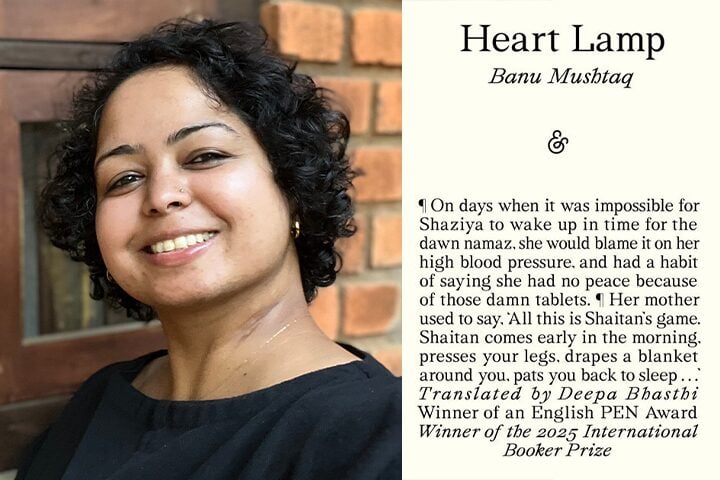
Language as Culture, History, and Stories: Deepa Bhasthi on the Heart of Translation
In an interview with PEN America, writer and translator Deepa Bhasthi shares what translation means in a multilingual society like India.
-
Eliana Alves Cruz’s Novel Illuminates Brazil’s ‘Deep Historical Wounds’
Solitaria is a really lovely work of “decolonial” translation, a translation that respects the linguistic differences and varied meanings that make up a story written in a language other than English.
-
Women in Translation Month Celebrates Literary Art of Translation As AI Looms Large
To celebrate Women in Translation Month 2025, the PEN America Translation Committee curated a reading list of 18 works by women writers and translators.
-
Michael Heim’s Choice: A Letter from Michael Kerr to the Translation Community
Priscilla sends her very best regards to you all, for all that hard work harmonizing books from one language to another, as do I.