

The PEN/Diamonstein-Spielvogel Award for the Art of the Essay is an annual award which honors a seasoned writer whose collection of essays is an expansion on their corpus of work. Beginning in 2021, the award was conferred with an increased cash purse of $15,000.
PEN America member, former PEN America Trustee, and author Barbaralee Diamonstein and Carl Spielvogel, former New York Times columnist, founded the PEN/Diamonstein-Spielvogel Award for the Art of the Essay to preserve the dignity and esteem that the essay form imparts to literature. The award has been conferred to distinguished writers including Michelle Tea, Ursula K. Le Guin, James Wolcott, Ta-Nehisi Coates, Marilynne Robinson, Martha Nussbaum, Cynthia Ozick, and Bernard Knox, among others.
The award is for a book of individual essays, either exploring one specific theme or a range of subjects, not a book-length work of nonfiction. Individual essays may have been previously published elsewhere; however, if the submitted book includes work previously published in a collection by the author, the submitted book should include significant new work. Candidates must be permanent U.S. residents or American citizens and living at the time of the book’s publication. First time and debut authors are ineligible, as the award is not intended for the discovery of new writers.
All winners, finalists, and longlisted books are eligible to receive PEN America’s official emblems. If you are a publisher interested in obtaining a PEN America award emblem for use on a book cover, please write to [email protected].
For more information about PEN America’s Literary Awards, please visit our FAQ.
Submissions for the 2027 Literary Awards are now open! The deadline for submissions is August 1.
2026 Winner
For a seasoned writer whose collection of essays is an expansion on their corpus of work and preserves the distinguished art form of the essay.
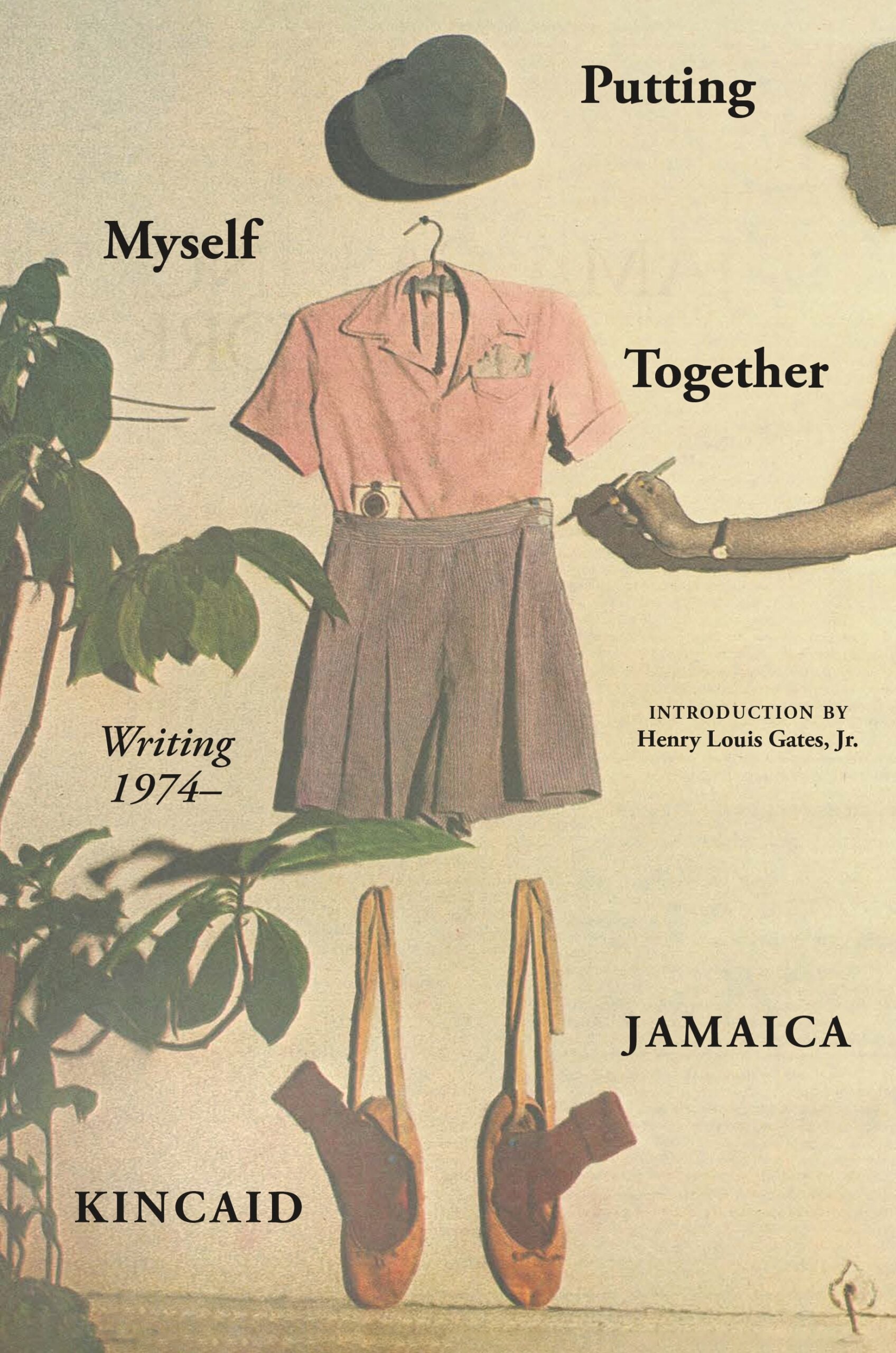
Winner: Jamaica Kincaid, Putting Myself Together: Writing 1974– (Farrar, Straus and Giroux)
Judges: Charles D’Ambrosio, Vanessa Mobley, Mark Slouka
From the judges’ citation: “There are writers—good writers—who make themselves a part of the cultural landscape, who find their place, their corner of the garden. Then there are those who are the landscape – the very soil, if you will, from which others draw. Writers whose voice becomes foundational.
Jamaica Kincaid is one of those writers. Her essays—wide-ranging, vocally distinct, consistently fearless—don’t seem to age. Decades later they retain their immediacy, their sharpness, their ability to elicit a laugh (or a wince) of surprise. A vein of vulnerability runs through them, but what distinguishes them—what distinguishes their author—is the combination of precision and soul, that rarest of combinations.”
Previous Winners
2025 Dagoberto Gilb, A Passing West (UNM Press, 2024)
2024 Jill Lepore, The Deadline: Essays (Liveright)
2023 Judith Thurman, A Left-Handed Woman (Farrar, Straus and Giroux)
2022 Margaret Renkl, Graceland, at Last: Notes on Hope and Heartache from the American South (Milkweed Editions)
2021 Barbara Ehrenreich, Had I Known: Collected Essays (Twelve)
2020 Deborah Fleming, Resurrection of the Wild: Meditations on Ohio’s Natural Landscape (Kent State University Press)
2019 Michelle Tea, Against Memoir (Feminist Press)
2018 Ursula K. Le Guin, No Time to Spare (Houghton Mifflin Harcourt)
2017 Angela Morales, The Girls in My Town (University of New Mexico Press)
2016 Ta-Nehisi Coates, Between the World and Me (Spiegel & Grau/ Random House)
2015 Ian Buruma, Theater of Cruelty: Art, Film, and the Shadows of War (New York Review Books)
2014 James Wolcott, Critical Mass (Doubleday)
2013 Robert Hass, What Light Can Do (Ecco)
2012 Christopher Hitchens, Arguably (Twelve)
2011 Mark Slouka, Essays from the Nick of Time (Graywolf Press)
[The award went on hiatus from 2005-2010]
2004 Stewart Justman, Seeds of Mortality (Floyd Skloot)
2003 William H. Gass, Tests of Time (Knopf)
2002 David Bromwich, Skeptical Music (University of Chicago)
2001 David Quammen, The Boilerplate Rhino (Scribner)
2000 Annie Dillard, For the Time Being (Knopf)
1999 Marilynne Robinson, The Death of Adam (Houghton Mifflin)
1998 Adam Hochschild, Finding the Trapdoor (Univ. of Syracuse)
1997 Cynthia Ozick, Fame and Folly (Knopf)
1996 Thomas Nagel, Other Minds (Oxford)
1995 John Brinckerhoff Jackson, A Sense of Place, A Sense of Time (Yale)
1994 Stanley Fish, There’s No Such Thing as Free Speech…And It’s A Good Thing Too (Oxford)
1993 Frederick Crews, The Critics Bear It Away: American Fiction and the Academy (Random House)
1992 David B. Morris, The Culture of Pain (University of California)
1991 Martha Nussbaum, Love’s Knowledge (Oxford)
1990 Bernard Knox, Essays Ancient and Modern (Johns Hopkins)
Eligibility
- Eligible titles must have been published by a U.S. trade publisher between January 1 and December 31 of the current calendar year. Self-published books are ineligible.
- Candidates must be permanent U.S. residents or American citizens.
- There are no restrictions on the subject matter of the essays. Essays may deal either with a range of subjects or explore one specific theme.
- The author must have previously published at least one collection of essays. First collections of essays are not eligible for the award.
- The book must be published by a single author. Anthologies with multiple authors are ineligible.
- Individual essays may have been previously published in magazines, journals, or anthologies.
- Books submitted for this award may not be submitted for any additional PEN America Literary Awards, with the exception of the PEN Open Book Award. Please note that the PEN/Faulkner and PEN/Hemingway Awards are not considered PEN America Literary Awards.
Submission Guidelines
- All submitted books must be published by a trade or academic publisher between January 1 and December 31 of the current year. Self-published books are ineligible for the PEN America Literary Awards.
- Books with more than one original author are ineligible for the PEN America Literary Awards.
- PEN America will only accept submissions from publishers or literary agents. Authors may not submit their own books.
- Please be sure to select the award you are submitting to on the submission form.
- Submitting a book for multiple awards is allowed only in the case of the PEN Open Book Award. Please complete a separate submission for this award if applicable.
- Please submit verified email addresses on the submission form. Your order cannot be processed without an email address. Multiple addresses are essential so that we can get in touch directly if an author or translator is selected as a longlister, finalist, or winner.
- Upload a PDF file of the galley or final manuscript to the book submission form. Book award submissions will be read as PDF files. Please upload the file saved as BOOKTITLE_AUTHORNAME. For the judges’ ease of reading, please upload a book file WITHOUT watermarks. Each book file will remain confidential and is accessible only to the Literary Awards team and the awards judges. Please note that if a book is longlisted, PEN America may request physical copies for the judging panel.
- Upload a high-resolution image of the book cover. This will be used if the book is a longlister, finalist, or winner.
- Each submission is $85. Submission fees are not refundable. Please note that all payments must be made via the submission form.
- Submission fees may be waived for publishers whose annual net sales are less than $2 million. You may request an exemption here; a letter on company letterhead stating that the press’s annual net sales are less than $2 million is required. Do not submit your title before requesting your fee exemption, as the Literary Awards Team will provide you with an alternative submission method.
- Once a submitted book is received and reviewed for eligibility by PEN America, it will be passed along to the judges. Please add [email protected] to your address book, as it will be the main point of contact from PEN America.