This is part of PEN America’s ongoing “Snapshots of Censorship” project. Read more and share your story here.
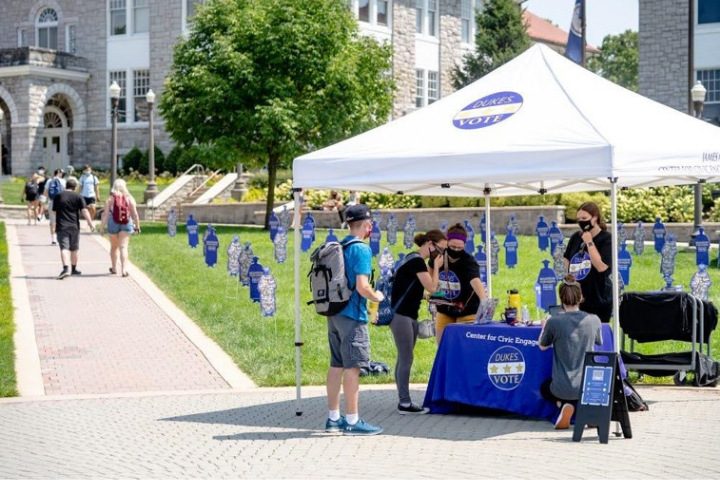
Students at James Madison University (JMU) deserve ample opportunities to have conversations about political issues on their campus. Tent Talks was a program launched in 2018 by JMU’s Center for Civic Engagement to facilitate just that.
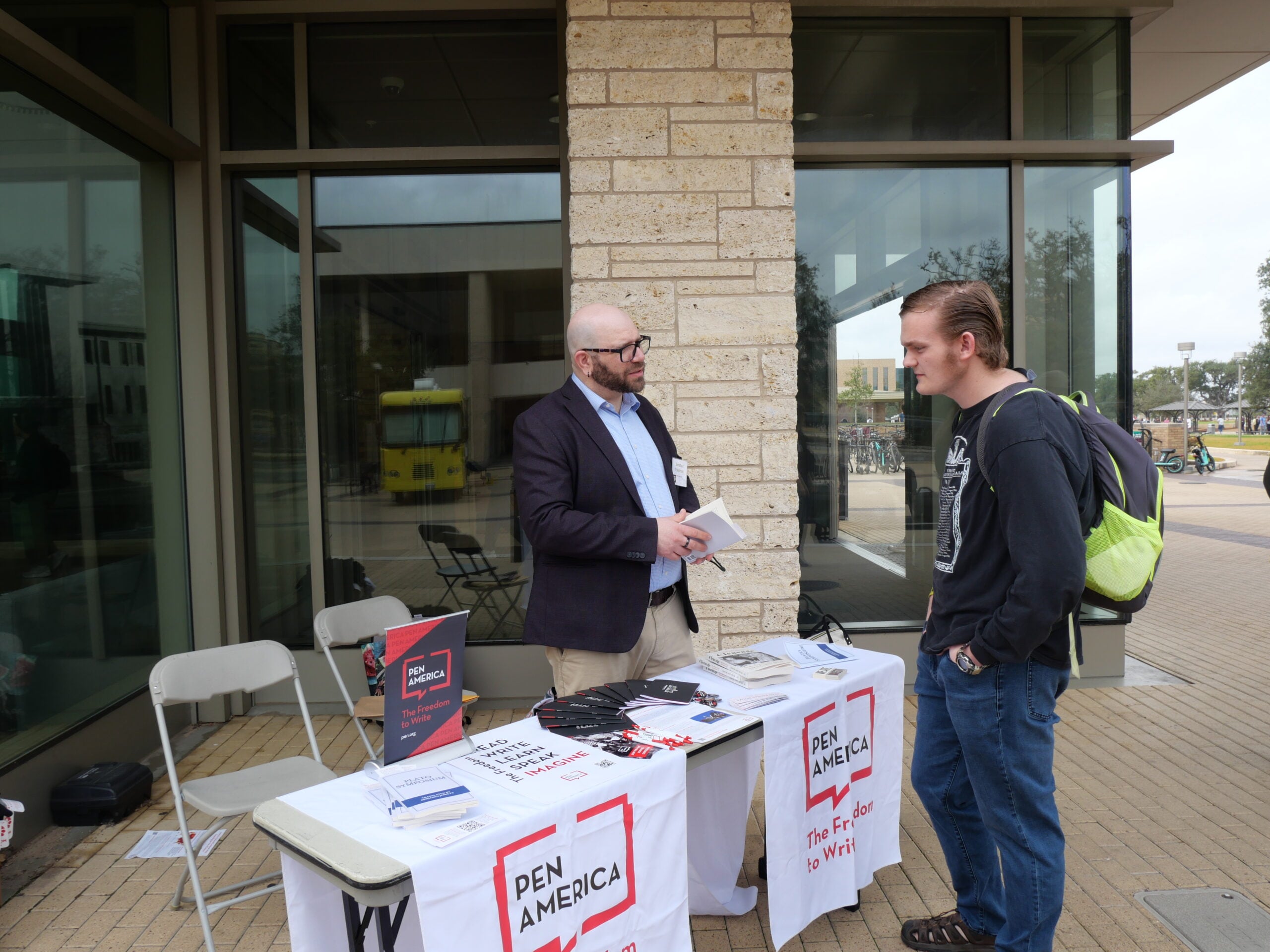
Students walking through our heavily trafficked Quad would be met with questions from trained facilitators standing by a tailgate tent and invited into short conversations about any number of public issues. “Have you thought about your citizenship today?” was one of the questions a student might be asked when engaging in Tent Talks. The program was designed to directly serve the university’s civic mission.
Unfortunately, Tent Talks are no longer.
In 2021, an administrator sent a message to me while I was serving as director of the Center for Civic Engagement that senior leadership indicated its firm desire that the Quad only be used for events such as a tree lighting ceremony and ESPN GameDay. These sentiments were codified in Policy 1121, which stipulates that the Quad “may be reserved only for university-sponsored events, which include QuadFest, Halftime on the Quad, and the placement of the official flag of the United States on the Quad in recognition of Veterans Day.” Further, no “temporary structure is permitted on the Quad except those deemed necessary for the university-sponsored event,” with few university administrators having the authority to make such allowances.
Tent Talks not only engaged students in impromptu political discourse, but promoted nonpartisan voter education on campus by allowing students to check their voter registration or to register for the first time. Thousands of JMU students engaged in a low-stakes but meaningful way. The Tent would be open for two-hour slots several times each week. There was no barrier to entry or requirement to participate. Students stumbled upon Tent Talks without looking for it – teaching them that conversations about political issues are not simply for the classroom or pre-arranged panels and speakers. The program demystified discussions on public issues, connected students to the electoral process, and showed just how many students value open discussions about public issues.
Students who helped to facilitate Tent Talks learned and practiced the important skill of encouraging conversations with peers who represent a broad range of perspectives, including perspectives with which they personally disagreed. In an environment in which many young people might be apprehensive to engage in political conversations, Tent Talks demonstrated that such discourse should not be feared, but can instead be inviting and even enlightening.
Barring Tent Talks from the Quad sends a message, not only to the students who were engaging their peers under the tent, but to any and every student at James Madison University: political discussions are not suitable for the Quad and need to be kept under wraps.
While administrators justified the policies that shuttered Tent Talks as a way to keep campus safe, what they sacrificed is the free speech and civic engagement that make higher education impactful and prepare students to be engaged participants in our democracy.
Does the elimination of a program that aimed to encourage civil conversations on issues of the day amount to censorship? I’ll leave that up to you. But the bottom line is that rules such as Policy 1121 chill the campus climate for free expression and inhibit faculty and students from fulfilling the civic mission of higher education.
After all, if political discussions aren’t welcome on a college campus, where are they welcome?
In this Snapshot of Censorship, I am speaking for myself and my perspectives do not necessarily reflect those held by my institution.