This is part of PEN America’s ongoing “Snapshots of Censorship” project. Read more and share your story here.
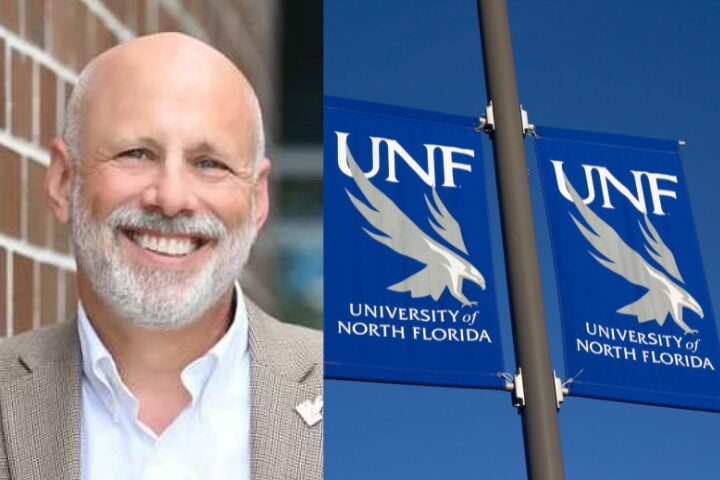
At the University of North Florida, where I serve as a professor of education, I was told, along with my colleagues, to alter our syllabi to remove the terms “diversity” “equity” “inclusion” and “culture.” “It’s only three or four words,” the university administrators said. “It’s the law and we must follow the law.”
This semester, it became clear to me that Florida universities, and the faculty who teach there, are being muzzled by zealous policy makers and by over-complying administrators. These four words – “diversity,” “equity,” “inclusion,” and “culture” – have been deemed inappropriate as subjects to discuss in a college classroom at University of North Florida. This censorship is a harbinger of what’s to come: a threat to the pursuit of knowledge and academic inquiry everywhere.
When my colleagues and I were told our syllabi would need to be updated in order to be in compliance with state rules, I asked for more clarification; I wanted to read for myself the law that was threatening my academic freedom. When I did, I discovered that there was no law or legal imperative to change my course syllabus. Instead, in an attempt to control academic thought and classroom discussion at Florida’s state universities, state policymakers went outside of state law to censor me, my colleagues, and my students.
The “rules” that the administrators cited as justification for their demands are in no way legally codified – they’re unwritten and verbally communicated; thus, they are rules that my colleagues and I cannot see for ourselves. But that does not stop them from being powerful. Fear has permeated Florida classrooms. Faculty today do not know what they are and are not allowed to teach; they do not know if and how they are being surveilled to ensure their compliance. The pressure to comply with these unwritten rules is constant. After I refused to change my syllabus, I was told by administrators that I was hurting my students by jeopardizing the approval of my courses. I was told by my university that I was hurting my program and the university more broadly by speaking out about what was taking place. In pushing back against censorship, I was–by the administration’s account–the problem.
I do not take attacks on my academic freedom lightly and will continue to speak out against state censorship in Florida. Despite what university administrators have tried to tell me, this issue is not just about “three or four words.” This is about ideas. Since I teach in an education program, it is imperative that I discuss with students the issues that will impact their future careers as teachers – and those include culture, equity, diversity, and inclusion. State policymakers and administrators want to silence legitimate and valid academic content, marking a new, dystopic low not only for Florida, but for the whole country. If we cede academic freedom to policymakers in one state, faculty and students everywhere are at risk.