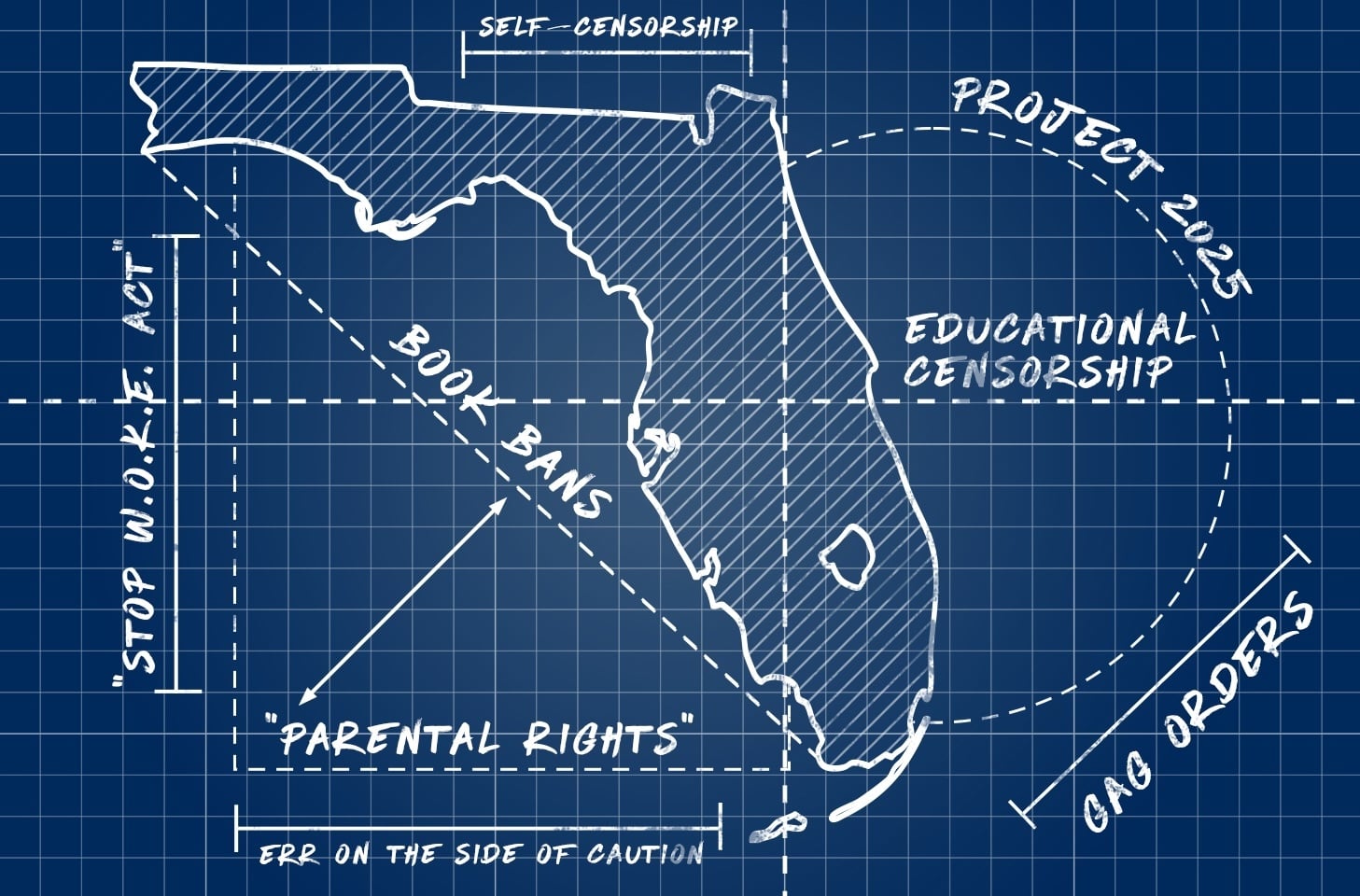
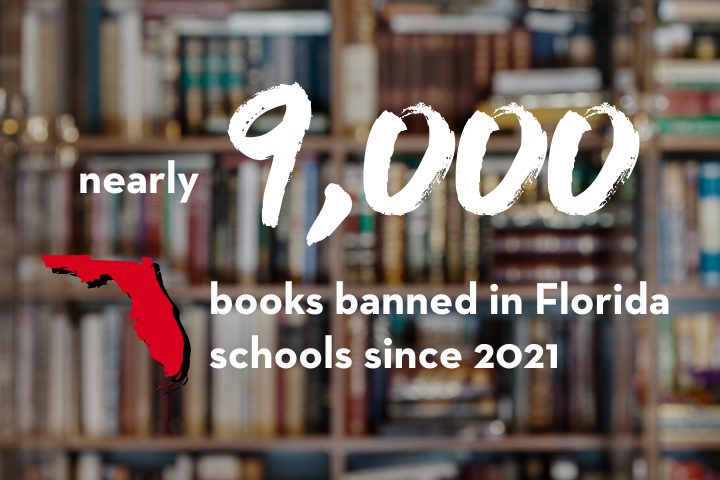
Florida has earned the unfortunate distinction as the number one book-banning state in the country for three years in a row, with nearly 9,000 books banned in its public schools since 2021—and Florida shows no signs of slowing down.
For the 2026 legislative session, state legislators have introduced bills that would drive the state’s book-banning crisis to unimaginable heights. Prohibiting the freedom to read remains a priority of the Florida government, all to the detriment of Florida students, parents, educators, librarians, and community members.
This year, two major bills – HB 1119/SB 1692 and HB 1071/SB 1090 – would further restrict students’ access to books in Florida.
HB 1119 / SB 1692 explicitly forbids school districts from considering a book’s literary, artistic, political, or scientific value when assessing whether to ban it. This consideration is a vital prong of the Miller test, a Supreme Court standard in place for more than 50 years that requires weighing a book’s overall value before it’s considered obscene and therefore not protected by the First Amendment. Courts use a modified Miller test as applied to minors in determining what materials are “harmful to minors.”
By attempting to pass a law that would require districts to ignore the Miller test, Florida seeks to further devastate librarians’ ability to curate libraries with professional standards. We’ve seen what happens when Florida passes overly vague book-banning laws: one such law, HB 1069 (2023), was ruled unconstitutional by a federal judge last year for circumventing the Miller test and leading to thousands of school book bans since it became law. Despite these constitutional challenges, the Florida legislature continues to try to pass bills that will ignore the Miller test, making school districts vulnerable to costly litigation.
HB 1071 / SB 1090, meanwhile, is an omnibus education bill that would give the Education Commissioner the power to ban a publisher from the state-adopted list of instructional materials if the commissioner simply decides–without any legal due process–that the publisher violated Florida law. The bill never clearly defines which laws could trigger removal and instead relies on a vague reference to the state’s ever-expanding rules on instructional materials. The commissioner could decide that the sale of a single book to a school district violates the law and unilaterally remove all materials from that publisher from the state’s approved list and prevent the publisher from submitting new materials for adoption for up to five years.
If this bill becomes law, it will give a single state official incredibly broad powers at the expense of local school districts that rely on the state-adopted instructional materials list. The state would have even greater control over what materials students can access in their schools. As a result, the state – not local administrators, parents, or educators – will decide what students can read and what book-related programs schools can offer.
Within the bill is also a broad ban on diversity, equity, and inclusion that prohibits schools from using state or federal funding on programs or campus activities that “advocate for” diversity, equity, and inclusion (DEI) or “promote” political or social activism. This vague ban would implicate not only actual DEI-related programming but also could be weaponized to censor book fairs, library purchases, author visits, membership or training from library organizations, and any other book-related activities that politicians view as supporting DEI or activism.
These bills cost students their learning opportunities, parents their rights to make choices for their own families, and educators their ability to do their jobs effectively. And they are yet another addition to the array of educational censorship bills already in effect in Florida. They will open the door for individual districts to lose even more rights to self-governing, and leave them further vulnerable to expensive litigation by forcing them to go against Supreme Court standards.
Floridians: Send an action alert to your representatives today.