The killing of conservative activist Charlie Kirk and the swift crackdown on free speech that followed has left many workers including professors and journalists wondering exactly what protections they have against retaliation from their employers due to their speech.
The further stunning news on Wednesday that Disney was pulling late night comic Jimmy Kimmel off the air over his comments on the political fallout from Kirk’s murder, along with the news of reporters and other professionals being fired, and students getting expelled, all may feel instinctively unconstitutional. But the question of whether the First Amendment protects people against retaliation for speech depends on multiple factors.
The First Amendment’s constraint on censorship only applies to government actors. That means that while there are constraints on how public institutions discipline their employees for their speech, private employers and institutions are not bound by the First Amendment in the same way. Private employers often can fire someone or take other adverse actions against them for speech that would be protected from government interference.
Employees at public institutions do have First Amendment protections for their speech that may protect them from disciplinary action, but they are not absolute. The protections apply when a government employee is speaking as a private citizen (that is, not as part of their professional responsibilities), on a matter of public concern.
Courts also consider public employers’ interest in its obligations to the public and ensuring efficiency, balancing this state interest with an employee’s individual speech rights using a test articulated by the Supreme Court in Pickering v. Board of Education. So if a government employer claims that the speech in question is legitimately disruptive to their activities and prevents them from serving the greater interests of the public, the court may weigh that interest against the employee’s speech rights.
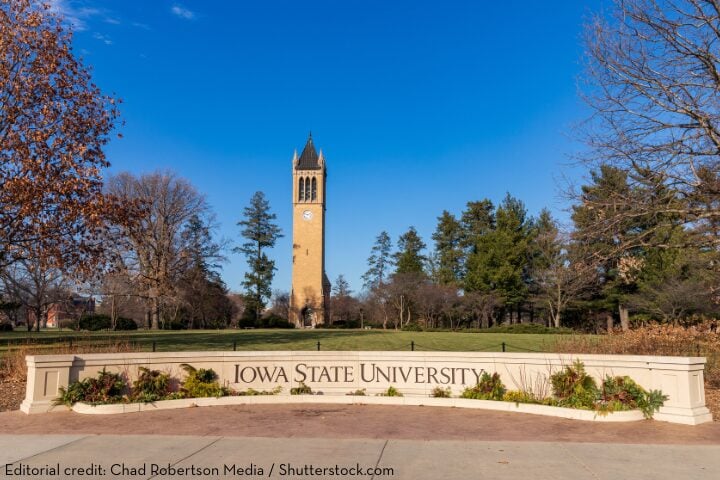
When it comes to faculty at public universities, because academic freedom is a special concern of the First Amendment, they are generally entitled to broad protections under the First Amendment for what is often termed “extramural” speech. Students at public universities are also guaranteed First Amendment protections for their speech, subject to certain viewpoint-neutral time, place, and manner restrictions.
The fact that the First Amendment applies only to the government, however, doesn’t mean that people who have experienced censorship from private institutions have no options. State laws and constitutions, federal and state anti-discrimination laws, as well as the protections of a union, may provide additional speech protections. Connecticut, for example, has a statute that applies the same protections that public employees have to private employees. And in California, a statute guarantees First Amendment protections to students at private colleges and universities.
In some cases, if an employer has violated its own internal policy in firing someone for their speech, there may be recourse there as well. Faculty, students, and staff at private universities, which are not governed by the First Amendment, may find that school policies prevent retaliation on the basis of speech, and could have grounds to file suit. Similarly, private newsrooms and other media outlets may have explicit policies about outside speech. Because free speech and open exchange are such fundamental values in the academy and in the media, many private institutions in these sectors maintain robust free speech protections in their policies.
In short, the First Amendment doesn’t provide absolute protections even for public employees and the free speech rights of employees depend not only on whether they work for a public or private employer, but also the state in which they work, other applicable federal and state laws, and whether their speech is protected by a union. It’s a fractured legal landscape, but protections do exist.
But it is easy for this distinction between public and private actors to get blurred, especially when a culture of censorship and fear is so pervasive, as is the case for anyone who ventures an opinion about Charlie Kirk that differs from the position that the Trump administration and its allies are demanding.
For example, the decision to cancel Jimmy Kimmel Live! for the host’s comments came from ABC, a private company owned by Disney. But chillingly, it was spurred by a threat from the Federal Communications Commission that the network’s broadcast licenses could be pulled if they didn’t take action against Kimmel. Such threats could constitute jawboning—the pernicious use of government power, often in areas of the company’s business unrelated to the actual speech at issue, to coerce private actors into censoring speech that the state disfavors. The Supreme Court has found some jawboning to violate the First Amendment, including recently when it ruled in favor of the NRA in NRA v. Vullo.
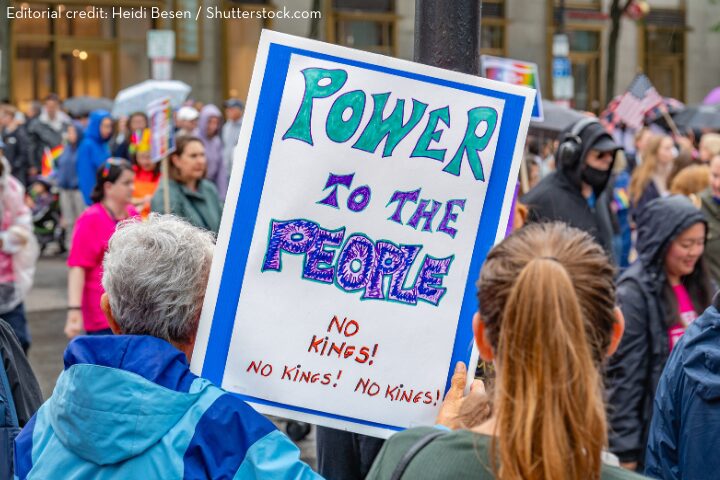
That has not stopped the Trump administration’s insidious attempt to bully private institutions to fall in line. Make no mistake; the Trump administration is attempting to weaponize the murder of Kirk to crack down on speech and silence dissent from its critics more generally, much in the way they have weaponized antisemitism to attack higher education and other institutions. The White House has deceptively lionized Kirk—whose organization Turning Point USA created a “Professor Watchlist” to monitor and dox faculty viewed as promoting left-leaning politics—as a champion of free speech, all the while claiming to honor that purported legacy by mounting a national censorship campaign.
Regardless of the constitutionality of any given incident imposing penalties for speech, this wave of public and private disciplinary responses to Kirk’s death is an extraordinary assault on freedom of expression. And it is just the latest chapter in the Trump administration’s abuses of power to silence and intimidate its critics . It is a powerful reminder of the insidiousness of censorship and the myriad tools the government can deploy to chill speech both directly and in subtle or indirect ways — which overall have a profound effect on the cultural and political climate for us all.
Elly Brinkley is the staff attorney for Free Expression programs at PEN America.
Nothing in this post constitutes, nor should be construed, as providing legal advice on any matter.