PEN America works tirelessly to defend free expression, support persecuted writers, and promote literary culture. Here are some of the latest ways PEN America is speaking out.
- To mark the Day of the Imprisoned Writer, PEN America and PEN International highlighted several writers and journalists at risk for their expression: poet Mohamed Tadjadit, imprisoned in Algeria; journalist Rory Branker, detained in Venezuela; Uyghur literary critic Yalqun Rozi, imprisoned in the Xinjiang Uyghur Autonomous Region in China; and journalist Mzia Amaglobeli, imprisoned in Georgia. Read more about writers behind bars here, and take action to support them here.
- PEN America condemned in the strongest terms President Donald Trump’s comments about a video of federal lawmakers calling on military troops to refuse to follow unlawful orders. “This is beyond the pale,” said Hadar Harris, managing director of the Washington office. “While the President has repeatedly used the bully pulpit to do just that — bully his opponents — today he has crossed a serious and dangerous red line explicitly encouraging violence against federal lawmakers.” Read the full statement here.
- PEN America raised alarm about Florida’s new social studies standards — specifically, a new unit on the history of communism — which recasts McCarthyism as patriotism. “A classroom should be a place where ideas meet, not where ideology reigns,” said William Johnson, director of the Florida office. Read the full statement here.
- For The Kansas City Star, Amanda Wells, program coordinator for Digital Safety and Free Expression, and Alexia Gardner of the U.S. Committee for Refugees and Immigrants outlined the dangers of a new policy that will vet immigrants’ social media accounts for “anti-American” content. “With this new policy, the United States is turning its back on the dissidents that it once prided itself in protecting,” they wrote. Read the full article here.
- PEN America and other advocates expressed alarm over a change to the Alabama Public Library Service Administrative Code that mandates public libraries to relocate or remove materials “regarding transgender procedures, gender ideology, or the concept of more than two biological genders.” “Reclassifying books for young people to adult sections ultimately leaves young readers empty-handed without access to critical stories, histories, and representations,” said Sabrina Baêta, Freedom to Read senior program manager. Read the full statement here.
- PEN America celebrated a Jackson County, Missouri, Circuit Court judge’s decision to overturn a law that imposed criminal sanctions on school employees supplying “sexually explicit material” to students. “Making school employees criminals over their book selections is simply outrageous and unacceptable,” said Kasey Meehan, director of Freedom to Read. Read about the decision here, and read PEN America’s full statement here.
- PEN America expressed outrage at President Donald Trump’s comment on the culpability of Saudi Crown Prince Mohammed Bin Salman in the murder of Saudi columnist Jamal Khashoggi. “Trump sends a chilling message to authoritarian governments: The United States will look the other way when writers and journalists are silenced as long as it serves the administration’s interests,” said Liesl Gerntholtz, managing director of the PEN/Barbey Freedom to Write Center. Read the full statement here.
- Timothy Richardson and Viktorya Vilk, PEN America experts on journalist safety, wrote about Trump’s escalating assault on journalists, especially women. “When the world’s most powerful leader singles out a reporter, he understands his insult is not isolated, but a green light for targeted harassment and intimidation.” Read the article here.
- In a new blog, Kristen Shahverdian, program director for Campus Free Speech, explains that although teachers may be reasonably fed up with kids calling out “6-7” in the middle of class, Indiana police officers still shouldn’t have issued “tickets” to students for doing so. It sends “the wrong message to our students about freedom of speech, what the First Amendment is, and how and when to use their freedom of expression,” Shahverdian wrote. Read the full blog here.
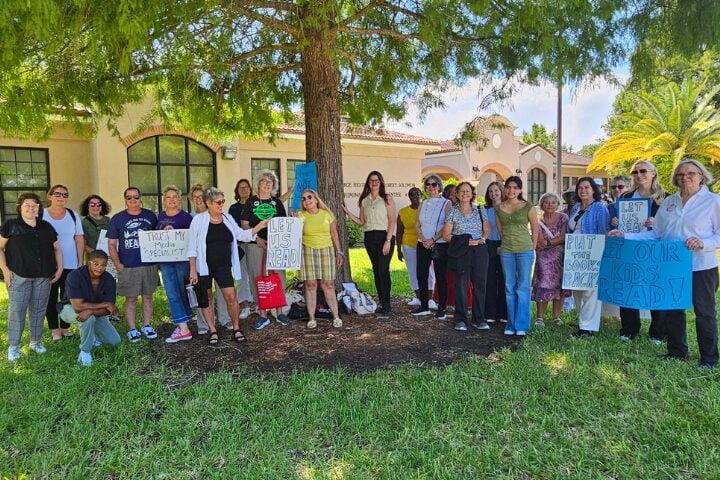
- Educators, librarians, parents, and other advocates gathered in downtown Orlando at PEN America’s “The Book Ban Fight: From Stories to Strategy” to brainstorm ways to push back against the wave of book bans sweeping the state. Read more about the event here.
- An installment of the hit children’s series Butt or Face? drew the attention of two Texas school districts reviewing pending library acquisitions under a law that bans materials with “indecent or profane content.” PEN America spoke with the series’ author, Kari Lavelle, who explained how the book thrills and educates young readers. “Before they know it, they’re learning all sorts of STEM-focused science about animals — adaptations, camouflage, mimicry,” she said. Read the full blog here.
- PEN America and Women’s Media Group held “Words as Weapons: Women, Online Abuse, & the Fight for Digital Safety” on November 12, a panel discussion where Alia Dastagir, Francesca Donner, and Viktorya Vilk shared anecdotes about how they’ve combatted online harassment and tools that audience members can employ to fight it themselves. Read WMG member Clementina Esposito’s recap of the event here.
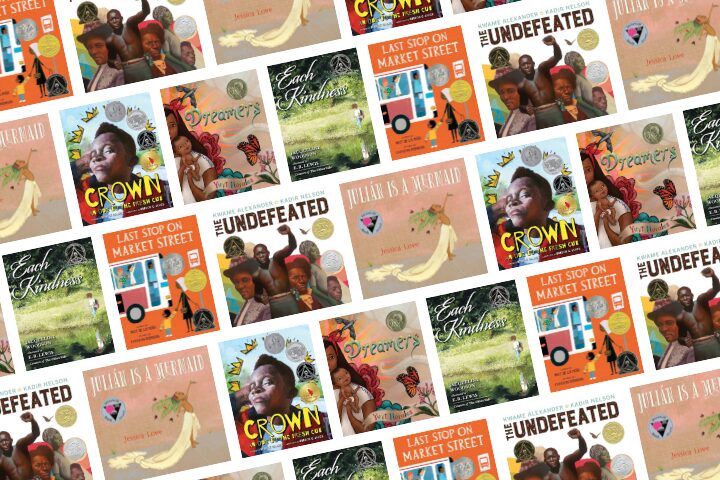
- Looking for new ways to celebrate Native American Heritage Month? Check out our new list of banned Native American authors and stories here.
- On Transgender Day of Awareness, PEN America affirmed that gender expression is free expression. PEN America also released a reading list in celebration of Transgender Awareness Week, which ran through November 19. Read the blog post here, and take a look at the reading list here.
- Student content creators have been making videos about PEN America’s work on educational censorship and communicating to their audience why we all should care about the crackdowns on academic freedom and free expression. Watch a video from Cameron Samuels at UT Austin.