Varun Shetty needed creative direction. Trini Bui wanted to regain momentum on her novel. And Ava Emilione was searching for a community of writers dedicated to their work and one another.
Five months later, Shetty, Bui, and Emilione have found exactly what they were looking for — and more — through PEN America’s Emerging Voices Fellowship. Founded in 1996, the fellowship offers support to early-career writers from communities underrepresented in the publishing industry. Throughout the program, each writer receives one-on-one guidance from a mentor and attends virtual craft workshops as well as informational sessions with editors, agents, and publishers.
“Emerging Voices is a testament to what happens when a diverse community of writers gains access to the resources, mentorship, and opportunities they deserve,” said TC. Mann, the fellowship’s coordinator. “When given that platform, remarkable art follows. Our program nurtures storytellers who not only strengthen their craft, but also reimagine the world through their words.”
This year’s fellowship culminated in a virtual reading on October 22, during which each of the nine cohort members presented a taste of what they’ve been working on since June.
Bui read an excerpt from her young adult novel, which is inspired by her Vietnamese heritage and explores themes of family and collective responsibility. She set out to write the novel while living in Vietnam in 2018 and hit the ground running, producing around 50,000 words in a single year. But after moving to the United States, and especially following the onset of the pandemic, she began to slow down. “I was reaching a point where I really needed motivation from other writers, because I was starting to not necessarily lose the vision, but lose a way forward,” Bui said.
Thanks to the fellowship, Bui has been making great strides once again. From the beginning of the program, her mentor, Swati Teerdhala, facilitated crucial breakthroughs for her. “When she gave me feedback on just the first 20 pages, it helped me rework the entire plot of the novel. It really helped me see the end and how to get to the end,” Bui said. “When I started the program, I knew it was going to be helpful, but I didn’t really know how transformative it would be.”
Another fiction writer in the cohort, Emilione, shared an excerpt from a piece about a drag performer struggling with addiction and grief. The performer returns to their hometown in southern Colorado, where they find that the only river in the area has been poisoned.
Emilione began the fellowship with an early draft of the piece, then just a short story — but given the wide-ranging themes it tackles, their mentor, Chinelo Okparanta, suggested they expand it into a novel. In addition to writing other short stories, Emilione began reimagining the piece as a book during the fellowship, and they’re eager to continue.
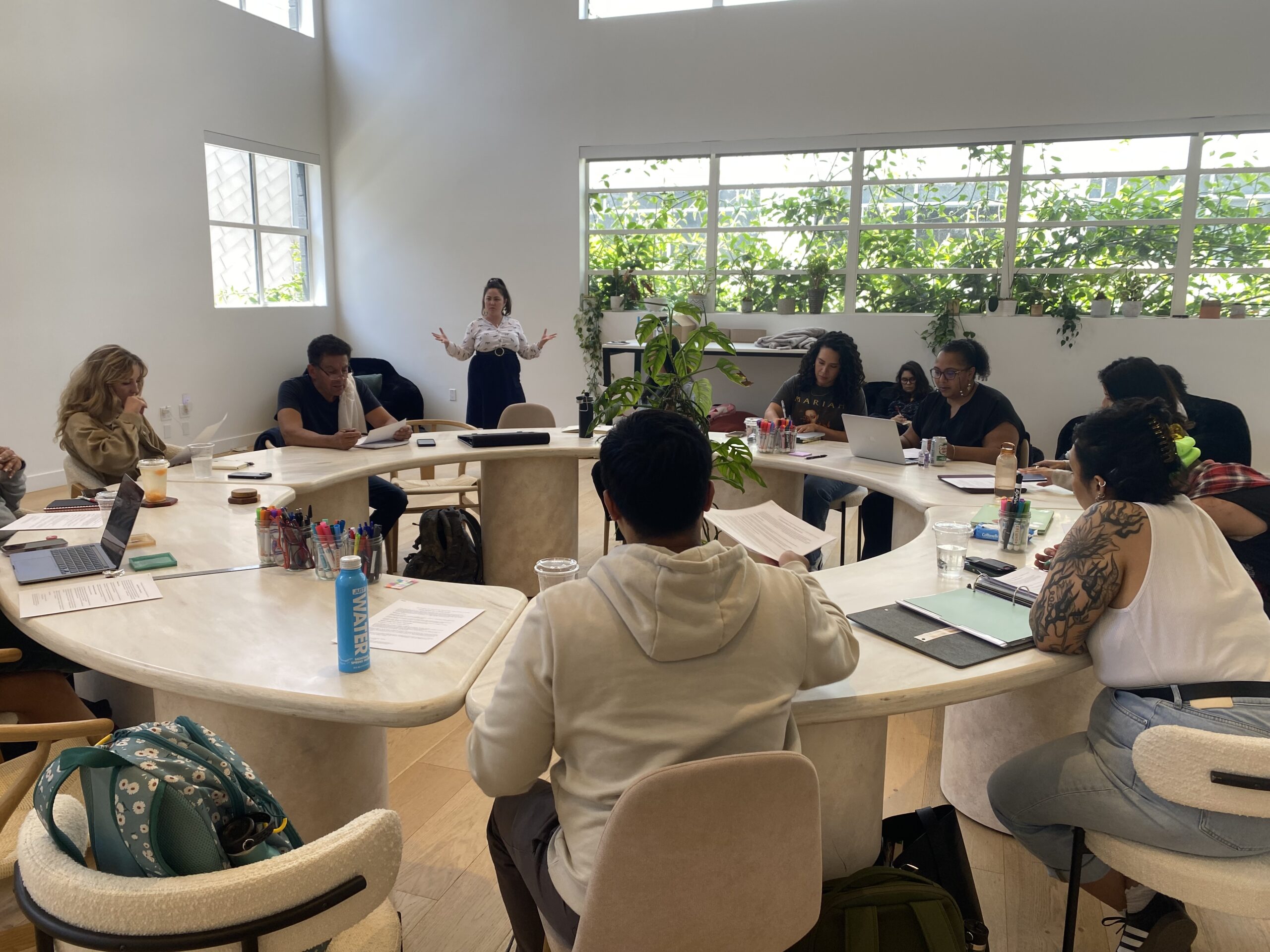
If they come up against new challenges, Emilione knows they can turn to other cohort members for advice and encouragement. Though the program was virtual, the fellows supported one another in person, attending the launch party of one another’s literary magazines, for example, and meeting up in advance of the reading to practice sharing their writing out loud. “It’s really cool to have to have that community around my work, and that’s something that I’ll carry with me for sure,” Emilione said.
Emilione particularly enjoyed hearing from the cohort’s poets at the reading, since fellows attended craft workshops only with other writers working in their genre. They commended the reading from Shetty, who said he “never in his wildest dreams” imagined he would be selected for the fellowship.
Before the program began, Shetty, an intensive critical care physician, often struggled to grant himself permission to read and write poetry. He spent the little free time he had studying medicine, and when he did turn to his poetry, it wasn’t clear to him how, or even if, one poem connected to the next.
But the fellowship empowered Shetty to change course for the first time. “I kept reading, reading, reading to marinate myself in that world,” he said. “And then as I wrote more, the direction became clearer. I was starting to see themes in my work. I was starting to see the arc of my manuscript. … It felt really liberating.”
Shetty is now ready to submit his chapbook for publication, which he plans to expand into a full-length manuscript soon.
“I really, really enjoyed my fellowship,” Emilione said. “I’m sad that it’s over, but I hope other programs I do in the future can be as good and as fruitful as this one.”
Applications for the 2026 Emerging Voices Fellowship will open on January 1, 2026 and close on January 31.