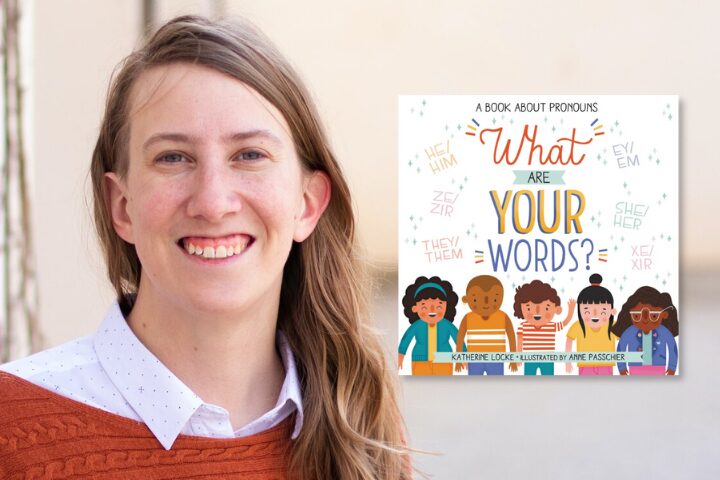
For many authors, email serves as a way to connect with readers and professional opportunities. Unfortunately, for some, it has also become a pipeline for harassment. Katherine Locke, a children’s and YA author, has experienced that shift firsthand, with online hostility toward their work fueled by the rise of book bans and cultural debates over gender identity. Their experiences, as well as those of other writers and academics, have informed PEN America’s new Email Safety Toolbox, which offers tips and strategies for managing email harassment.
The turning point
Locke’s experiences with harassment escalated sharply after they published What Are Your Words in 2021, a book that introduces children to the idea that pronouns can change. “It was supposed to be an affirming statement,” Locke said about a line in the book.
What followed was a coordinated online harassment campaign of message bombing, threats, and hateful speech. A handful of emails quickly grew into waves of messages, often repeating phrases circulating on social media, including falsely accusing Locke of being a “pedophile” or “groomer.” Most of the harassment, according to Locke, was focused on the content of their work rather than their personal identity.
“They were very upset that I said pronouns could change for anyone, but specifically for a child protagonist,” Locke said.
A shift in safety strategy
At first, Locke said, the messages weren’t frequent enough to put privacy filters in place, so they left their Instagram and email completely open. Anyone could comment, send a DM, reply to a story, or reach out through their website. They also made a point of responding to every reader.
Over time, though, as the volume of hostile messages increased, they stopped replying to every email. “2021 was a big shift in how I had to interact online,” Locke said. They decided to take down their email address from their author website, replacing it with a contact form. They also put email filters on their account, so that emails with certain trigger words would automatically be quarantined in a folder. They named the folder “stupid people.” The folder’s name, they explained, not only helps them cope with the negativity, but also ensure that the folder appears later in the alphabetical list, so they rarely have to see it unless they look for it.
Prioritizing mental health
Sometimes those filters block messages Locke wishes they could see. Still, they said, it’s been the best way to manage during the last four years, allowing them to open their inbox without “holding their breath.” Prioritizing their mental health, they explained, made the filtered folder a “game-changer.”
Locke said that concerns about safety now shape how they interact online. “I think about safety so much more than I did.” In addition to filters, they also use an auto-responder on their email to help manage inquiries. They’ve also set Google alerts for variations of their book titles and name, not to track publicity, but to anticipate waves of online harassment.
Bans fuel backlash
Most of the attention Locke receives tends to spike when their book comes up in discussions about school bookshelves during the school year. While the volume of harassment is not consistently high, they usually skim the emails. Sometimes they’ll text a friend in advance so someone is available for support. More often, they pair the process with a relaxing activity, like watching a favorite TV show or movie, so it becomes almost automatic and less emotionally draining.
Their book’s release coincided with a national surge in book bans and heightened debates around gender, pronouns and transgender identity. As the topic became more high-profile, they saw the impact reflected in the volume of the emails they received.
In Mahmoud v. Taylor (2025), the U.S. Supreme Court ruled that a Maryland school district likely violated parents’ constitutional rights by requiring students to engage with LGBTQ+ inclusive storybooks without offering opt-outs. Locke’s book was a part of the list of books cited in the case.
Resisting self-censorship
Despite harassment, Locke continues to advocate for inclusive storytelling. “The broader book banning experience does affect how I think about what I’m writing now and what goes into that book and what I’m including and what I want to edit out because it would make my life and sales better,” Locke said. “But you know, I actively try to fight that feeling.”
Peer support from other authors has been vital, as have positive messages from readers describing how the books have impacted their lives is the reason they keep going. Those messages also help counteract the self-censorship Locke sometimes grapples with.
PEN America’s Safety Toolbox
To help authors navigate these challenges, PEN America has created the Email Safety Toolbox, a guide that offers strategies for managing emails with safety and psychological well being in mind.
Find out other ways to stay safe online with our guide for what to do if you are doxed or placed on a watchlist.