What follows is not merely a chronicle of events—it is a testament to the endurance, imagination, and heartbreak of Palestinians surviving genocide. Through the lens of daily life in Gaza, writer Akram Al-Sourani invites us to witness the seemingly impossible: a city reduced to rubble, yet brimming with stories, memory, and unyielding human dignity.
These lines capture the weight of loss, the struggle for survival, and the quiet heroism of maintaining hope amid devastation. More than an account of destruction, this is a call to see, hear, and honor the lives of those whose reality the world too often ignores. His original piece was written in Arabic and translated into English by PEN America staff.
Akram Al-Sourani is a writer, a poet, and a parent. After sharing his story with us, and following the Israeli military’s assault of Gaza City, he was displaced from his home for the seventh time since October 2023, adding more pain and loss in an already unbearable reality.
Planet Earth of numbness
Salutations from the wreckage, from death, from siege,
from hunger’s grip, from fire in the skies, from deafening blasts.
Greetings from a tent [of honor] and blood that won’t stop flowing.
Greetings from Gaza,
These few lines are but a small part of the story, just one humble chapter in a larger novel. In Gaza today, there is real competition: competition with the greatest novelists and journalists of all time. A competition for who can tell the most powerful story. Two million novelists have lived and died here. Two million Naguib Mahfouzes, each one ready to write their own story, their trilogy, their misery, their pain, their children’s hunger.
They will write that “we are fine in Gaza” because all that’s happened is they stripped our souls, shattered our hearts, encrypted our futures, uprooted our children, and leveled our lives to the ground…!
War can stir the impulse to write or drown it in a deep unshakable melancholy. For me, it brought on something like post-writing depression, not unlike postpartum grief.
To get these lines out, to send them to my loyal friends at PEN America, I’m stealing bits of internet through a painfully slow, frustrating “turtle card” or, when fortune allows, a flicker of eSIM signal. Here in Gaza, everything feels dim and lifeless, dull, deadly, slow, terrifying, and unbearably sad. There is no life in the city, no city in the city, no electricity, no networks, no reprieve, just a flickering thread of 2 Mbps and a scattering of fading batteries to keep our phones on. A handful of dim LEDs whose pale glow I pray lasts long enough for me to finish writing.
Allow me a brief note, perhaps it may seem trivial, but like all of Gaza’s sons and daughters, I may be speaking in lost time. Here, among the ruins of the city, everything is lost—places, people, even moments. Amid the wreckage and what’s left of humanity, we are consumed—we are not free… because far from you, we are at war.
But beyond the war, the bombing, the pounding that pulverizes us like bitter harissa without sugar, here, dear friends, we embrace steadfastness and patience. There is no room left for sweetness, especially not after the price of sugar and everything else has soared. Everything, that is, except for our own worth—our dignity and value, which drop lower by the minute. And the world, in all its numbness and indifference, watches this river of blood, this ongoing saga of genocide, unfold in silence.
In Gaza, people still stand tall, taller than the lines they queue in: lines for Zikim, lines for Netzarim, lines for flour, and a sixth line for cardboard boxes.
They stand tall even as the city is ground to dust, despite near-constant bombing. They endure hunger, queuing for days at money exchange shops and commission stalls, waiting for whatever scraps of aid or remittances may come. We have all (God help us) become “begging projects.” As Mahmoud Darwish never said, but surely meant: “It was once called Palestine; now it’s just a sack of flour.”
I won’t wander too deep into Gaza’s sewage or dwell on the soaring prices, the misery of tents, the mountains of rubble, the outbreaks of pox among children, liver disease, or relentless diarrhea—but suffice it to say, our tragedy has reached all the way to tampons and diapers.
We struggle to survive, if you can even call this survival. We fight just to feel human. In this jungle of terror, hunger, and death, we barely resemble people anymore. Water is scarce, medicine rarer, and food… Well, nothing here qualifies as food. The medicine doesn’t heal, the food isn’t food. We eat everything but meals, cook everything but actual dishes. To be precise, we eat things that even dogs would find disgusting. If you ran an ultrasound on our stomachs, you’d find trees—trees of pasta, lentils, beans, and tuna.
Our children sleep on bare bones. Many, especially the youngest, have forgotten what vegetables even look like, let alone the names of fruits. They’ve lost their memory of food just as we’ve lost the taste of time. Today is like yesterday and yesterday like tomorrow—and there is no chicken in this town!
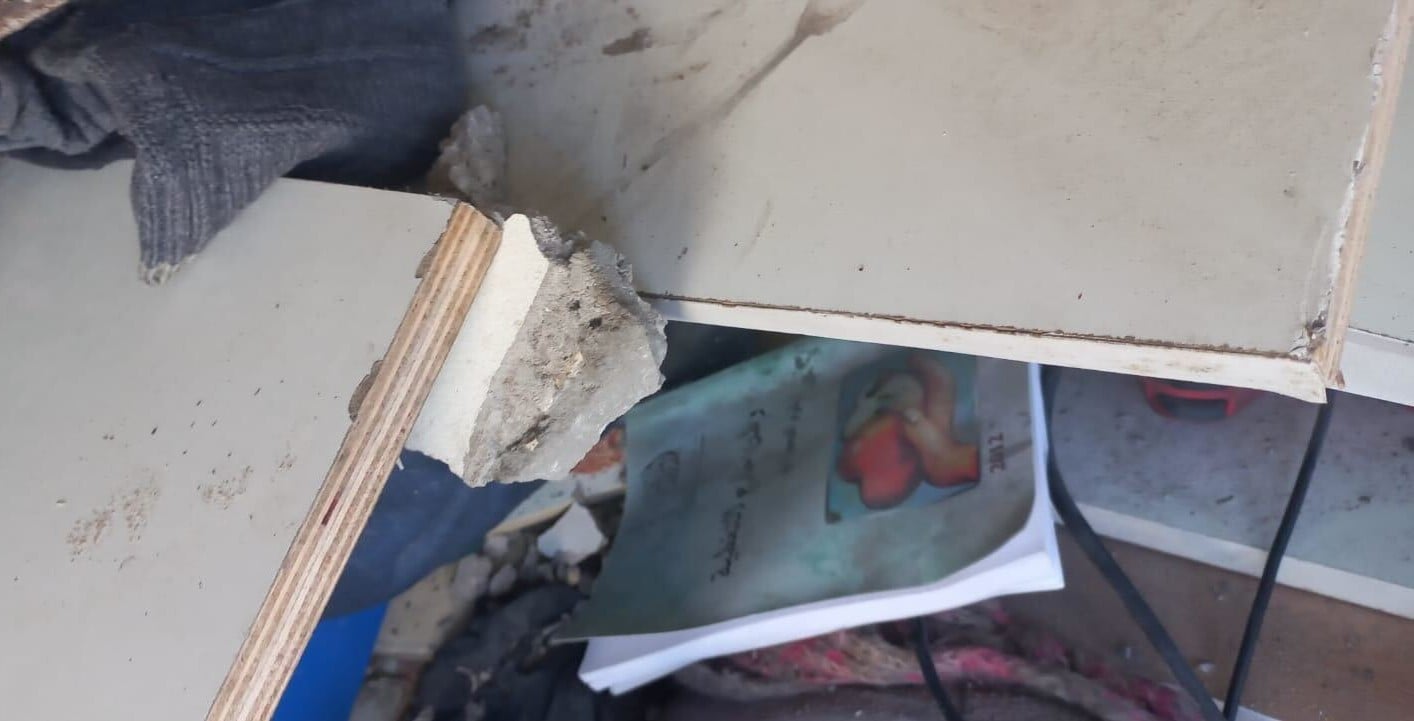
Our children don’t go to school, the schools are gone. Education books are sold on the streets, and the streets are no longer streets. Recently I bought national‑education books—and I regret telling you—I had to burn them, burning my children’s future so we could bake a bit of bread and whatever beans we could find.
All living beings here have withered; faces have darkened like the streets themselves; life has become a series of roadblocks and jolts. We have nothing, nothing but helplessness, oppression, exhaustion, and a flicker of internet connection.
In Gaza, homes aren’t “missing” anything, they have exploded roofs and evaporated walls, and their owners left without return. Those who remain live in tents or the skeletal remnants of buildings, waiting ‘indefinitely’ for the bombing to stop.
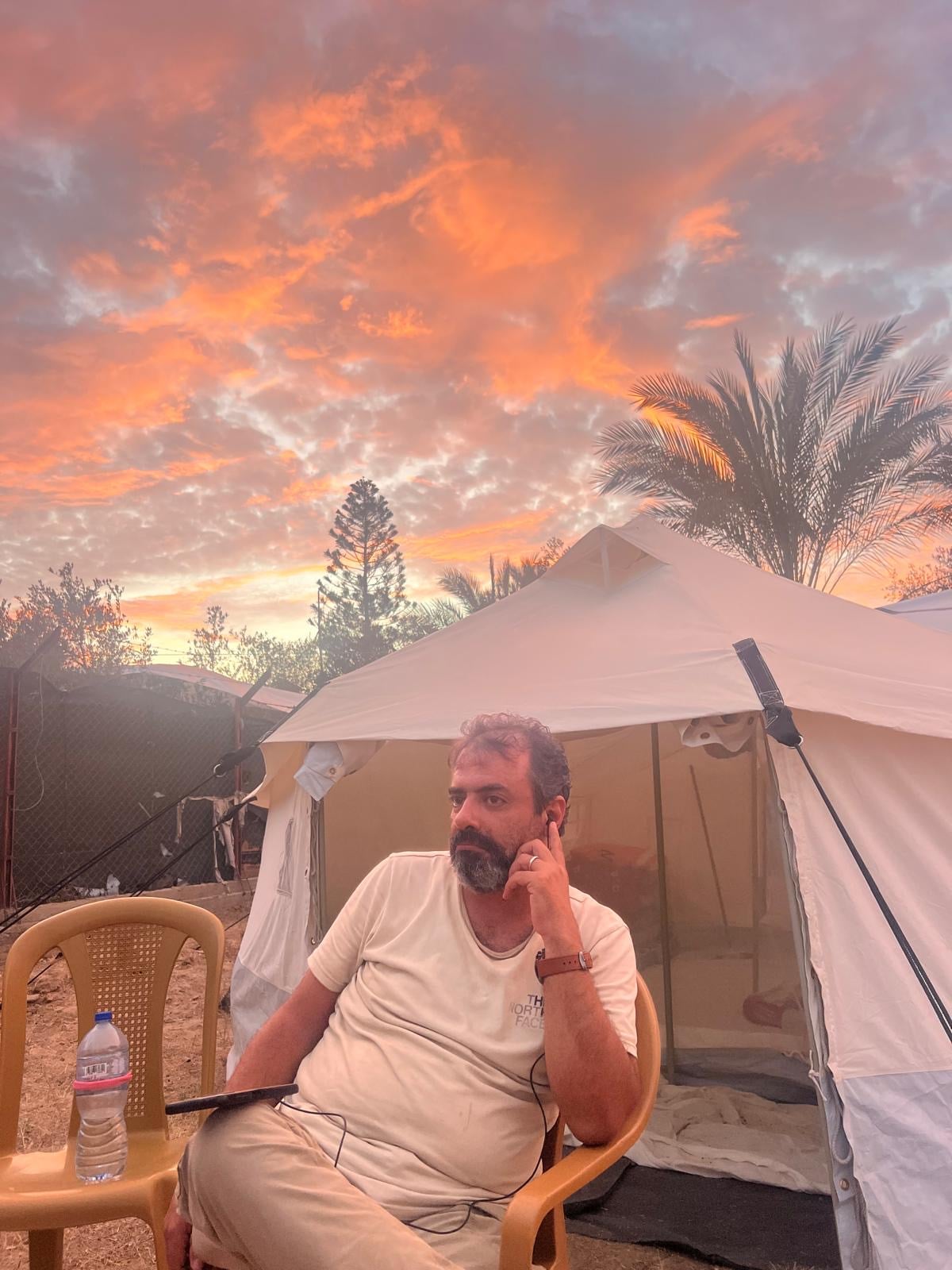
After six displacements, moving between Khan Yunis, Rafah, al-Mawasi, al-Zawayda, and Deir al-Balah and orbiting the Gaza Strip like a planet from place to place, from tent to disappointment… we reached Gaza. I was stunned beyond shock: I saw everything in Gaza, yet didn’t see Gaza!
The windows of the house were missing only the windows. Through what remained of them, I stood stunned, facing hills, plains, and mountains of garbage, rubble, and living beings still walking, though war had broken their backs and stolen their future. No windows, no glass, no streets, no hospitals, no infrastructure, no schools—only the skeletal shells of towers and buildings, decaying under the weight of time and bombardment. Some sleep inside what’s left of their ribcage homes, others in flimsy tents on the edges of roads. From one shattered window, I think about my children, Khaled and Carmen, my wife Amani, and the bitter taste of displacement we’ve endured.
Tonight, we sleep in a patch of tents where, just to keep things light, we’d scribbled “Here’s the bathroom” on a flap, one of many makeshift signs. You walk into the open night carrying fear like a second skin, swatting at bugs that bite at midnight, dodging drones and rotors overhead, while stray dogs answer nature’s call in nature and on nature. I’m not sure if they’re keeping us company or we’re keeping them entertained, or maybe by now, we’ve just all gotten used to each other. We discovered rare insects, ones I’m sure National Geographic hasn’t yet documented!
From another shattered window I see burned apartments, inhabited now by charcoal and rats. There used to be life in each one of them. The homes are gone, Gaza is gone, life itself feels gone.
Walking into our home felt like crossing a historic threshold. After we had already given up the hope to ever return to the north. We, all four of us, Akram, Amani, Khaled, and Carmen, shouted in disbelief, “Our home!”
The tanks had torn up the walls, ripped off the front doors, flattened part of the garden, and left scars across the building’s face. Amani climbed the stairs in tears. We followed on foot. I couldn’t hold myself together. I disguised my tears as laughter, shouting uncontrollably, “Our home!” I kissed the walls, hugged the doorframes. We explored the house like strangers visiting a museum, as if seeing it for the very first time.
We opened drawers and closets, crying out: “That’s my blouse! That’s my bed! That’s our room! That’s our bathroom!” We were like strange creatures reacquainting ourselves with a TV, a fridge, a washing machine—even though there was no electricity. It was surreal and beautiful. For 500 days, we hadn’t seen a home, not just any home, but ours. And not just ours, but our homeland. Because home is the nation, and the nation is home. A discovery made too late, after the body was broken, the cities destroyed, and war carved wounds into the soul that won’t fade. You realize your homeland is your family, your friends, your house, your bathroom, your bed, your kitchen, your independence, your privacy, your keychain… The rest of the map is just background noise.
What happened to us and what continues to happen in Gaza is nearly beyond belief. It defies reason and exceeds what any human should be expected to endure. We’ve lost everything: our sense of self, our lives, our belongings, even Gaza itself. Every day, I search for the person I used to be, but I can’t find him.
And as Mahmoud Darwish did not say: “Since the tragedy began, Akram has become a different man.”
I used to laugh all the time, everyone could see it, and I was always the one ready to explode, though only Akram ever really saw it.
Let me confess: I miss grilled chicken breast, the embrace of a lamb chop or rib, kissing the golden skin of a stuffed roast chicken. I miss the wink of a grilled fish under a sprinkle of parsley, crashing a wedding, dancing at my neighbor’s son’s celebration—he died before grief could claim him. I miss a family feast of falafel and fries, a graduation party for my friend’s child who’s still buried under the rubble.
And most of all, I miss myself.
I’ve been wounded deeply, brutally, in both my present and whatever future I still pretend to imagine. Just like two million Gazans crushed by panic, grief, loss, oppression, and a total disorientation of what it means to belong, just like every Palestinian adrift in Ramallah, in Jerusalem, inside the borders and out. We belong to Gaza, to the West Bank, to Haifa, Jaffa, and all of Palestine, and we are still searching: for a country, for a name, for independence, for freedom, for something as basic as the right to self-determination.
Gaza’s memory won’t fade; it clings like smoke. It’s not just painful, it’s permanent. A memory soaked in blood that devours both the short and the long term. We Palestinians carry a third kind of memory: the hard kind. The kind made of pain and of hope. And that memory won’t die. It will remain, stubborn and searing, a witness and a martyr to the dream of freedom and the end of this endless occupation. We are a people who deserve to see our dreams come true, after swallowing every nightmare imaginable. But our journey isn’t done yet. Even as I write this, Gaza, my family, and I are bracing for another displacement, southward, again, into the unknown. And like every night of hunger, our little Carmen prepares a feast: lavish, mouthwatering, imagined.
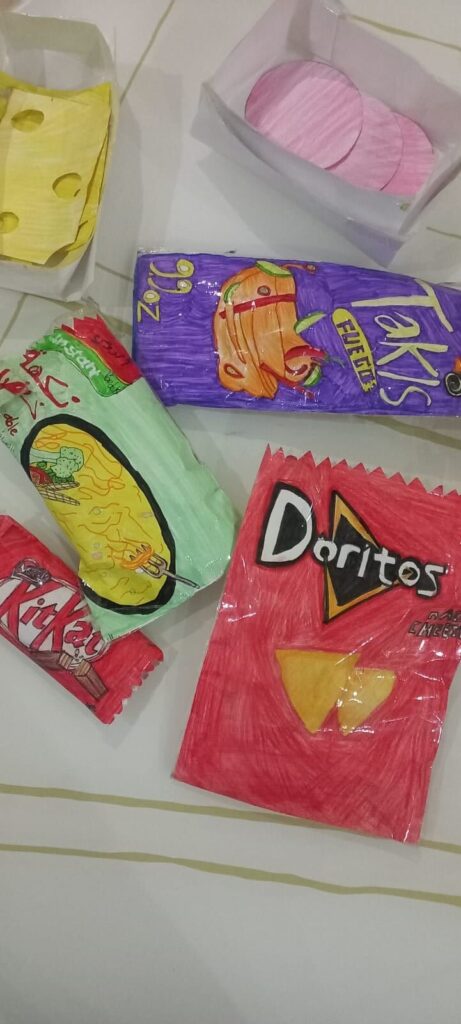
The war has assassinated flavor, murdered speech, but Carmen, with her gentle little brush, insists on slaying us with sweetness. She draws paper meals, elegant, delicious illusions. And as always, we gather late at night to play our favorite game: the game of eating by imagination. And so here we are: chewing on fantasy, devouring our dreams.
The story continues… if there’s still anything left in the mind or the bones to keep it going. And if not—write this on your walls: “Akram loved life, and building hope, and spreading joy… but he died of grief.”