2025-26 Free Expression Advocacy Fellows | Conversations on the Quad
This year, PEN America’s Campus Free Expression Advocacy Fellows educated their peers, opened doors for accessibility, hosted conversations on campus, and demonstrated how student leaders can serve as powerful translators and catalysts for free expression programming on their own campuses. Their projects ranged from research on shared governance at the University of Virginia and accessibility for Deaf and hard of hearing students at the University of Memphis, to archival work on student protest and Black Studies at Georgia State University and civil discourse programming at The Ohio State University. Together, the fellows produced reports, essays, panels, workshops, presentations, and surveys that helped students connect free speech and academic freedom to the issues shaping their campus communities.
PEN America’s Campus Free Expression Advocacy Fellowship is rooted in the idea that a robust culture for free speech on campus must include students, whose movement across classrooms, residence halls, student organizations, campus media, and informal peer spaces gives them unique insight into how controversies unfold, what institutional decisions are misunderstood, and where there are accessibility issues that may be invisible. Over the course of the year-long fellowship program, selected undergraduate students receive funding for projects, mentorship from PEN staff, and support from the cohort of fellows as they design and carry out campus-based projects that advance free expression and academic freedom on their campuses.
For this latest entry in PEN America’s Conversations on the Quad blog series, we spoke with our 2025–2026 Fellows to hear what they achieved, what they learned, and what lasting impact they hope their work will have.
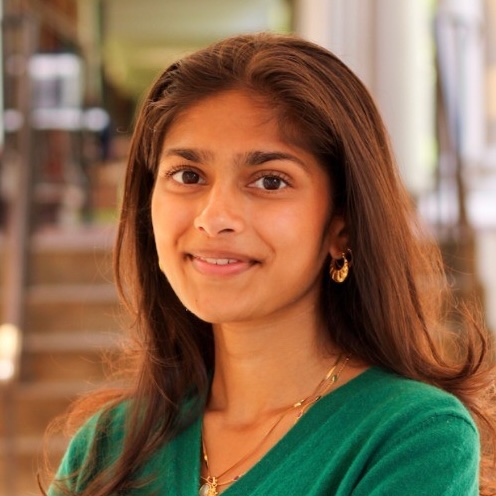
Laasya Gadiyaram
“If the only barrier between my campus community and making change is accessibility, then I want to help make things accessible.”
At the University of Virginia (UVA), Laasya Gadiyaram, a fourth-year English major, used her fellowship to examine UVA’s response to federal and state pressures. The university was undergoing investigations by the Department of Justice (DOJ) into its diversity, equity, and inclusion policies, and its president, Jim Ryan, resigned after the Trump administration demanded that he step aside. The tumult led to growing tensions between the Board of Visitors and the university community.
From her own conversations with peers, Laasya understood that many students were struggling to digest these events, both on campus and within the larger political context. Through a long-form research report, a forthcoming op-ed pitched to her student newspaper, and a conference presentation to the United States Student Association (USSA), her goal was to provide clarity and context so that students could form their own opinions and advocate for shared governance and increased transparency in university decision making.
“I applied to this fellowship with the hopes of finding resources for me to parse through my own complicated feelings about what was happening at my university,” she told us, “while also empowering other students to feel more aware and more confident when forming their opinions about what’s going on around them.”
Laasya’s report traced UVA’s founding commitment to student self-governance, compiled a timeline of UVA’s interactions with the Trump administration and DOJ, and examined stakeholders including the Board of Visitors, state officials, faculty governance bodies, student organizers, and alumni groups. She also interviewed student leaders and faculty to document the year’s “human impact.” One student leader told her, “Reading [Ryan’s resignation] letter was really devastating… I had never really expected an event like this to occur at UVA… It seemed like it had become political, which I feel like higher education should never become political.” A faculty member also shared, “There’s no distribution of decision making, it’s a concentration and an imposition, and that makes any kind of shared governance kind of puppetry.”
Laasya developed those findings into a forthcoming op-ed calling for UVA to repair trust through meaningful shared governance by involving students and faculty more fully in consequential decisions, communicating clearly, and moving beyond “half-hearted attempts” at listening. Laasya presented her research and recommendations at USSA’s National Grassroots Legislative Conference where she used UVA as a case study to outline strategies for student advocates, including identifying allies, lobbying for collective bargaining, and organizing for transparency and accountability.
Laasya’s work translated her research into tools that other students could use to understand institutional decision-making, identify allies, and advocate for shared governance. As she prepares for graduate study in English, she hopes the work will continue to help UVA students see academic freedom not as an abstract principle, but as part of the everyday conditions that make learning and participation possible. “I learned that free expression is an issue that is an undercurrent of every other issue that I interact with every day,” she reflected.
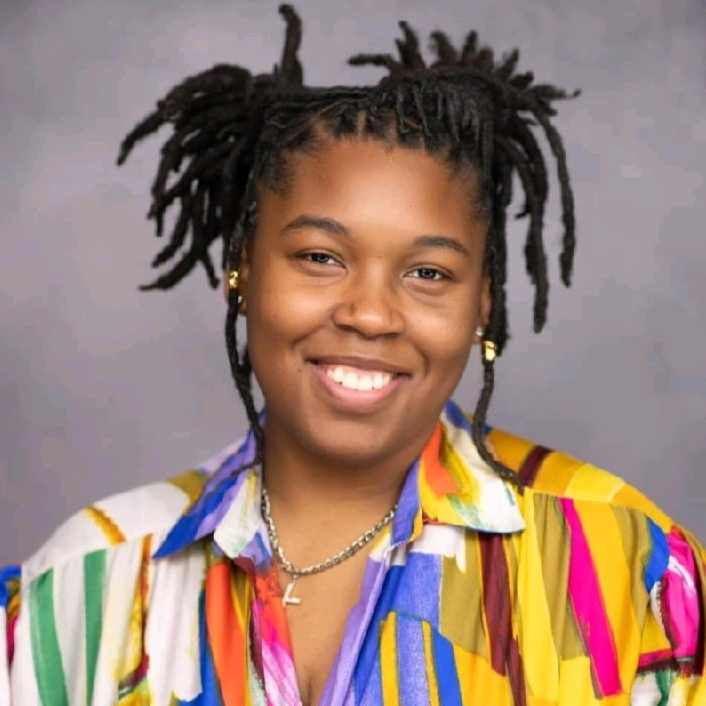
Kaya Phillips
“This has been the first time that I could be Deaf freely.”
For Kaya Phillips, a fourth-year American Sign Language (ASL) and Deaf Studies major at the University of Memphis, the fellowship offered a rare professional space where her lived experience was not only welcomed, but treated as essential to the work.
Kaya explored freedom of expression through an accessibility lens, focusing on Deaf and hard of hearing students. As a Black Deaf woman, student advocate, and future doctoral student, Kaya joined the fellowship knowing how often Deaf people are absent from conversations about campus speech and advocacy. “When I saw this opportunity come about, I realized the amount of times that Deaf people have not been in spaces such as this one,” she told us.
Her interest in this question was shaped by her own experience trying to participate in campus speech and protest. When a controversial speaker came to the University of Memphis, Kaya needed to request an interpreter on short notice in order to participate fully in the student response. “I can’t truly make a difference if I don’t hear or understand everything that’s happening around me,” she told us. “It’s like I made it to the room, but I’m still missing out.” That experience helped crystallize the question at the center of her fellowship: Do Deaf and hard of hearing students have meaningful access to free expression on campus?
To explore that question, Kaya developed research questions informed by PEN America’s Campus Free Speech Guide, conducted targeted outreach, created ASL video content, hosted a campus event on free expression and accessibility, and visited Gallaudet University to speak with Deaf and hard of hearing students about free expression and academic freedom. Across these efforts, Kaya estimates reaching more than 150 students, faculty, interpreters, and community members.
Kaya also gathered responses from Deaf and hard of hearing students and recent alumni about their comfort expressing opinions, access to campus events and dialogue, classroom participation, protest and advocacy, and communication barriers. She identified one common thread: Freedom of expression must include the ability to be understood, taken seriously, and communicate in one’s preferred language.
Kaya wrote two forthcoming op-eds and hosted a campus event on free expression and accessibility for students, Disability Resources staff, and interpreters. The op-eds translate her research into a public call for colleges and universities to treat access not as optional or merely as an accommodation, but as the foundation for free expression and education. In one piece submitted to The Daily Helmsman, Kaya argues that “Access is not a privilege. It is a right.” In another, she makes the stakes even more plain: “When access is missing, so are we.”
As Kaya prepares to begin her doctoral program in audiology, she plans to continue developing this research, pursue publication of her findings, and build on the campus and community relationships she formed through the fellowship. Her project reminds us that free expression depends not only on whether students are allowed to speak, but also on whether they can access, understand, and respond to the conversations unfolding around them.
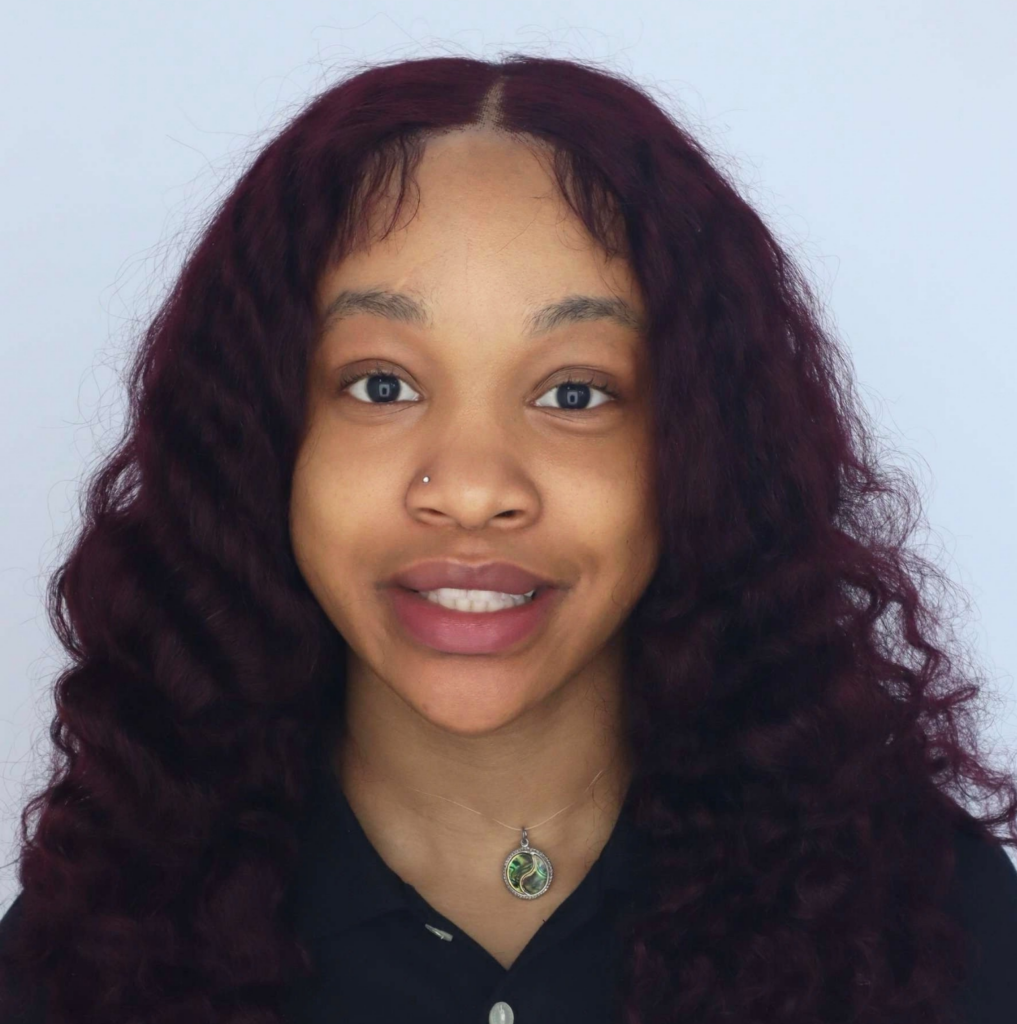
Reginis Kelley
“With so much censorship going on right now, I just think that it’s so important to be against forgetting.”
At Georgia State University, Reginis Kelley, a second-year journalism major with a media and society concentration, took advantage of the fellowship to investigate the relationship between free expression, historical memory, and student activism. Her project combined archival research,review of student and local newspaper coverage, and interviews with people who were present during the 1992 Georgia State student sit-ins. Through that research, Reginis uncovered the history of the protests that helped lead to the university’s African American Studies Department, now the Department of Africana Studies. For Reginis, that history showed how student expression, protest, and collective memory can help shape what a university becomes.
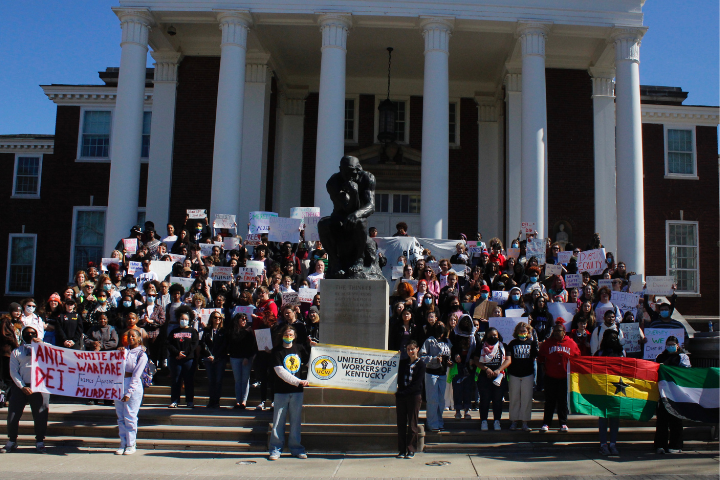
Reginis’ project centered on the idea that campus archives can help students make sense of the present. At the Georgia State University Research Conference, Reginis presented a reconstructed protest timeline to a room of students and faculty. She showed how in 1992, after an African American Studies minor was approved, students discovered a trashcan vandalized by a fraternity member with a racial slur, inspiring dozens to participate in an eight-hour protest in the president’s office and a 12-hour sit-in outside Sparks Hall. Students called for the university to investigate prior incidents, protect marginalized students, grant amnesty to protesters, and, most centrally, establish an African American Studies department.
Reginis also shared this research with Georgia State’s chapter of the National Association of Black Journalists through a creative workshop that asked students to connect the 1992 sit-ins to current debates over campus speech, hateful expression, and educational censorship. Drawing from PEN America’s Campus Free Speech Guide, she discussed how universities can respond to hateful speech through counter-messaging, support for affected students, open dialogue, and education, rather than suppression. She also introduced students to recent efforts to restrict or reshape what can be taught, funded, or supported in higher education. Reginis then led a “blackout poetry” activity, in which participants selected words or phrases from archival articles about the sit-ins and blacked out the rest, creating new poems from the historical record. In a post-event survey, one attendee said the session made them “appreciate [their] position more and understand [their] privilege,” while another said learning about the sit-in activists made them “proud that we can come together to fight against things that are wrong.”
Reginis also developed these ideas in a forthcoming op-ed pitched to The Signal, Georgia State’s student newspaper, where she framed the 1992 sit-ins as campus free speech in action. The students, she argued, were not simply responding to a single hateful incident; they were using protest to demand that the university answer for a broader pattern of exclusion and neglect. Their civil disobedience helped turn grievance into institutional change, contributing to the creation of the African American Studies Department.
To extend the life of the project, Reginis also donated her presentation slides and a reflective essay documenting her research process, interviews, findings, and connections to contemporary debates over free expression and educational censorship to the Georgia State University Library Special Collections & Archives. By contributing her work to the library, she made her own project available for future research, display, educational use, and public access.
For Reginis, the archives are not just a repository for the past, they are a key for sustaining the memories of campus free speech across generations. She reflected to us, “Free expression can also be the conversations you have with artifacts”. At the same time, she emphasized that students should not get so bogged down in history that they treat institutions as fixed: “I think it’s important not to treat the university like a monument or statue when it can definitely be changed.”
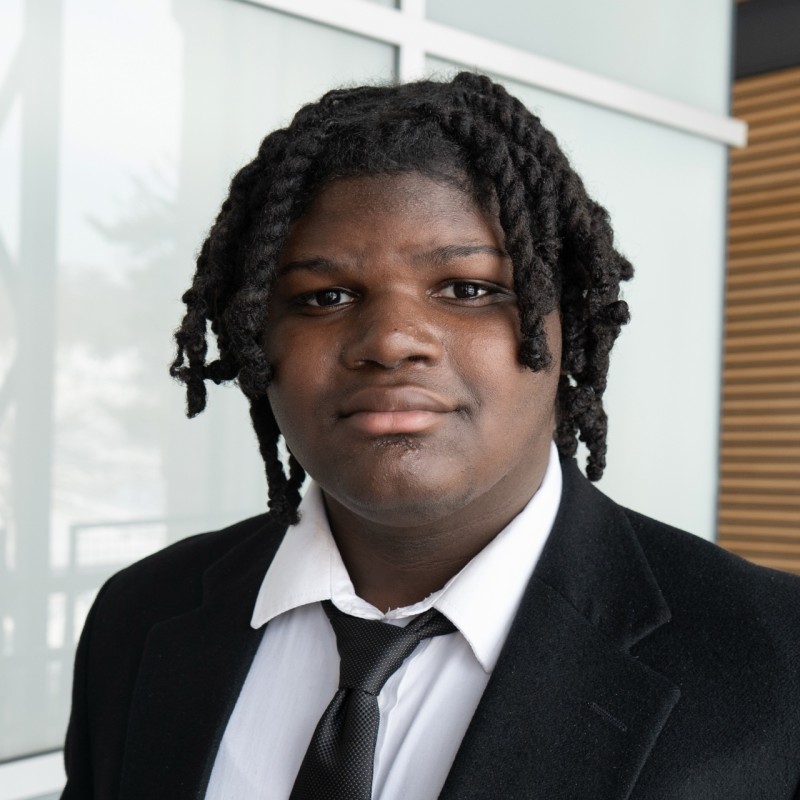
Myles Riggins
“Civil discourse is a means of resistance to the chilling effect that we experience on campus.”
At The Ohio State University (OSU), Myles Riggins, a second-year public management, leadership, and policy major, entered the fellowship with a new student organization already underway. Alongside his peers last year, he had helped launch the Civil Discourse Society, a group designed to create space for students to talk across political, ideological, and experiential differences. The fellowship gave Myles an opportunity to sharpen the organization’s free expression focus, build out more ambitious programming, and respond to conditions that he believed were making open dialogue more difficult on campus.
Myles’s project grew out of what he described as a chilling effect at Ohio State. He pointed to several free expression concerns, including the university’s ban on chalking, changes connected to the university’s overcompliance with Ohio S. B. 1, and broader administrative responses to state and federal pressure. These developments shaped whether students and faculty felt free to speak, teach, organize, and express themselves. In that climate, Myles saw civil discourse not as a retreat from conflict, but as a way to insist on having difficult conversations anyway.
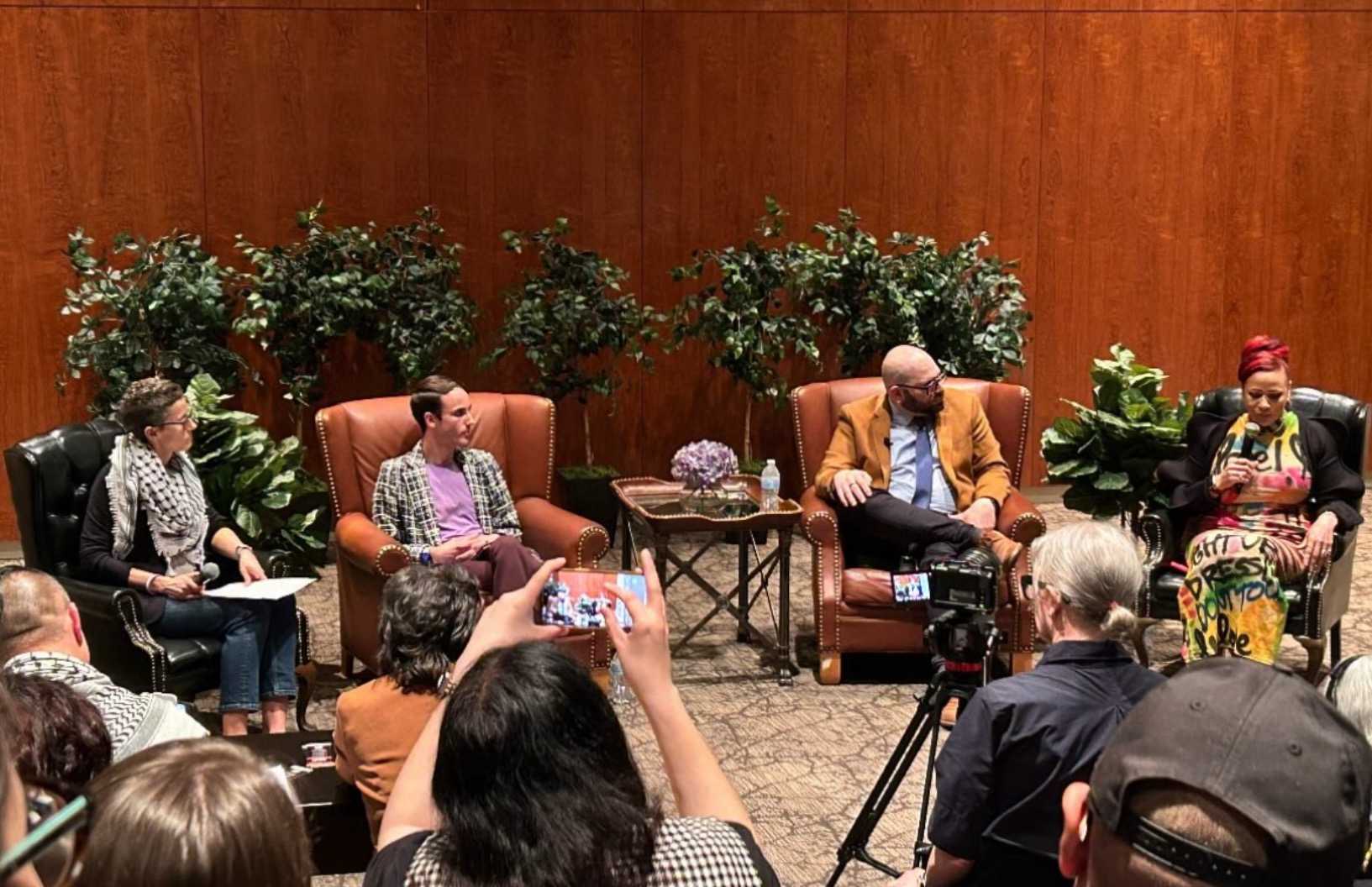
Through the Civil Discourse Society, Myles organized two major programs. The first was a panel on freedom of expression featuring PEN America’s Clare Carter, State Representative Dontavius Jarrelsl, Professor Pranav Jani of Ohio State American Association of University Professors, and Rachel Coyle of Honesty for Ohio Education. The second program, “Bridging the Gaps,” invited students to discuss contested topics including gun rights, abortion, immigration, and artificial intelligence. Rather than avoiding disagreement, the event asked students to engage it directly. As Myles explained, “speaking on controversial and not often agreed upon things is a way to not only strengthen your own viewpoints but to change your viewpoints and grow as a person.”
The impact was visible in the conversations students had with one another. At “Bridging the Gaps,” Myles recalled one exchange between two students with opposing views on gun policy. They did not leave in agreement, but did leave with a clearer understanding of each other’s perspectives. That outcome reflected the purpose of the Civil Discourse Society, which is not to force consensus, but to help students practice listening, questioning, and speaking across difference.
Both major events drew dozens of students, and the Civil Discourse Society’s broader reach grew through regular meetings and outreach. The fellowship also helped Myles and his peers move the organization from its early start-up phase into a more stable campus presence, with a clearer identity and stronger programming model. This led to a major institutional opportunity: OSU’s Center for Ethics and Human Values formally invited the group to operate under its sponsorship beginning in fall 2026, giving the group access to additional support, funding, visibility, and resources.
The fellowship strengthened both the organization and Myles’ leadership. “My ability to organize and execute large scale events has improved significantly due to this fellowship,” he reflected. As he continues with the Civil Discourse Society, Myles hopes to build on the group’s momentum, expand its collaborations, and create a lasting forum for dialogue at Ohio State.
The work of Laasya, Kaya, Reginis, and Myles shows that there is no single roadmap or formula for effective free expression advocacy on campus. Student leaders have room to mobilize in their own ways, drawing on their talents, interests, and lived experiences to move the needle on local issues in ways that resonate with their peers and campus communities. At PEN America, we are excited to share their stories in the hope that they inspire new models for student leadership across campuses. Students interested in getting involved with PEN America’s campus free expression work can check PEN America’s Opportunities page regularly for updates; more information about the next fellowship cycle is expected to be posted next month.