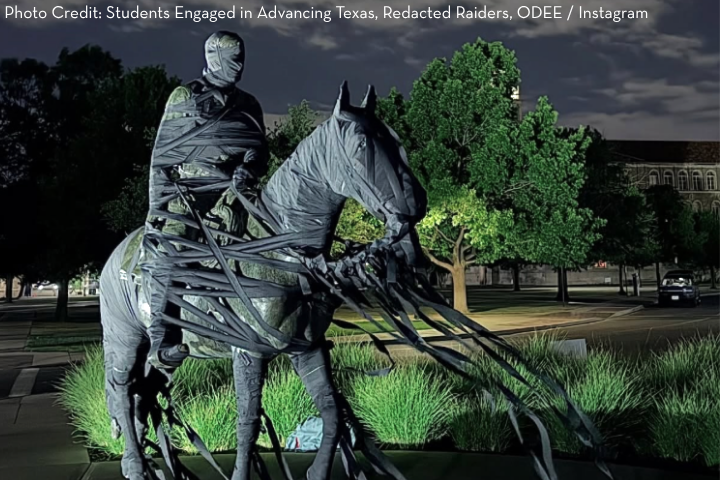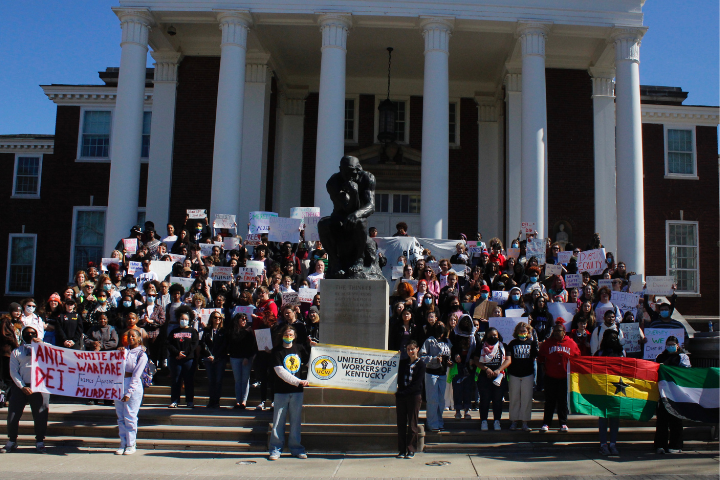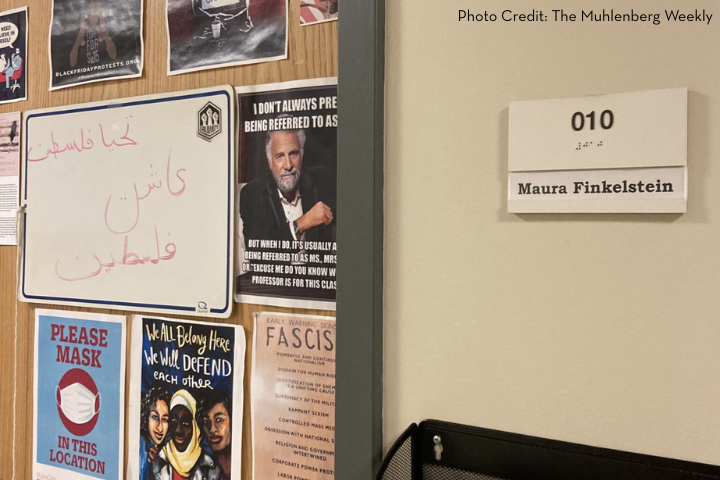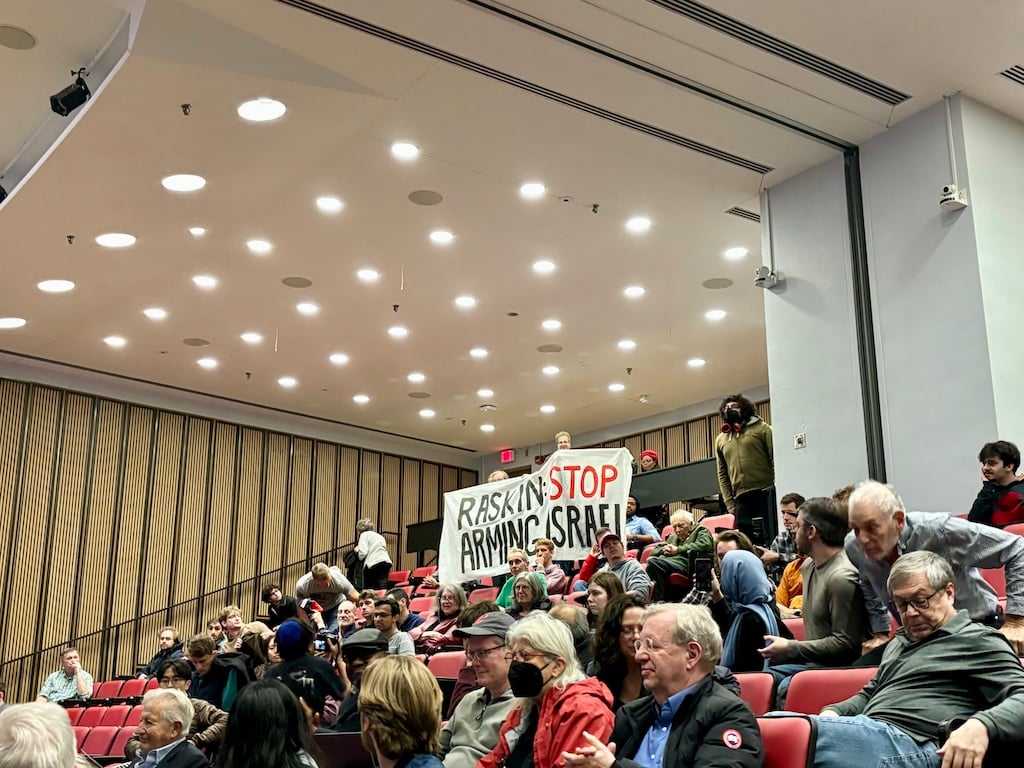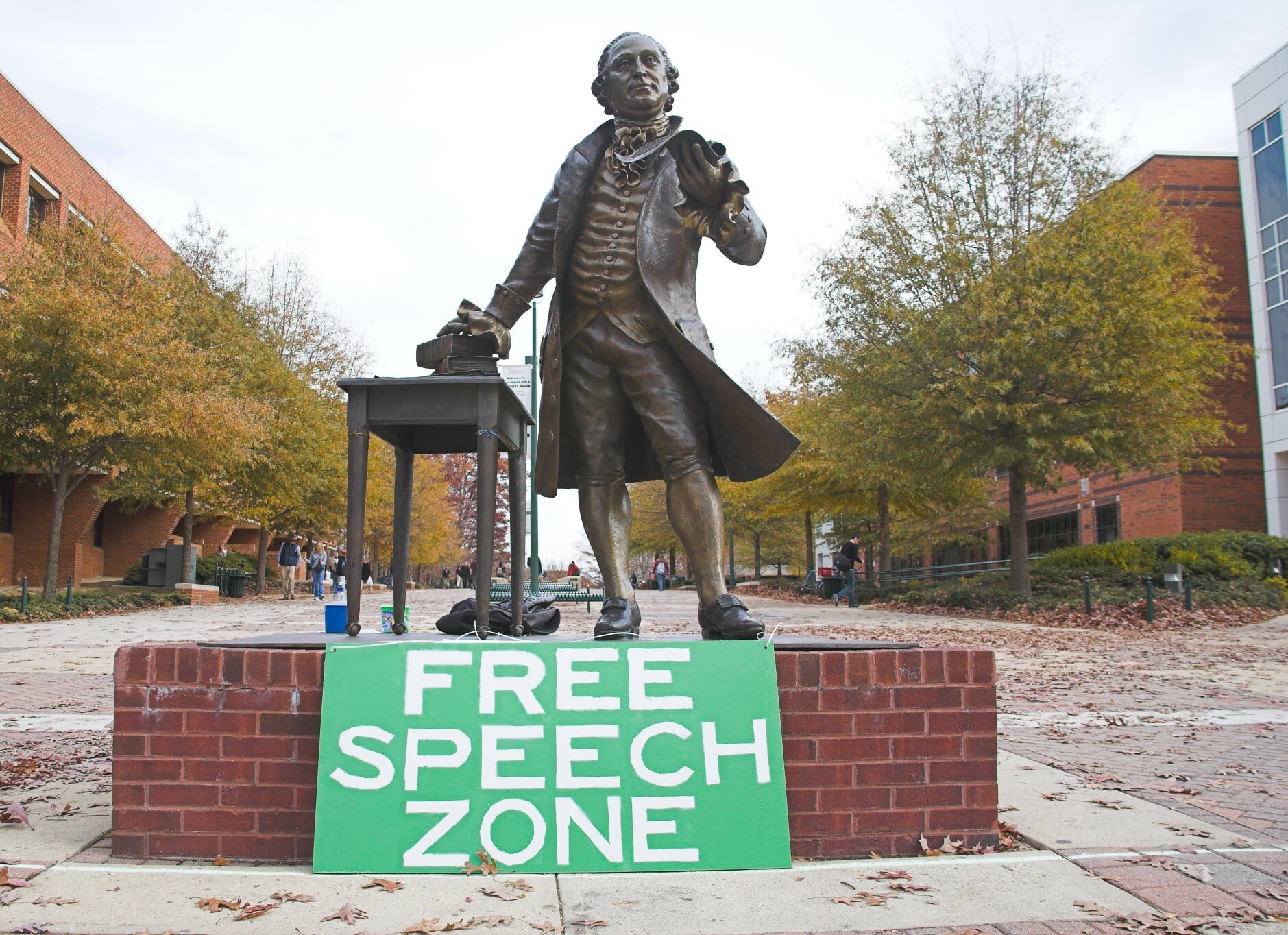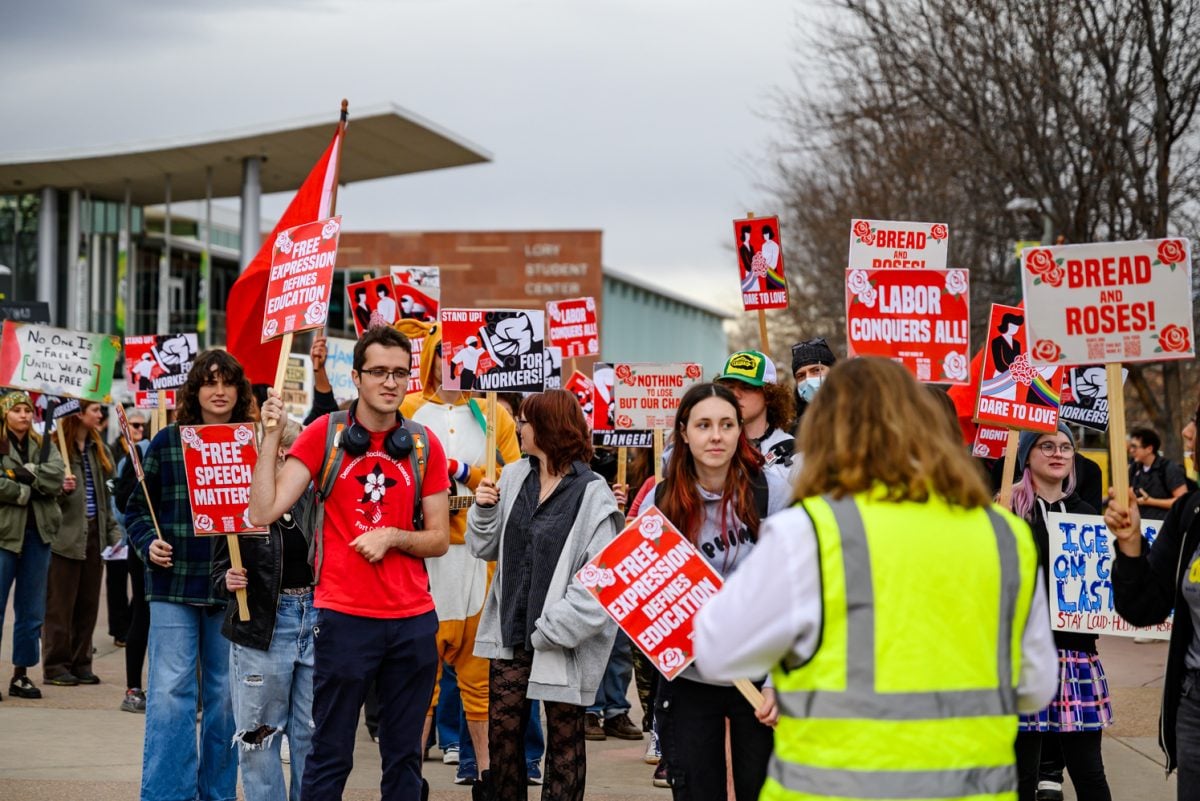
At PEN America, we’re paying attention to the ways in which an increased sense of being watched is affecting freedom of expression and academic freedom, contributing to a chilled campus where suspicion and anxiety are running at high levels. Surveillance technologies like security cameras are increasing on campus. New legal pathways have been created for students to report faculty behavior. And the threat of a picture or video of your class ending up on social media is ever looming.
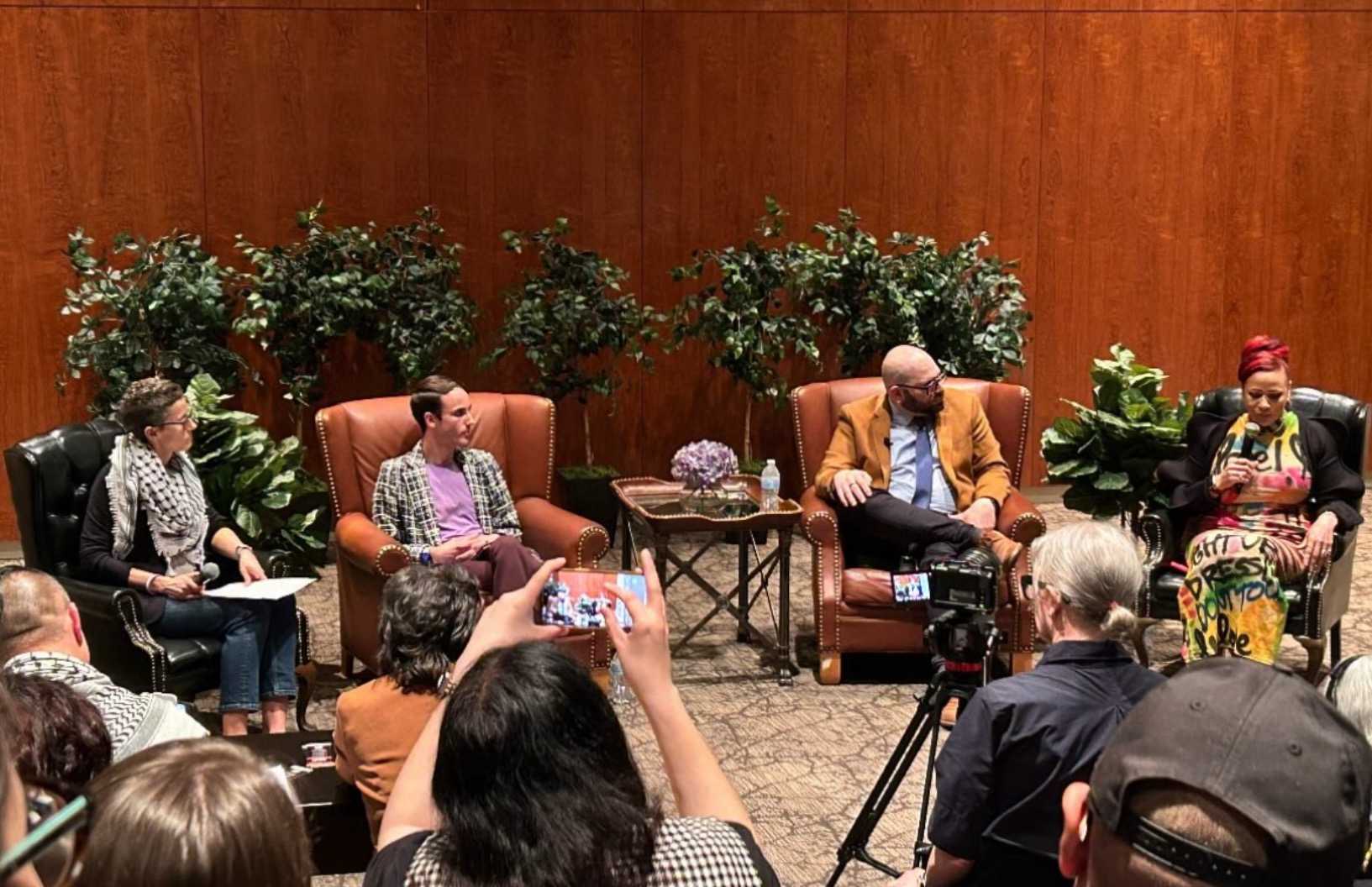
We joined forces with the University of California Center for Free Speech and Civic Engagement on a two-part panel series. The first webinar of the series, Surveillance on the Quad: Privacy, Safety, and Protest, ran on April 16, 2026, moderated by Michelle Deutchman, Executive director of the UC National Center, and featuring the following panelists:
- Lisa Loveall, Director, Office of Open Expression Programs at Emory University
- Lindsay Weinberg, Founding Director, Tech Justice Lab at Purdue University
- Nathan Freed Wessler, Deputy Director, ACLU’s Speech, Privacy, and Technology Project
Here’s what we learned.
Surveillance concerns on campuses reach back well before the advent of generative AI or October 7, 2023, but campus policy doesn’t always keep up with rapid changes in technology.
While security camera footage, facial recognition, and social media screening may feel intensely relevant following the 2023-2024 encampment movement, protest surveillance technology is not remotely new. Weinberg traced the history of protest surveillance technology back to the advent of campus police forces during the 1960s anti-war and civil rights movements, through 9/11 and its impact on international student privacy, to the Occupy and Black Lives Matter protests of the 2010s.
Surveillance doesn’t always look like cameras, though; data like ID card swipes to access buildings or wifi connection points on campus can also be used to track location and have unforeseen consequences.
“Only data that exists can be subject to abuse, right?” argued Wessler. “So one of the very important questions before you even get to the law is how much data is being gathered, how long is it being stored, and is it really necessary to be storing it?” He shared that interpretations of the Fourth Amendment are murkier when it comes to requests for data like card swipes, so it’s up to colleges and universities to establish clear policy for how data is stored, and under what circumstances an institution will comply with requests for data from law enforcement or immigration authorities.
Increased surveillance is directly affecting student expression on campus.
According to Weinberg, because the goal of surveillance technology is to monitor for potential threats, the presence of these technologies can give the sense that nonviolent protests are actually dangerous events. This paves the way for an increase in time, place, and manner restrictions, which can significantly constrain when and how protests can happen, often in ways that reduce their visibility and impact.
Loveall continued, pointing out that complications arise when policies are created or updated without a structure in place to implement them and adequately educate the community. When policies around data collection are not transparent or are carried out inconsistently, it can cause confusion and nervousness, discouraging expressive activity on campus.
At the same time, Loveall said that she also hears requests from students to increase the use of surveillance in order to hold others accountable to university policy. While she appreciates that policy needs to be upheld, she holds that in tension with the risks that needlessly increasing surveillance could have on individual privacy and community expression.
Increased surveillance does not necessarily lead to increased safety, but that doesn’t mean that the concept of safety won’t be used to argue for infringements on privacy or expressive freedoms.
The panelists repeatedly pointed to the tension between safety and privacy that undergirds decisions around campus surveillance and its related impacts on free expression.
Responding to an audience question about the calls for an increase in security cameras that followed the December 2025 shooting at Brown University, Weinberg pointed out that the efficacy of mass systems of surveillance is not well established in scholarship. Wessler added, “someone who’s really motivated doesn’t care whether there are five or 25 cameras in that corner of campus,” pointing instead to the proactive measures campuses can take to better insulate against violence, like robust mental health services on campus and active shooter drills.
“Concerns about safety can also be cynically weaponized to justify the curtailment of freedom of expression,” said Weinberg. “I think it’s important to just know that this is a rhetorical strategy or a tactic that’s used in a number of campus contexts in ways that are quite detrimental.”
Campuses must own their responsibility in balancing security and convenience with privacy.
“Almost nowhere has the law caught up with the potential of these digital-age technologies,” said Wessler, “which means all of us have a role in pushing decision makers, whether it’s local legislators, university regents, or student or faculty senates for greater transparency, greater disclosure, and greater substantive rules to protect against unnecessary or dangerous data collection and retention.”
Panelists recommended that decision-making processes in higher education be democratized, to ensure that the varied risks and implications of a data collection decision are considered from a variety of viewpoints. When it comes to policies for how data is stored or shared, institutions should have clear and consistent guidelines on who can access data and under what circumstances. Loveall argued that administrators should not bend immediately to requests for increased surveillance from students without a clear understanding of all the ways that new data could be misused, and Wessler and Weinberg shone a light on the profit-driven motives of tech companies to leverage concerns for safety in order to encourage campuses to subscribe to their services.
Further Reading
Nathan Freed Wessler shared the ACLU’s open letter to college and university general counsels on responding to administrative subpoena requests.
Lindsey Weinberg’s book is Smart University: Student Surveillance in the Digital Age