Bess Wohl, Boni B. Alvarez, Amanda Gronich, and Małgorzata Sikorska-Miszczuk draw from stories of the Nazi era.
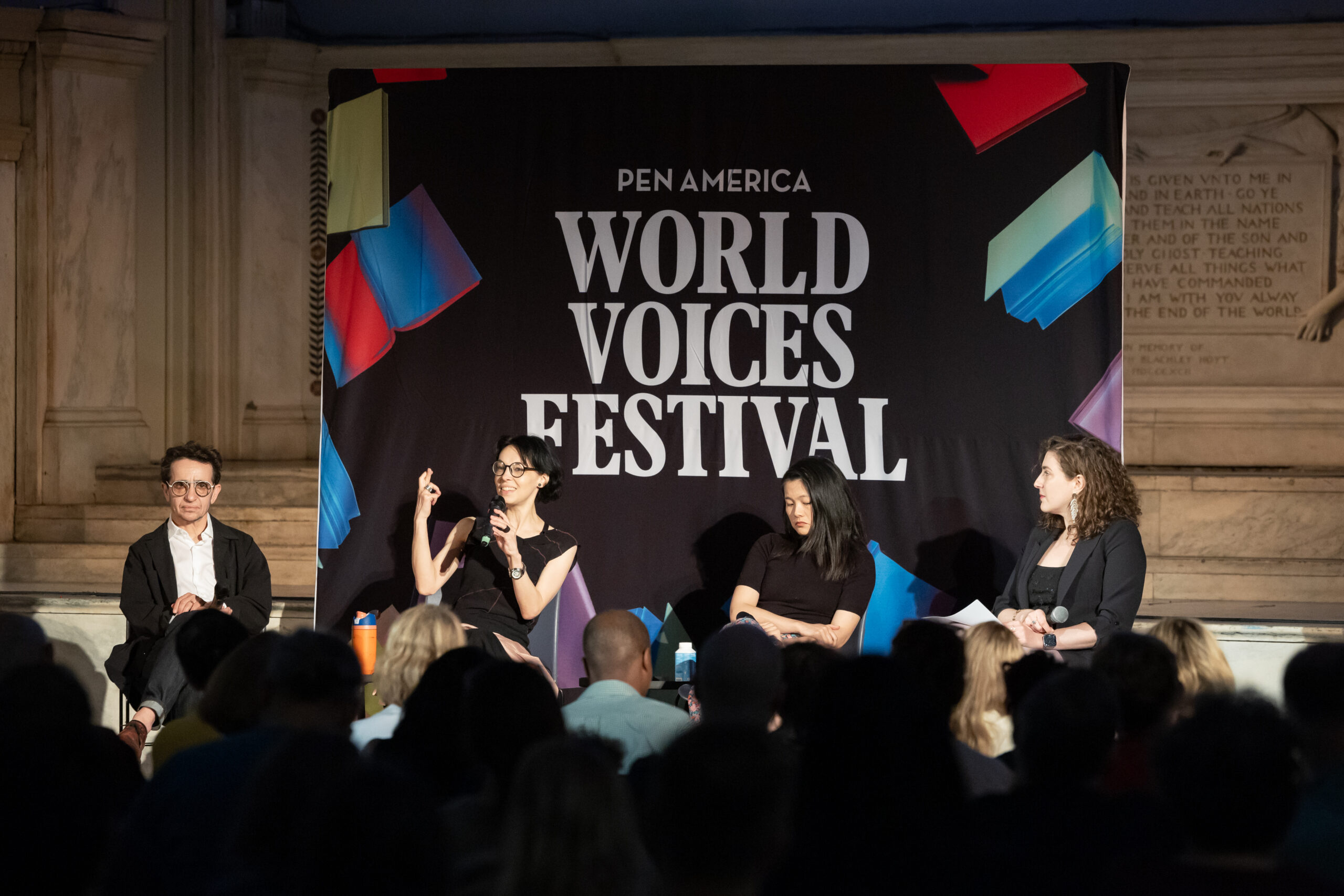
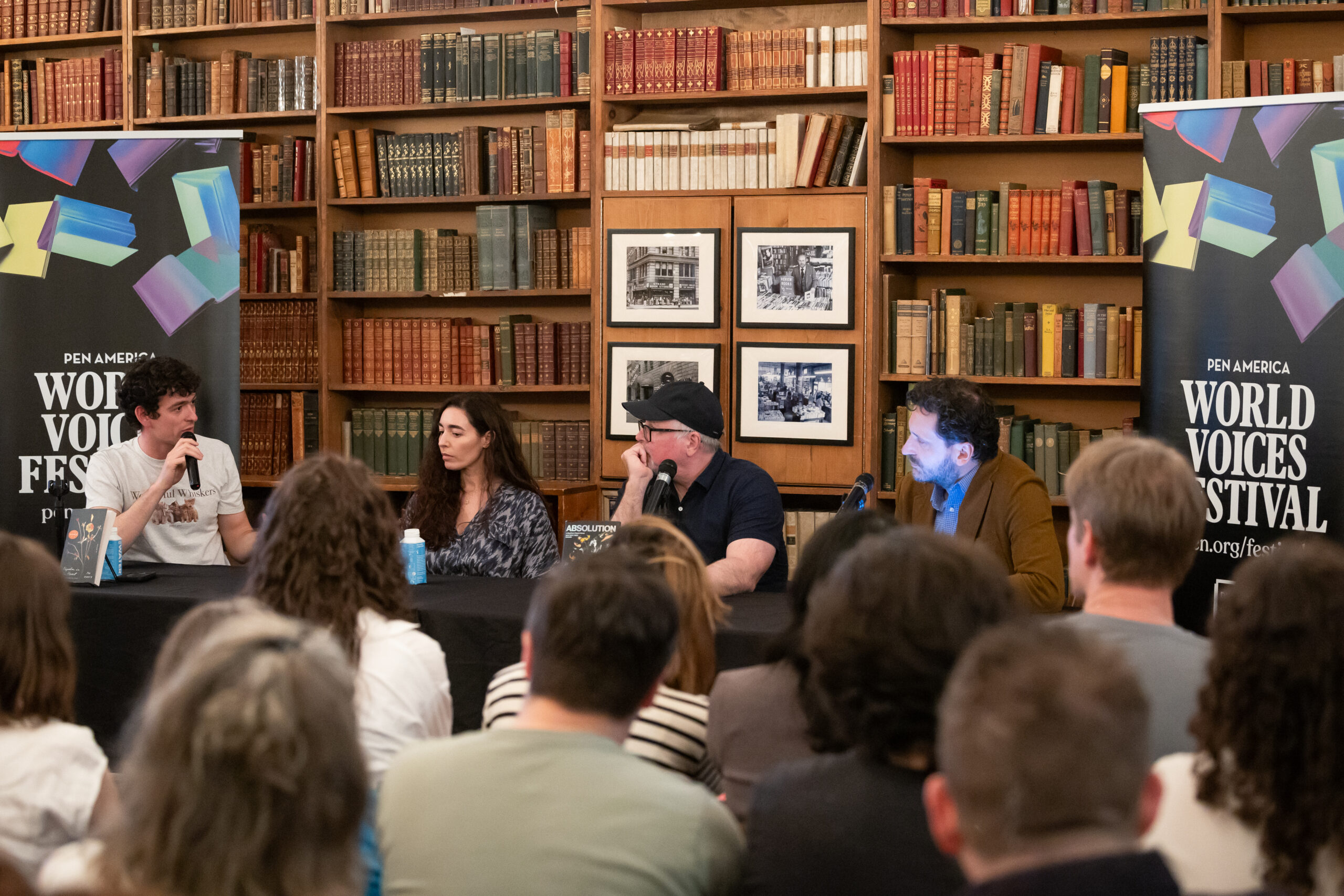
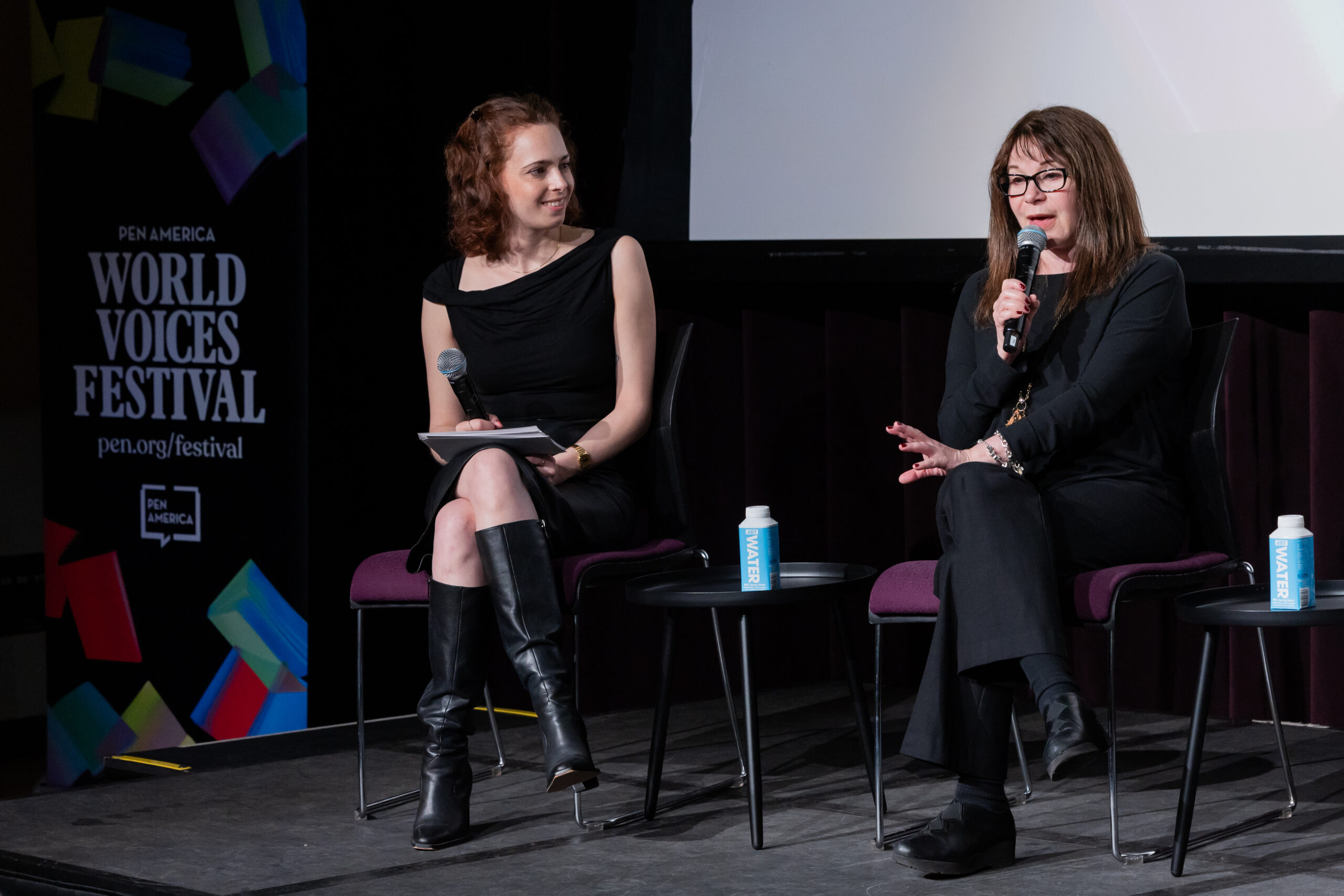
At the 2026 PEN World Voices Festival, the panel “The Ordinary and the Atrocious: Nazism in the Imagination of the Contemporary Playwright” brought together four writers whose plays approach World War II and the Holocaust from strikingly different angles. Moderated by playwright S. Dylan Zwickel, the conversation featured Bess Wohl, whose Camp Siegfried is set at a German American summer camp on Long Island; Boni B. Alvarez, whose Mix-Mix: The Filipino Adventures of a German Jewish Boy follows a Jewish child refugee in the Philippines; Amanda Gronich, whose Here There Are Blueberries builds from an album of photographs showing Auschwitz staff at leisure; and Małgorzata Sikorska-Miszczuk, whose work engages with Polish memory, complicity, and the afterlives of Nazi violence.
The panelists reflected on the stories and research that drew them to this history, the ethical challenge of portraying the humanity of the perpetrators rather than focusing on the evil they wrought, and the way live performance can make historical atrocity feel unnervingly present.
Why return to this history?
The discussion began with a deceptively simple question: given how extensively World War II has already been written about, why do artists keep coming back to it, and what made each writer choose the particular story they told? The answers revealed how often these works begin with a chance encounter, a family history, or an archival object that opens onto a much larger moral landscape.
Bess Wohl: “I started to research the history of the area, and lo and behold, there was this incredibly dark history in this seemingly bucolic, mundane area … I would just drive around the streets of Yaphank (Long Island where there had been a German American Summer Camp during the war) and think about all the things that had happened right where I was with my children.”
Amanda Gronich: “There was this album of photographs that no one had ever seen before in the Holocaust study community. … Here was something so stunning to me about looking at what are essentially the selfies of an SS officer. That’s what those pictures are. … So finding a quite literal new lens of how to look at it was enormously compelling.”
Małgorzata Sikorska-Miszczuk: “Poland is a country which is under the big shadow of what happened. … For me, literature is a kind of country. … It is my duty not to be distant from that kind of question.”
Boni B. Alvarez: “My play was actually a commission to be written about a real life Holocaust survivor who, when he was 8 years old, escaped Germany with his family to the Philippines … You escaped one war and then a few years later, there you are in the middle of another war.”
How do you write about perpetrators – Nazis in this case – without turning them into monsters?
One of the panel’s richest threads concerned the representation of perpetrators: whether understanding their motivations risks humanizing them too much, or whether refusing to understand them simply protects present-day audiences from recognizing their own vulnerabilities. Again and again, the panelists argued that reducing Nazis to inhuman monsters may be emotionally satisfying, but it blocks a deeper understanding of how atrocity becomes possible.
Gronich: “If you’re going to tell the story of the Nazis, it’s easy to turn them into sociopaths, psychopaths and monsters. Why motivation matters is because it’s intensely human. Were there a few psychopaths and monsters? Of course there were, but the vast majority of the body politic were not that. They were ordinary people .. Nobody wakes up and says, ‘I’m an evil monster. I’m gonna go do an evil, monstrous thing today.’ They wake up filled with their motivations for living their lives.”
Sikorska-Miszczuk: “It’s not about pointing out some people and saying, monster, psychopath. The main goal is to understand what made those people follow. They follow the social order to be a part of ideology, of the order they were born in. … Otherwise it’s like looking for a scapegoat.”
Wohl described in her play “this sort of idealized universe, and yet, right below the surface, there’s this simmering, horrible ideology that’s being promoted. … There was real abuse happening to those children, but under the guise of this beautiful, incredible camp experience; it kind of broke my brain to think about it … that it was all happening here in America, that there was actually a Hitler street on Long Island was very surprising to me, because there’s so much American mythology, especially around World War II, that positions us as the heroes. So I was interested in sort of complicating that narrative.”
What can theater do that other forms can’t?
Wohl: “I do think of theater as an exercise in empathy … and the actors are also artists whose toolbox is made of empathy. So I think to the extent that failures of empathy are part of what creates these horrible events in history, theater is a good sort of counterbalance, or presses against that in a way that I think is really useful, and that’s why I continue to make theater.”
Gronich: “It’s so dangerous because just as we create monsters on one side we create superheroes on the other side. I think it’s just as destructive in the storytelling of World War II to create superheroes, because there’s a continuum of complicity, complacency, and culpability, and every day we wake up in it. … It’s really messy and it’s really complicated.
Alvarez described how the attitude of the Holocaust survivor, whose story inspired Mix-Mix, inspired him to shape the play around resilience, intentionality, and the sustaining force of storytelling under conditions of war. “He’s very aware that he lives on borrowed time. So he’s very intentional with his life, and all of his daughters are too. So that’s something that I kind of took away from all the research that I did and time spent with the family.”