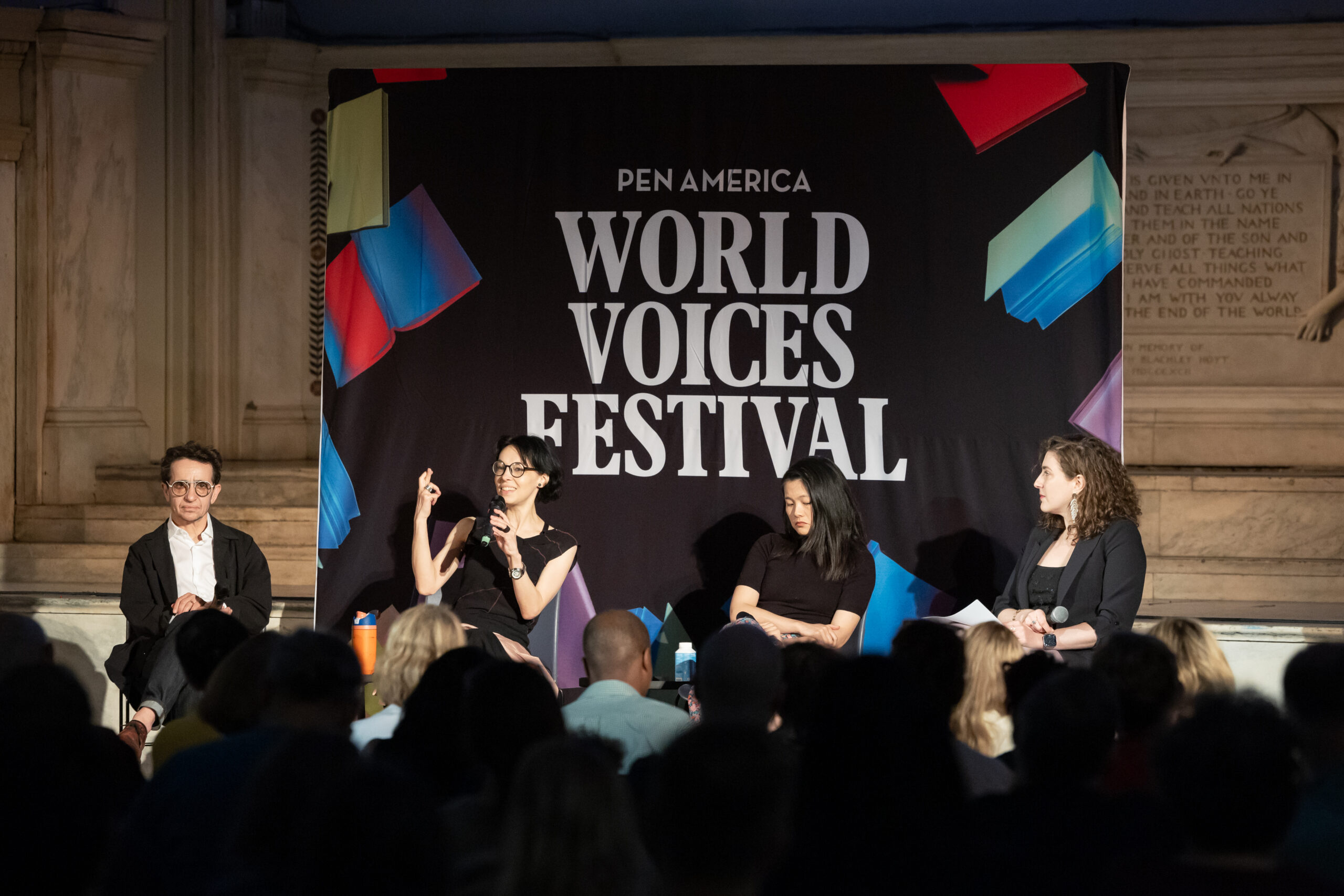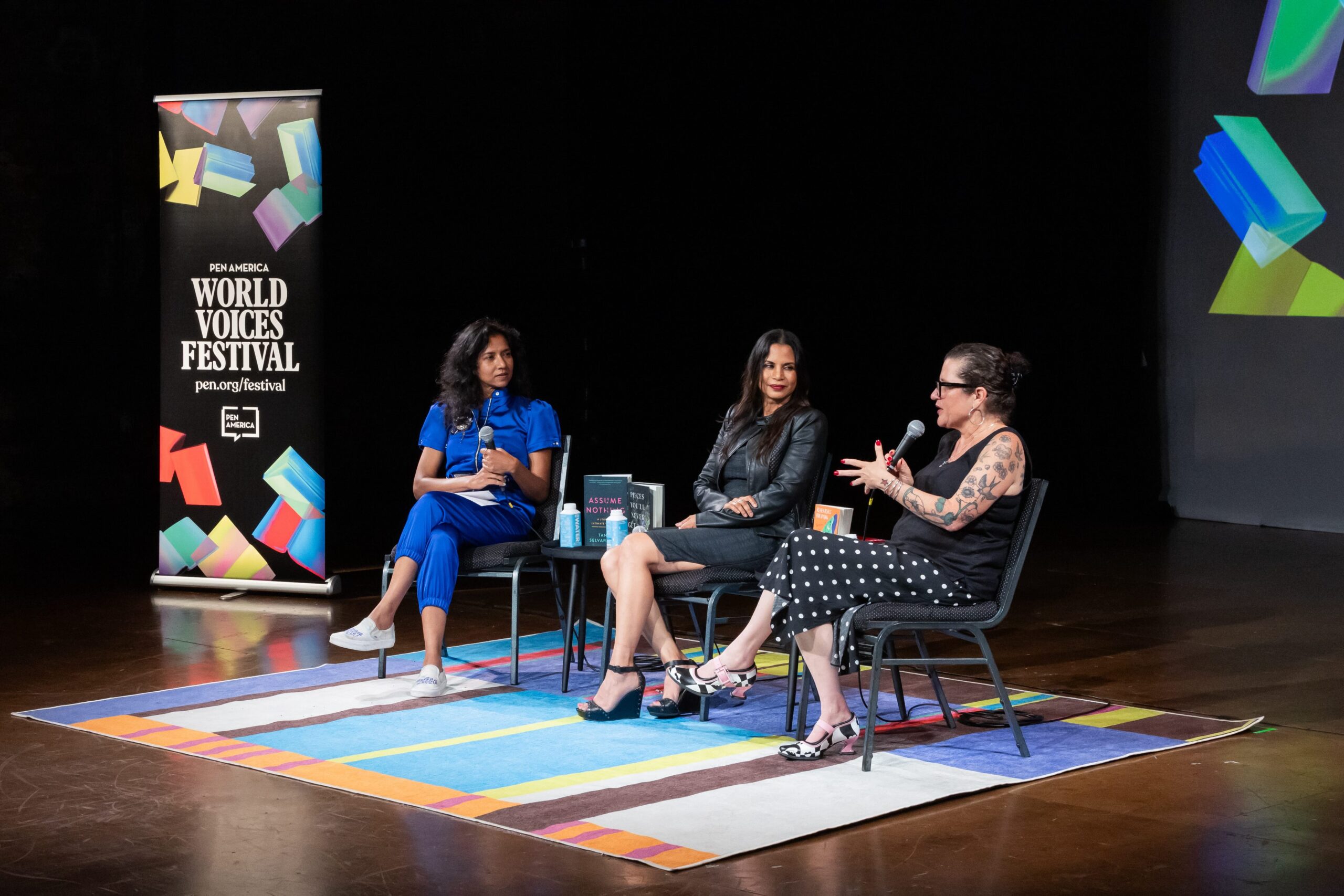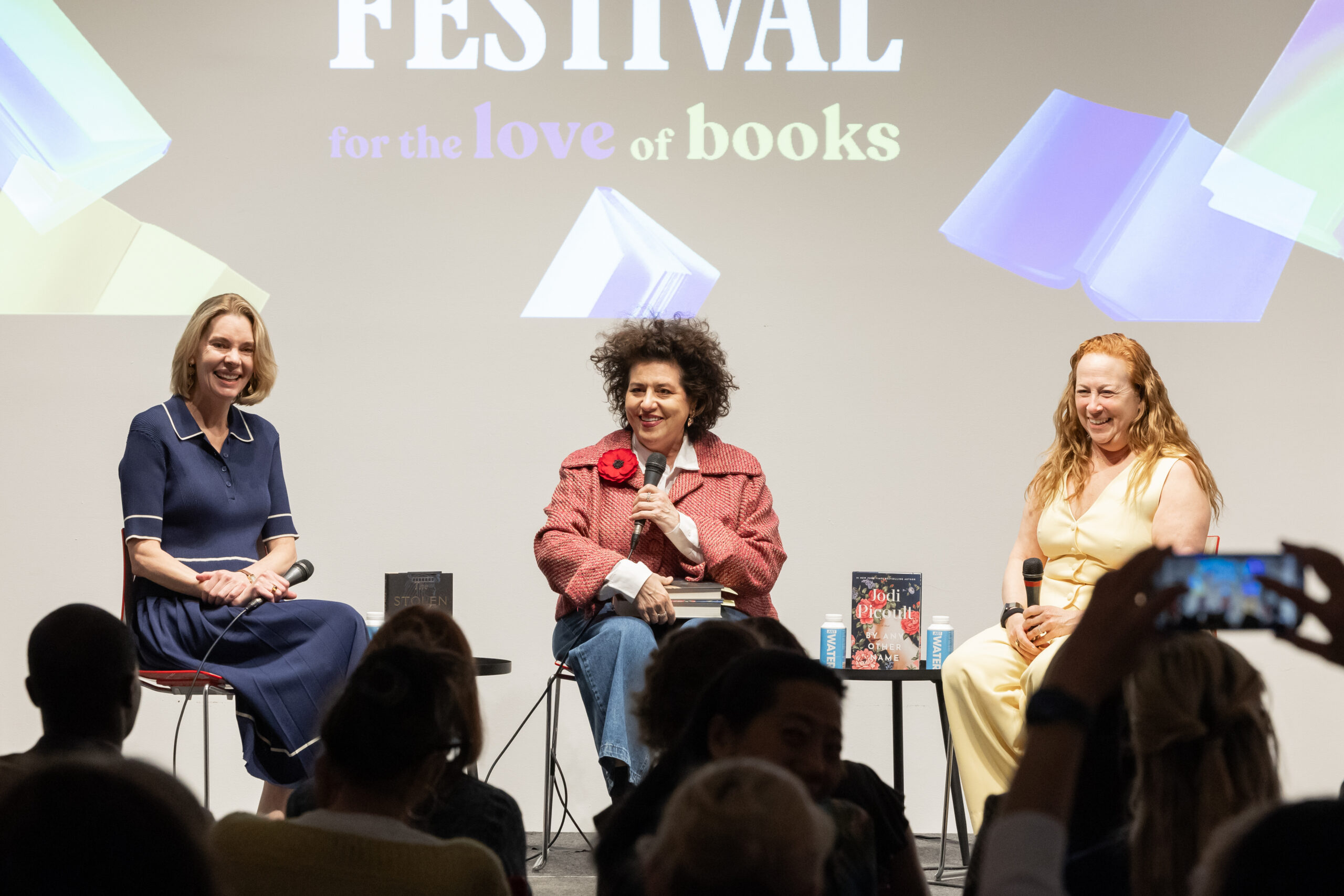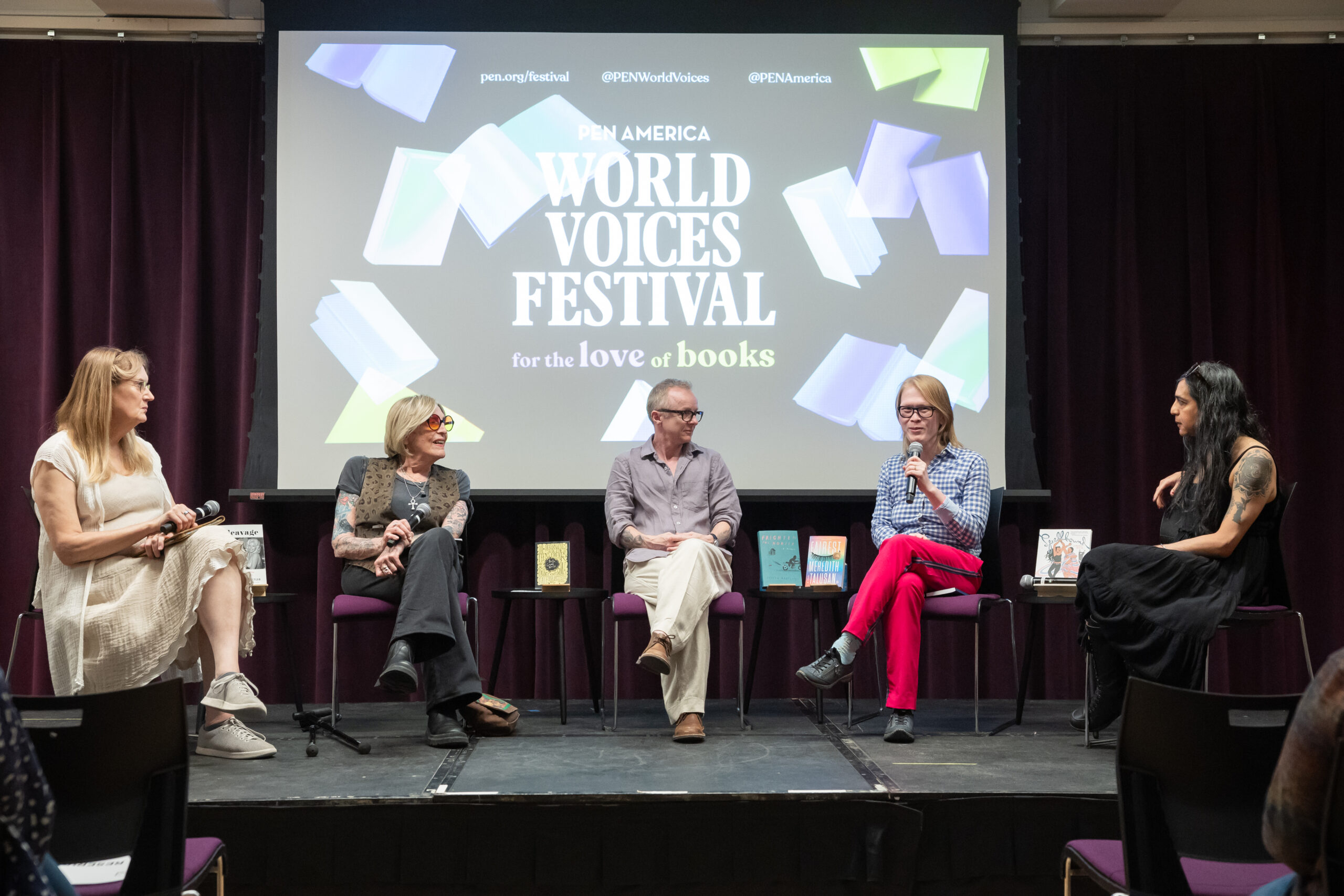
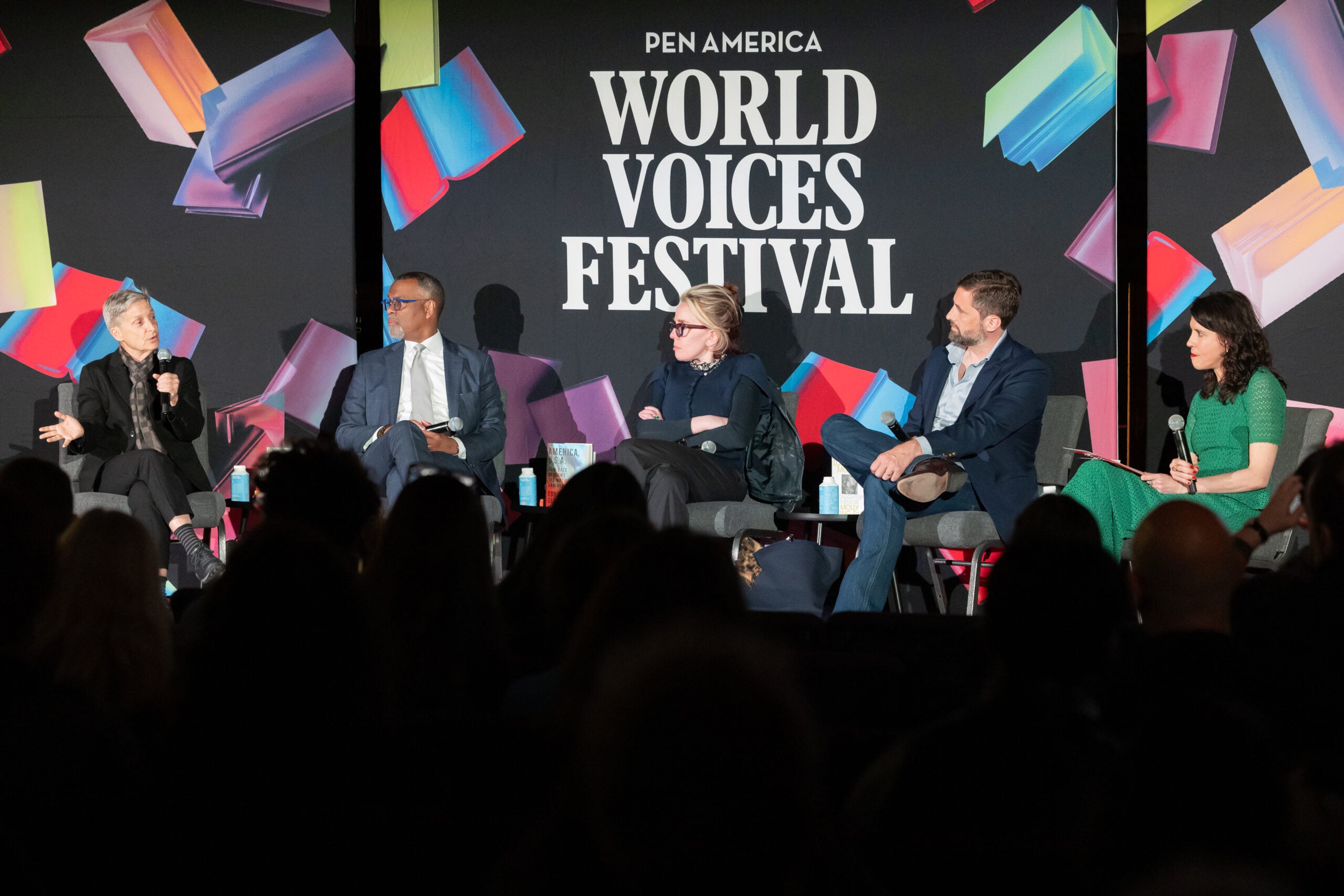
On the day that the Supreme Court struck down a pillar of the Voting Rights Act, the 2026 PEN World Voices Festival opened with an urgent conversation about the erosion of democracy in the United States.
“It’s been an eventful week, and it’s Wednesday,” said PEN America Co-CEO Summer Lopez, the event’s moderator, mentioning the Voting Rights Act decision, the FCC’s pursuit of ABC after Trump objected to a Jimmy Kimmel joke, and an indictment of James Comey for arranging seashells on the beach, just the latest threats to democracy under the Trump administration.
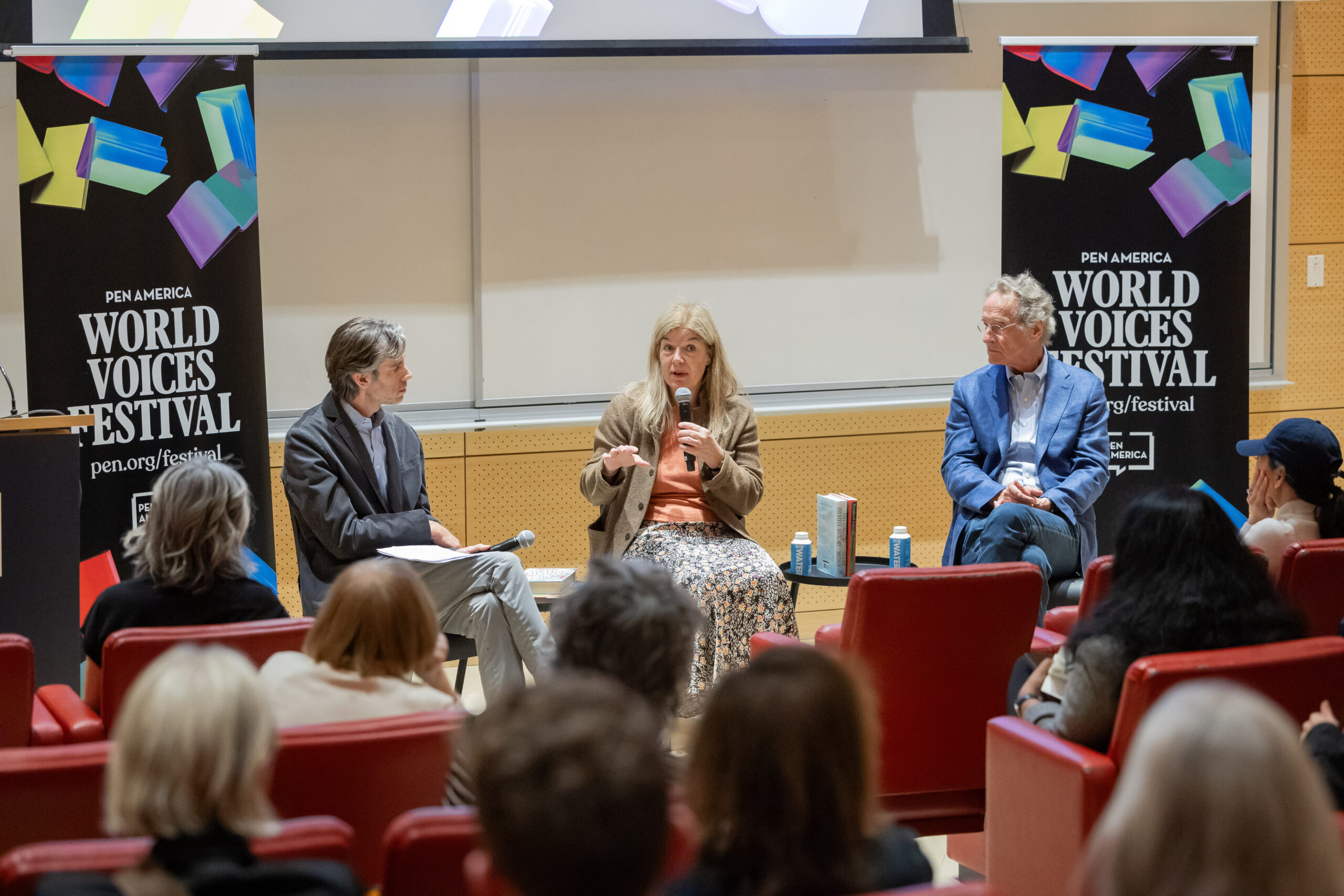
In a rich conversation about the serious democratic crisis, and what comes next, panelists Judith Butler (Who’s Afraid of Gender), Phil Klay (Uncertain Ground), Molly Jong-Fast (How to Lose Your Mother) and Eddie Glaude (We Are the Leaders We Have Been Looking For) described the patterns the country is repeating, and the new threats emerging.
The discussion, “Attacks on Democracy,” officially kicked off the World Voices Festival, a four-day gathering of more than 140 writers in more than 40 countries across New York City and Los Angeles. Events throughout the week celebrate literature with lively cross-cultural dialogue on wide-ranging topics including dark academia, dystopian novels, climate change solutions, border literature, and more.
On the current moment
Panelists described the current threats to our unfinished democracy as uniquely dangerous.
Eddie Glaude: “I think we’re deeply in peril, on a knife’s edge. I think we’re experiencing an institutional crisis of legitimacy across the board and an imperial executive that’s lost its mind. A gerrymandering house and dysfunctional senate, a captured Supreme Court.”
Judith Butler: “Well, I think that we never really had democracy, and one of the things we’re losing, one of the things we’re mourning, is a possibility of realizing the principles of democracy that have never been realized. … Democracy is being attacked. There’s no question in my mind.”
Phil Klay: “I’m a short-term pessimist long-term optimist. It’s bad right now. … We’re in this war with global repercussions with Iran that was the result of one man’s whim at the end of the day. That’s so far from the founding ideal of making sure that the most morally serious thing that a nation can do, which is engage in war, is the decision of Congress and that there needs to be debate and democratic buy-in before you engage in such a thing. … A lot of people are going to suffer.”
On history repeating itself
Although this moment is extraordinary, the panelists emphasized its echoes of the past.
Molly Jong-Fast: “I’m writing a book about my grandfather, who was blacklisted and jailed by McCarthy. So I would say that this is exactly who we are. Now, is it stupider? Yes. Is it perhaps even slightly more corrupt? For sure. … But a lot of what we’re seeing I would think rhymes with other moments in American life, and globally.”
Judith Butler: “The censorship of books, the attack on intellectuals and freedom of expression including artists, journalists, academics and activists, the punishing of individuals for insulting the president or the sovereign power … the authoritarian centralization of power. … This has all happened before.”
Eddie Gluade: “There have been some people who call this a second lost cause. What’s so interesting about the first one is that, of course, there was a denial of the reality of what caused the Civil War. … The children who were indoctrinated in it, turned out to be the adults in 1930s and 1940s and 1950s. The children who were denied access to the complexity of the story, many of them turned out to be monstrous.”
On imagining a better path
As writers, the panelists emphasized the importance of imagining a better world.
Judith Butler: “Somebody has to stand for a possible world that’s not defined by what it is right now. And that’s part of what we do when we imagine. That’s why we’re here, because we are people who traffic in the world of imagination. But imagination is right there at the center of democracy. We imagine the realization of ideas even when people tell us we are foolish to do so.”
Phil Klay: “The question is: Where do we go? What new politics do we build from here as a country? Can we take the ruin and not just put the pieces back together, but actually restore the deep, deep rot that led us to this place in the first place? I certainly hope that’s the case, and it will require a lot of work, but I think it’s possible.”
Eddie Gluade: “As a writer, what am I trying to do when I get to the page? I’m trying to give the nation language to think of itself differently, not because I have a fundamental faith in folk, but because I have to get my babies to the other side. … When I get to the page as a writer, I’m trying to find language so we can imagine ourselves otherwise. But first we have to stop with the noble lies that aren’t so noble and confront the truth of the matter that maybe, maybe, if we confront who we actually have been and are, we might release ourselves into a different future.”
Butler: “One might have radical hope for a democracy worthy of the name. Even though there’s no evidence to support the fact that it will indeed come to be. It’s unrealistic maybe, unrealizable maybe, but one can still imagine it and in some ways, I think we’re ethically obligated to imagine it, to resist the pull of realism.”
On erasing history
Judith Butler: “It’s enormously harmful for kids to be told they can’t learn about their world. They can’t learn about the history of slavery. They can’t learn about the slaughter of indigenous peoples at the beginning of this democracy. They cannot learn about gay and lesbian family formations or Texas Tech says that students attending may not write papers on sexual orientation. … It’s a deep anti-intellectualism.”
Eddie Glaude: “I, of course, am worried about what’s going to happen to our babies in the classrooms where this history is not being told. … How will it affect the babies to digest this nonsense?”
Judith Butler: “Maybe there will be a collective uprising of those babies in time.”
On solidarity
The panelists emphasized the need for transnational solidarity as authoritarian regimes repeat their patterns across the globe.
Eddie Glaude: “We need to understand the depth of what they’re doing and the scale of what they’re doing as we try to muster a response. Because it’s going to require a lot more than simply getting rid of Trump. It’s going to require a lot more of us.”
Judith Butler: “For me, solidarity is the basis of those values of care and love and justice and freedom because that’s where we practice them and where we regenerate them. … They call us woke, but, you know, I’ve been saying we’re dreaming wide awake.”
Want more?
Check out the panelists’ books:
- Who’s Afraid of Gender, by Judith Butler
- Uncertain Ground, by Phil Klay
- How to Lose Your Mother, by Molly Jong-Fast
- We Are the Leaders We Have Been Looking For, by Eddie Glaude