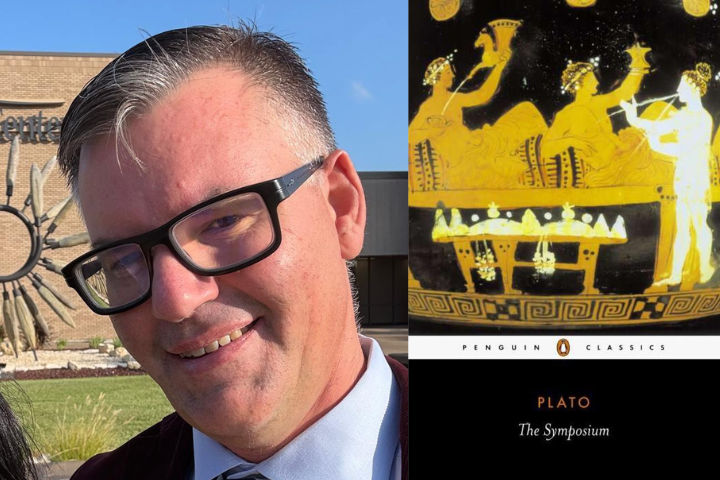
This is part of PEN America’s ongoing “Snapshots of Censorship” project. Read more and share your story here.
Earlier this year, I was told by university administrators at Texas A&M to remove a reading from Plato’s Symposium from my introduction to philosophy course. The reason? Because the reading discussed love in its many forms, including same-sex love, as well as the possibility of a third gender.
Plato’s Symposium is a classic text assigned in philosophy classes nation- and worldwide. Now, because of the censorship policy passed by the Texas A&M Board of Regents in late 2025, which prohibits discussions of “race or gender ideology, or topics related to sexual orientation or gender identity” in most undergraduate courses, the students at Texas A&M are forced to settle for less. Less classic content in philosophy classes compared with their peers in other states. Less conversation around topics that will indeed come up in their everyday lives. Less opportunity to learn.
This story made national headlines, drawing criticism from across the country, but university leadership has not relented. Faculty were told to submit their syllabi for the fall semester for censorship review in March, almost half a year before the start of the semester.
After a frustrating, semester-long back and forth with administrators, I have come to the conclusion that leadership at Texas A&M is unwilling to defend academic freedom and free expression at the university – to the detriment of our students, the remaining faculty, and the reputation of Texas A&M. This isn’t just about Plato. I cannot, in good conscience, continue to do my job in an environment that is so repressive that readings are being censored, classes canceled, and ever more faculty are quietly changing their syllabi, even in the absence of an official order by administrators. In my resignation letter, I quote John Stuart Mill, who in On Liberty argues that certain ideas must be “fully, frequently, and fearlessly discussed,” lest they become “dead dogma, not a living truth.” I refuse to participate in the reduction of education to the transmission of “dead dogma.”
I have spoken up and will continue to speak up against these policies. Texas students deserve better than the half truths they receive when professors are not allowed to speak freely on their expertise. As I transition out of my role at Texas A&M and into a position at Southern Methodist University, it is my sincere hope that Texas A&M leadership begins to understand the detrimental effects of these policies and to reverse course. Our classes and our students’ education must not be censored.