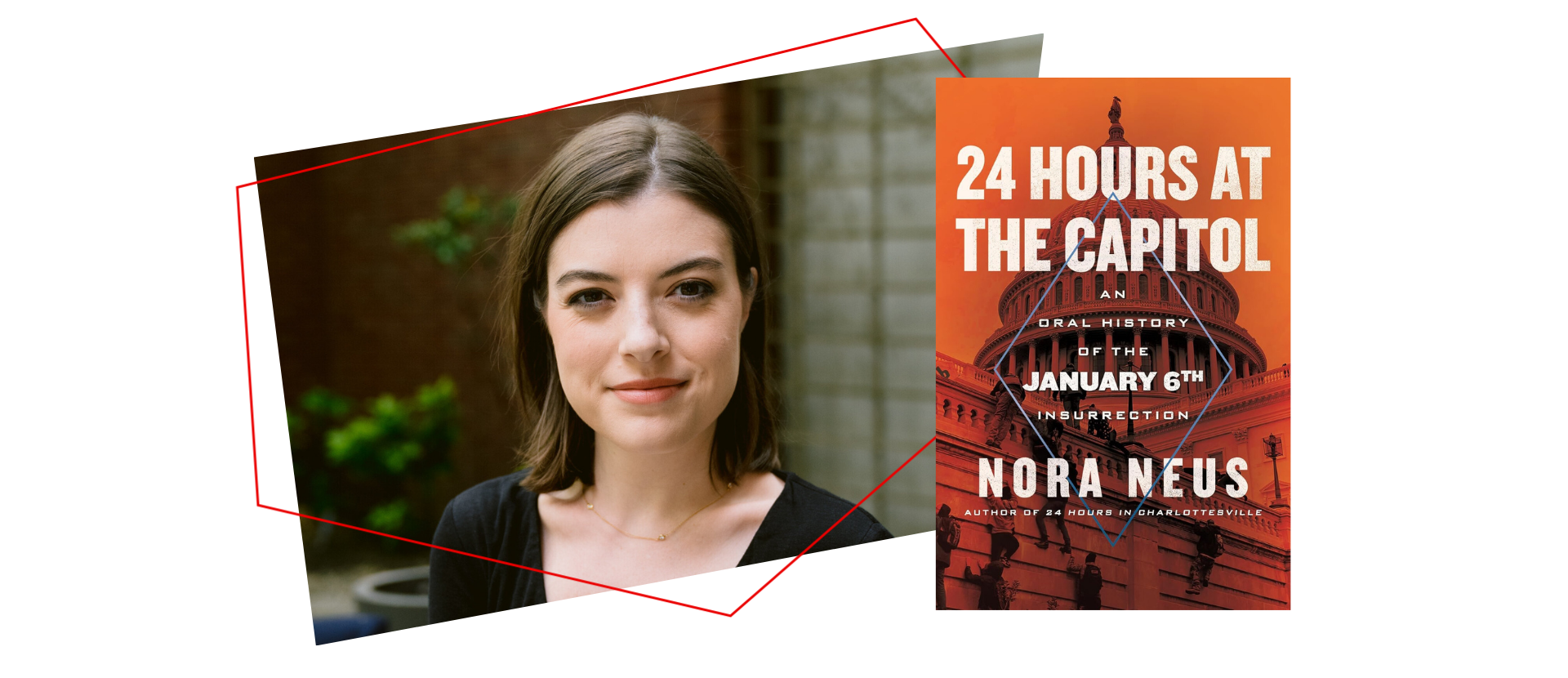
A conversation with author and journalist Nora Neus
Virginia Gov. Abigail Spanberger has until April 13 to veto a bill that passed the Virginia state legislature which will restrict how public schools can teach about the Jan. 6, 2021 riot at the U.S. Capitol.
The impetus for such a law is understandable. “The White House has tried to rewrite history,” the legislation’s sponsor, State Del. Dan Helmer, told CBS News. “I don’t want to celebrate traitors in our public schools.” In conversation with PEN America, Nora Neus, a journalist and author of the recently released book 24 Hours at the Capitol, an Oral History of the January 6th Insurrection, called the White House’s account of Jan. 6 “outright lying about what happened.”
But well meaning or not, the bill is an educational gag order that will prohibit specific facts and viewpoints about Jan. 6 from being taught or even “suggested” in the classroom. Educational gag orders like this constrain students’ freedom to learn; by stopping educators from introducing specific subjects, ideas, or arguments in classrooms, they substitute dogma for critical thinking, nuance, and interrogation of facts.
The Virginia bill’s (HB 333) restrictions are quite specific, requiring that if school boards develop curriculum about Jan. 6, teachers must:
- “Not describe, portray, or present as credible a description or portrayal of the actions precipitating or involved in the events of the Jan. 6, 2021 insurrection as peaceful protest;
- Not state, suggest, or present as credible a statement or suggestion that there was extensive election fraud that could have changed or actually changed the results of the 2020 presidential election; and
- Describe the Jan. 6, 2021, insurrection at the United States Capitol as an unprecedented, violent attack on United States democratic institutions, infrastructure, and representatives for the purpose of overturning the results of the 2020 presidential election.”
To delve into this issue further, PEN America’s Jonathan Friedman spoke with Neus about the reality of what happened that day, the dangers of government restrictions on what can be taught in schools, and how this effort mimics attempts to police thought and restrict the freedom to learn in schools that have come from Republicans across the country.
Their conversation has been edited for length and clarity.
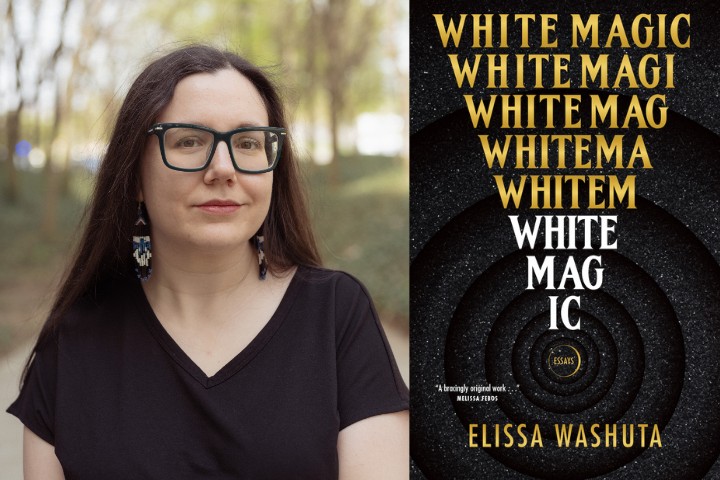
Jonathan Friedman: Nora, let’s start with your book, 24 Hours at the Capitol. What’s the focus and what compelled you to write it?
Nora Neus: This is the story of Jan. 6, 2021, told in the voices of the people who were actually there. It’s an oral history, essentially a collage of quotes from people who were at all different parts of the day: the run up, the day of, inside, outside, all kinds of sides of this issue and story. It’s also completely fact checked, even though it’s individuals’ quotes. I, as a journalist, fact check everything and make sure that this is the most clear picture of what happened on Jan. 6.
The reason I wanted to do that is because we see the same footage over and over on mainstream media. I was a CNN producer on Jan. 6, so I was definitely part of that. But there’s these few stories that a lot of us hear: about Nancy Pelosi’s staff, about Capitol police officers, DC police officers, but there were a lot of so-called “regular people” there that day, whose stories don’t as often get told.
We’ve seen an effort with President Trump retaking office to exert government control over the narrative of Jan. 6, to tell the country what is the legitimate narrative that is allowable in public. What do you think about these efforts, considering all that you know about what in fact happened that day?
It’s not even controlling the narrative, but just outright lying about what happened. And Jan. 6, I think is important to still be talking about, to be teaching students, because it really is the baseline from which his entire administration is occurring. President Trump essentially staged a coup against his own democratically elected government, threatened to take over, not only a government building, but the democracy of the United States of America, and then faced essentially no consequences, was re-elected, and then pardoned everyone who was involved.
Certainly we are in the midst of challenges surrounding national memory, and we have a president who, as you said, seems immune from any consequences. In that context, why is it important to read a book like yours, to capture that oral history, to make sure it is being accurately discussed?
On some level, Jan. 6 and the violence on that day was so much worse than we realized. I came away from my research stunned at the level of barbaric violence inside and outside the U.S. Capitol building, in the name of President Trump. I think it’s also important, because this is a president and an administration that have repeatedly called journalists “the enemy of the people,” that have repeatedly talked about “alternative facts,” and they’re just telling people not to believe their own eyes, and their own ability to read information. So you have this information war going on, on top of the violence of Jan. 6.
Let’s pivot to talking about this bill in Virginia, HB 333. It’s passed the legislature there, it’s on the governor’s desk for signature or veto, and this bill has been proposed by Democratic legislators to essentially legislate how Jan. 6 can be taught in schools. What do you make of this law?
I take this as a well-meaning attempt to combat the extraordinary amount of misinformation that’s out there about Jan. 6, but one of those laws that, once you think about it for a little bit, could set an extremely dangerous precedent, in addition to just there being some factual issues with the language of the law.
Jan. 6 is really hard to tell the nuanced story about, because, like any event where thousands of people were there, each individual person will have a different perspective on what they saw and what happened. If you pick individual people from different parts of the crowd, what they’re telling you they witnessed is not untrue; it’s just only part of the story.
There were absolutely so-called “peaceful protesters” in the crowd on Jan. 6, and that is hard to say — and I almost don’t want to even say that — because it gets warped and twisted into saying that everyone was a peaceful protester.
The way we got to Jan 6 is essentially by people thinking they were doing the right thing and then ultimately being on the wrong side of history. And that switch happens through misinformation and that switch happens through only seeing one side of the story.
It’s a great deal more complicated than I think a singular narrative allows.
Which is why I chose an oral history format for my book. There are so many different individual stories that make up the larger story of Jan. 6. So the second point in that bill is just factually inaccurate. There were peaceful protesters outside the Capitol and on the National Mall on Jan. 6. There were families, there were children. There were grandparents. There were also grandparents who then became violent and assaulted the Capitol building. But there absolutely were peaceful protesters at the Capitol.
Was that the bulk of the people there? No, if I had to characterize the crowd overall, I would say bloodthirsty and violent. And I’m not overstating that. Individuals in the crowd had two-by-fours with nails through the end that they were using to beat journalists and cops. There was an absurd amount of brutal violence.
So it’s fair to say that this bill in Virginia, as it’s written, would challenge a factual and accurate presentation of the events of Jan. 6 in schools?
Yes, and I see what they’re trying to do, but you can’t paint something like Jan. 6 with such a broad brush, and you certainly can’t legislate it, or shouldn’t legislate it, and define what history is. Historians exist for a reason.
At PEN America, we have opposed for a number of years what we call educational gag orders, our term to describe laws that directly restrict teaching about a range of topics, such as race, gender, American history, LGBTQ+ identities, in the classroom. These bills – which have overwhelmingly come from the right – are part of this broader project to censor conversations about race, gender, and sexuality in schools and universities. But at their heart, these efforts are about censoring and putting limits around what might be seen as complex topics or things that people disagree about. And they chill speech, they discourage critical thinking and that’s what I think makes them so pernicious. Even a bill like this, that seems to be coming from a well-meaning place in terms of encouraging accuracy, in terms of fighting propaganda and misinformation, nonetheless carries in it this risk.
Yes, and not only a risk of teaching the factual details of Jan. 6 wrong, but then this chilling effect of probably not even wanting to talk about it at all. I’ve spoken to so many teachers who have said they just aren’t going to bring up Jan. 6 ever in their classrooms, who try to just never bring up President Trump – which depending what subject you’re teaching, is valid. But if you’re teaching AP Government or you’re teaching AP History, it’s hard to do, and it’s a disservice to the students.
The way we got to Jan 6 is essentially by people thinking they were doing the right thing and then ultimately being on the wrong side of history. And that switch happens through misinformation and that switch happens through only seeing one side of the story. We should be teaching our students how to evaluate pieces of information, how to come to their own conclusions, how to identify misinformation, not just legislating specifically on what teachers can say about a given topic.
The way this law is written, it says you can’t present as credible a description or portrayal of the actions that sets them up as peaceful. So, in theory, wouldn’t that mean that excerpts from your book or your book as a whole would essentially be prohibited to be a resource for teachers?
Yes. You can take excerpts out of any book and take them out of context, but yes there’s quotes in my book from eyewitnesses, journalists, describing individuals they saw as peaceful. There’s way more quotes describing people not being peaceful.
What about even just showing what President Trump himself said about it? If you could be accused of endorsing this information or giving it credibility in some way by showing it, you could get in trouble.
I think there’s also a place for students to be taught how to make those analyses themselves. I think there’s a place to give them the information and say, with this set of facts, what is your conclusion that you’ve come to? Not necessarily telling them all the answers to start with, which is essentially what the third part of this bill says.
It’s hard to even schedule book events in a way that’s been completely unlike my last three books and my next two books that I’m already starting to schedule stuff for. People just don’t want to touch it. Some organizers admit that outright, that it’s just too political.
That’s the part that says that you have to teach that it’s an “unprecedented, violent attack” on democratic institutions for the purpose of overturning the 2020 election. Again, we’re flattening, I assume, a lot of the complexity of what drew people to that event.
Absolutely. One of the biggest things in my book is talking about how there was this perfect storm, a crucible, by the time of the election of 2020 going into Jan. 6 2021, where all these different factions who were worked up about all these different things, Q-Anon, save the children conspiracy, vaccine mandates, lockdown mandates, a whole Christo-fascist, Trump is God contingent, and then also a huge contingent of tourists who wanted to be at the last ever Trump rally from that time, all showed up for wildly different reasons. Which is how you end up with people with crosses and blue lives matter flags assaulting police officers.
Jan. 6 was an attack on the Capitol because of Donald Trump to overturn the 2020 election. But it also was the culmination of years of the far right and white supremacy in the United States resurging, and an engaged electorate who have been fed misinformation through Fox News and other mass media channels, to the point where it all explodes in a real-life violent incident. But that you can’t describe in a sentence, and then legislate it.
What do you make of the mandate here that you have to say that this was unprecedented?
That’s just subjective, isn’t it? It’s unprecedented in some ways. We also had a civil war in our country.
I think something that’s important here is to understand that we are far better served by open spaces for dialogue, the freedom to learn, the freedom of speech in public, even though it can be very difficult and contentious. On that point, since you’ve put out this book, has it been difficult to engage audiences in these conversations? Have you been challenged about some of the conclusions in it and how you’re describing Jan. 6?
Yes, it’s hard to even schedule book events in a way that’s been completely unlike my last three books and my next two books that I’m already starting to schedule stuff for. People just don’t want to touch it. Some organizers admit that outright, that it’s just too political. Others say they just don’t want to deal with any kind of potential backlash, even before the backlash comes.
Here at PEN America, our advice right now to the governor of Virginia and to legislators there is that this bill may have, as you said, come from good intentions, but the actual language could really have negative impacts on the climate for education in the state. It’s really important to understand, this isn’t a bill saying, let’s ensure that our young people have an opportunity to engage with primary sources, to develop critical thinking. To me, there is a lesson here for the Democrats who’ve pushed this, and for others, which is to say that they shouldn’t be copying the tactics that have chilled open debate and public education about these issues and made educating students so much harder across the country. There is a problem, but this is the wrong answer. We need to think a little bit more carefully about the solutions that we’re going to advance and be realistic about how proposals like HB 333 could backfire.
Right – if you support this bill, it’s hard for you to complain about “Don’t Say Gay” bills censoring classrooms in other states.
It’s hard to even complain against book bans! If this bill would mean that a book like yours might end up banned from potential inclusion in curriculum.
And this is so frustrating to talk about, because it’s so nuanced. I’m a University of Virginia alum. I have two degrees from UVA. I was a local news reporter in Charlottesville. I love these communities. I love this state. And often Virginia is the state that is most impacted by something like Jan. 6, with people from that state working in the Capitol. So I get it, I understand where they’re coming from. But a bill like this is ultimately going to be chilling.
Thank you so much for talking about these issues and your book, Nora. I really enjoyed reading it and think it’s such an important account of what happened on Jan. 6 and primary source for anyone wanting to understand the day in its complexity.
Thank you. And if there’s any teachers at any level that want help or primary sources or for me to talk to their students, I’m happy to help.