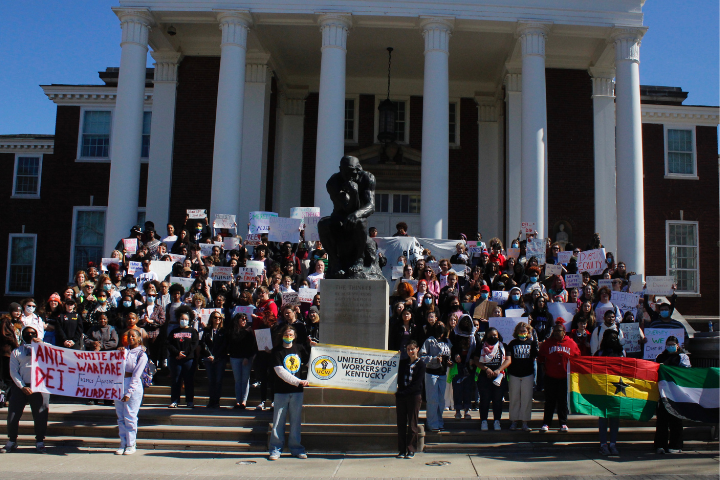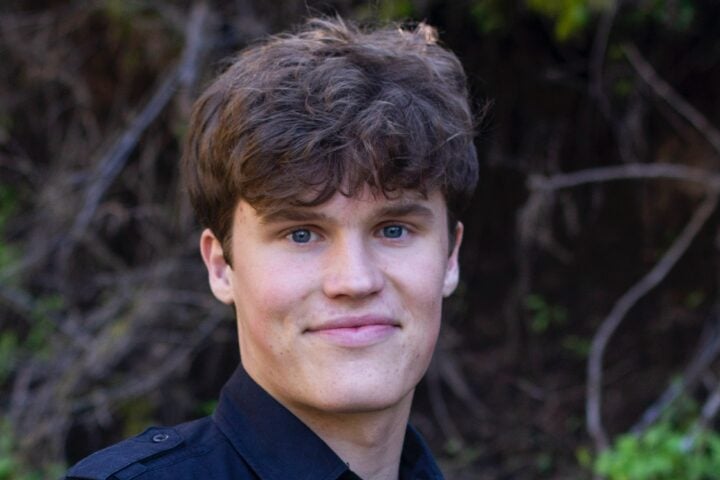
Censorship is out of control at Texas A&M — so out of control that Leya, a sophomore majoring in sociology, began wondering if she should transfer to another university. But after talking over the dilemma with a professor, she realized she didn’t have to be the victim of the A&M Board of Regents’ policies. Instead, she began organizing rallies, passing out flyers to students, and speaking out at Regents meetings.
“I’m being annoying, but I think I’m doing my job right if I’m being annoying, if I’m being a thorn in their side,” she said in an interview with PEN America during a visit to the university. “This is giving me an opportunity to apply myself, to test myself…and to make a change.”
Late last year, the Texas A&M Board of Regents approved policy changes that opened the floodgates to educational censorship. As a result of the revised policies — which prohibit courses from “advocating race or gender ideology, or topics related to sexual orientation or gender identity” — the women’s and gender studies program is scheduled to shutter, hundreds of courses have been altered, and even Plato has been banned.
The situation prompted PEN America to assemble a delegation of acclaimed writers to visit the university. Through both public and closed-door conversations with administrators, faculty members, and students, we sought to draw attention to the dire state of the freedom to learn at Texas A&M. We spurred some community members to action, and we rallied behind others like Leya who were already taking steps to restore the university’s commitment to open inquiry.
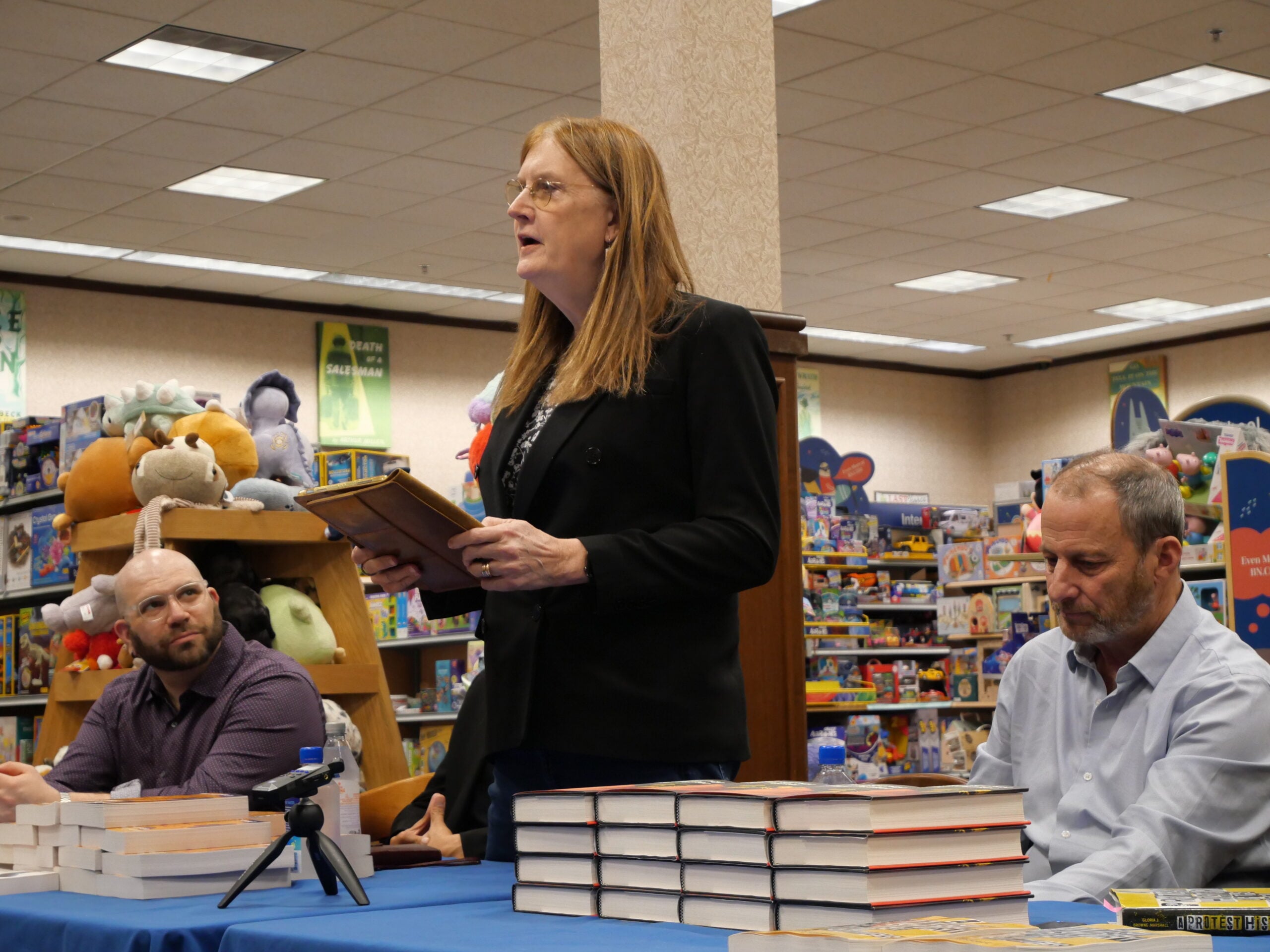
The delegation of writers — Sandra Cisneros, Jennifer Finney Boylan, George Packer, and Gloria J. Browne-Marshall — as well as Graham Piro, a fellow from the Foundation for Individual Rights and Expression, participated in a panel discussion on Feb. 10 that taught attendees how to stand up for free speech on college campuses. That night, the writers joined Tony Diaz of the anti-book banning group Librotraficantes for lively, uplifting readings of banned books at a local Barnes & Noble. PEN America’s Jonathan Friedman moderated both events.
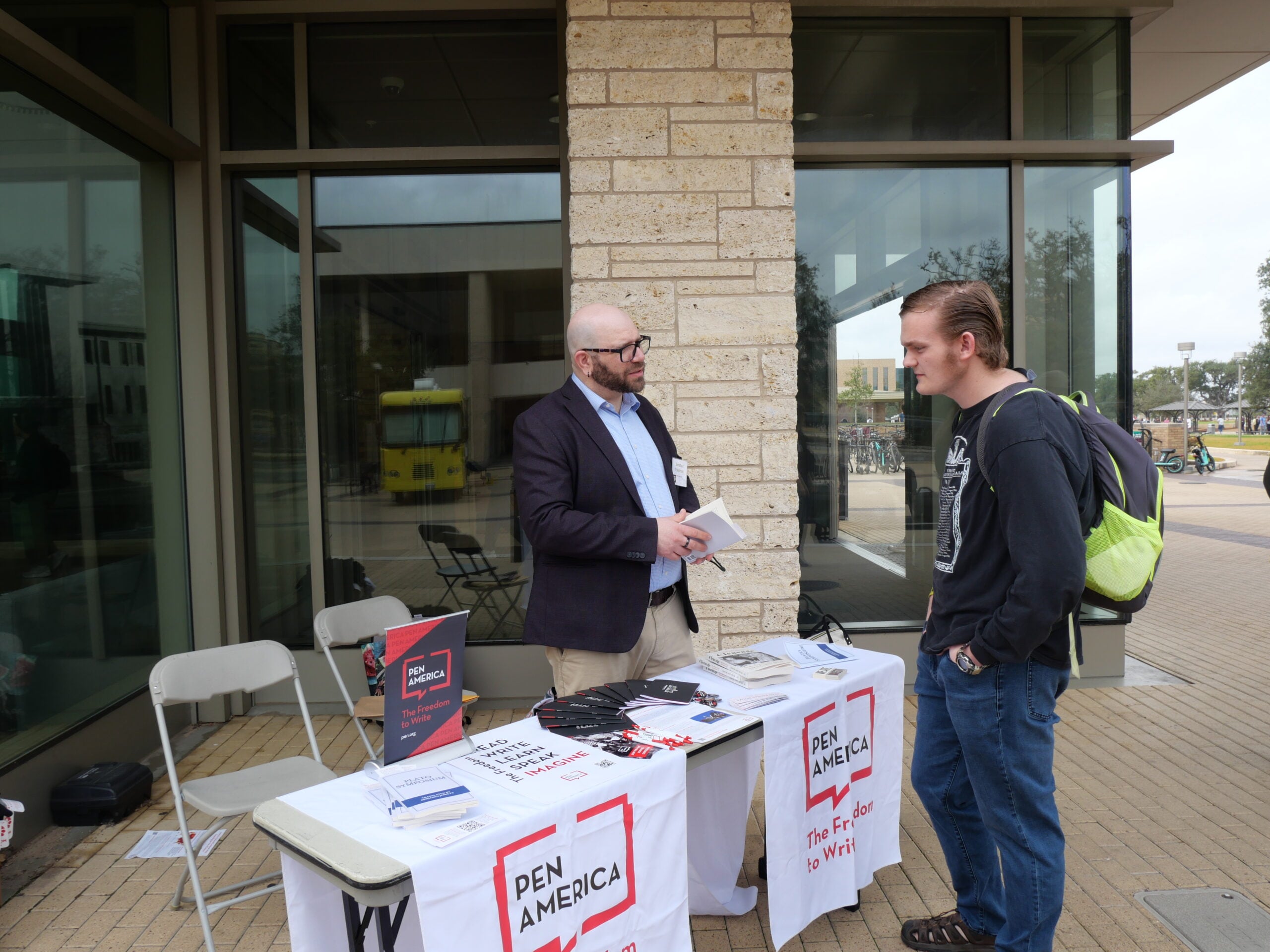
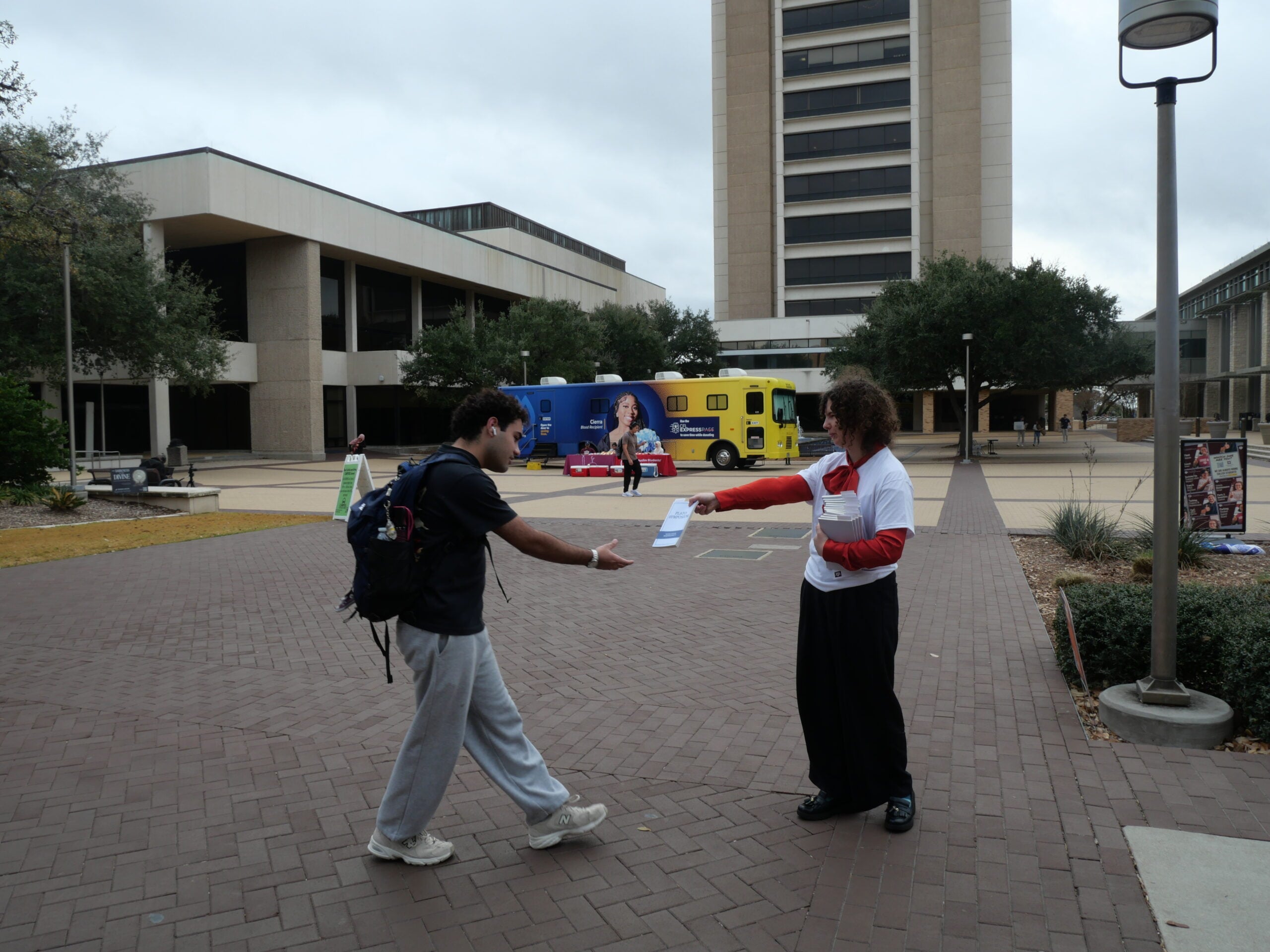
PEN America also delivered a letter to the Board of Regents signed by more than 35 local and national organizations demanding the reversal of policy changes, and we launched a parallel petition for individuals, which has since garnered more than 700 signatures. And because no one should be deprived of the opportunity to read Plato at college, we distributed 100 copies of the Symposium to students on Texas A&M’s Rudder Plaza.
Perhaps most importantly, throughout the trip, we invited dozens of community members to speak with us about their diminishing abilities to learn and teach freely.
Priscilla, a senior, confessed that she’s embarrassed to receive an education from an institution that’s purposefully restricting it. “Especially as an English major, we’re supposed to be well-versed on the human experience,” she said. “How are we supposed to explore the human experience if you’re taking out such an important aspect of it?”
Liam, a junior, worried about how incursions on academic freedom might shape the student body for years to come. “By closing avenues or degree plans, we’re going to see overall less diversity on campus, and we’re going to have, in the melting pot of ideas of a campus, fewer ingredients,” he said.
And George, another senior, raised alarm about the chilling effect of censorship, predicting it would be “more damaging in a more insidious way.” It’s a well-founded concern: As Dr. Leonard Bright, a professor at A&M, wrote in a recent Snapshot of Censorship, though hundreds of classes have been affected, they’re likely only “the tip of the censorship iceberg.” Professors may have revised hundreds of additional courses purely out of fear that they would be targeted by the university’s administration.
Our visit to A&M showed those on campus that they aren’t alone in their fears or their readiness to create change. Censorship is inherently isolating — when speech is restricted, it’s more challenging for community members to connect and mobilize — so it’s essential that Aggies know they can find support in one another and nationwide advocates for free expression like PEN America.
Following the trip, Boylan recounted a moment in which one Aggie realized exactly that. “As we crossed the quad, a young woman came up to us and burst into tears and said, ‘I’m so glad you all came. It’s hard to feel like we’re fighting this fight alone,’” she said. “I’m so grateful for the stories we heard and were able to share.”
Cisneros also expressed gratitude for the Texas A&M community, which she said treated her with respect and warmth she hadn’t anticipated. “I came away humbled and contrite. … The world never ceases to astonish.”
The battle for academic freedom is not, of course, limited to College Station. Censorship has reached new heights at A&M, but threats to teaching are rising at public universities across Texas. And, as PEN America’s reporting has shown, more than half of U.S. college and university students now study in a state with at least one law or policy restricting what can be taught or how campuses can operate.
Still, as Browne-Marshall stressed at the Barnes & Noble reading, there are countless ways for those at A&M and across the country to take immediate action. “Let’s not be freedom freeloaders, just living off of the work that our ancestors did. We have to stay in the game, and keep doing what we can do…and little by little, push forward,” she said. “Protest is an investment, and we need to invest in the future so that the next generation can have at least what we have, if not more.”