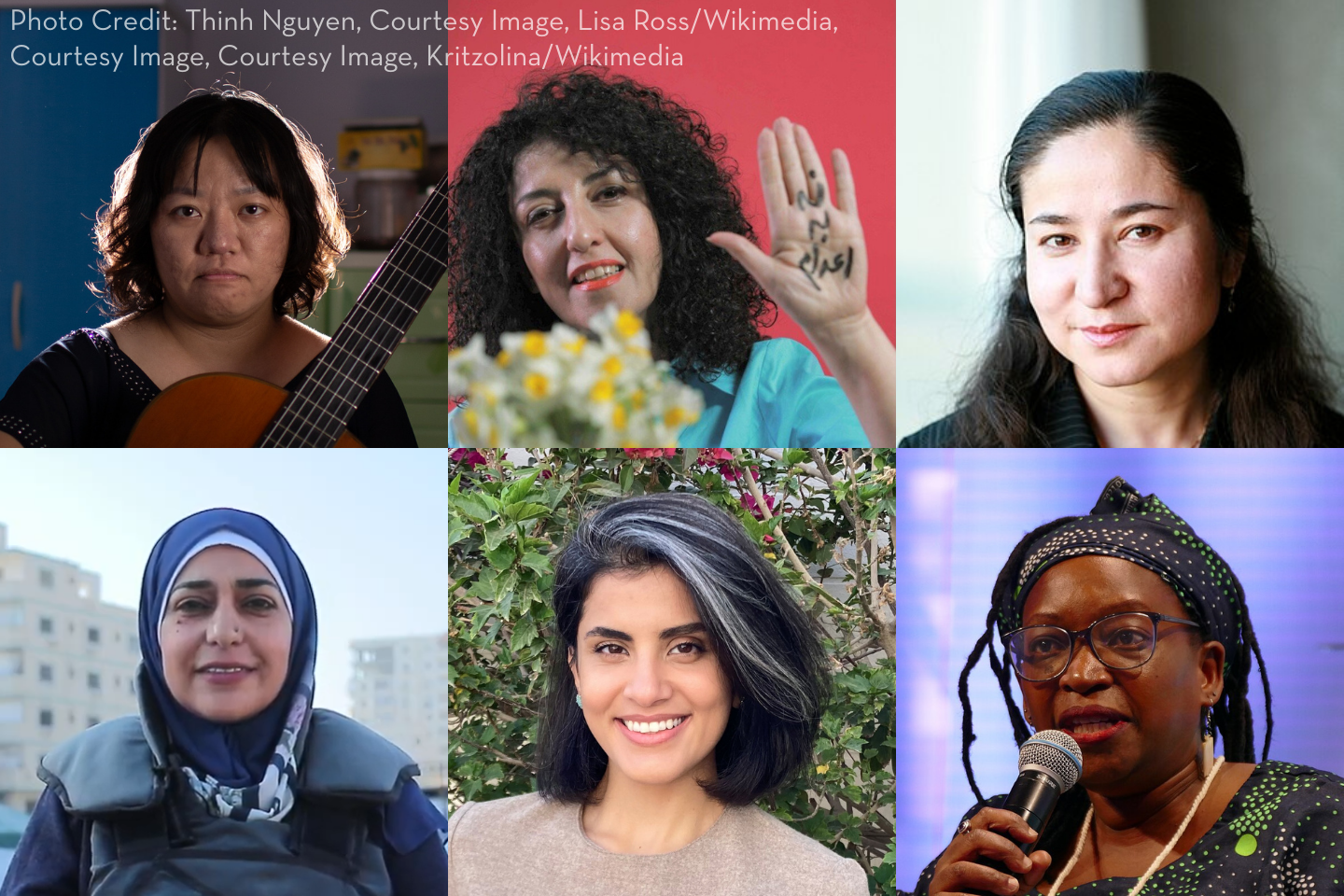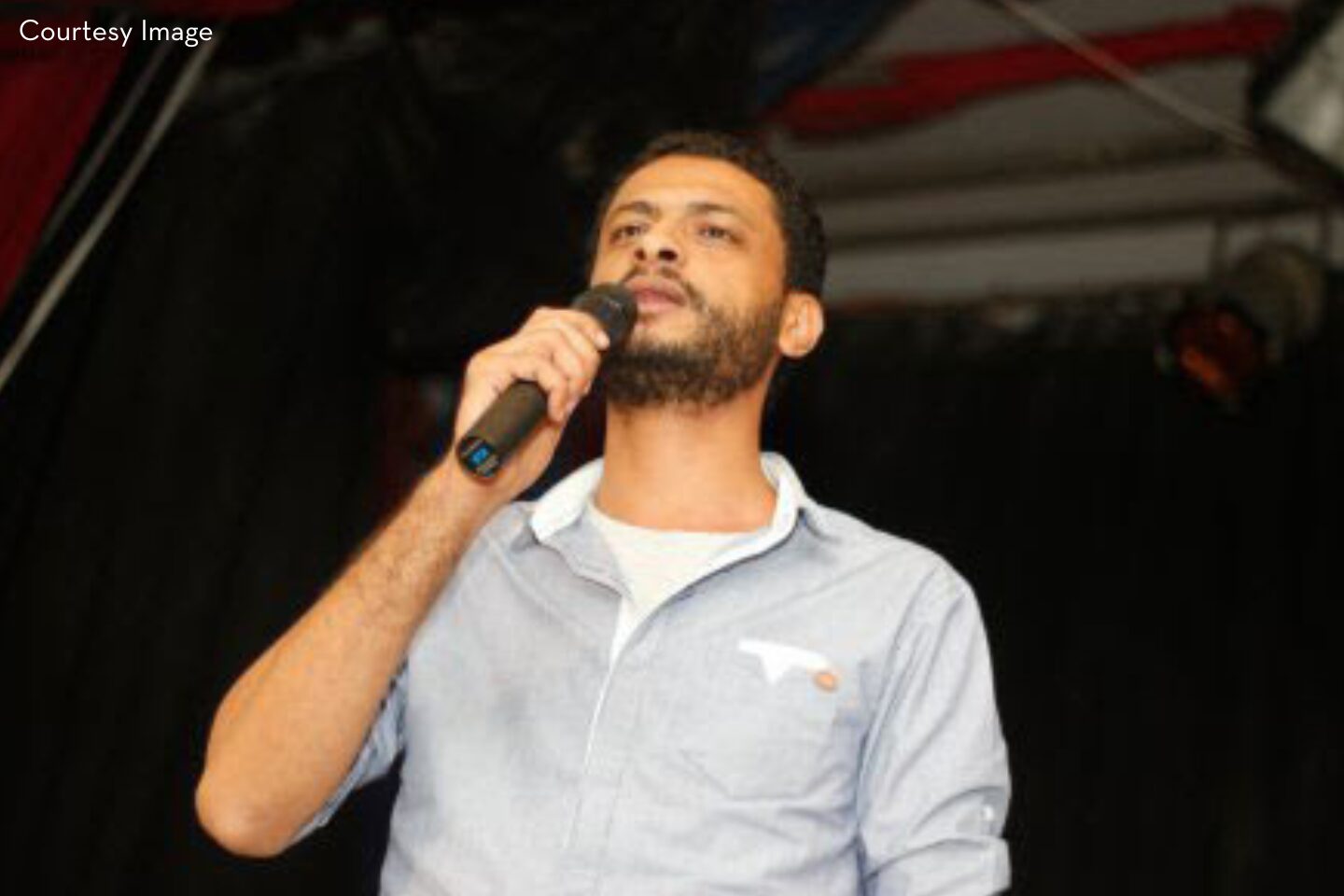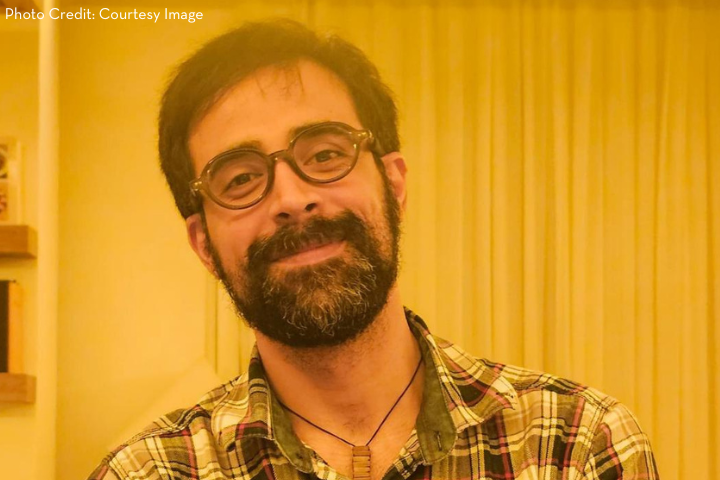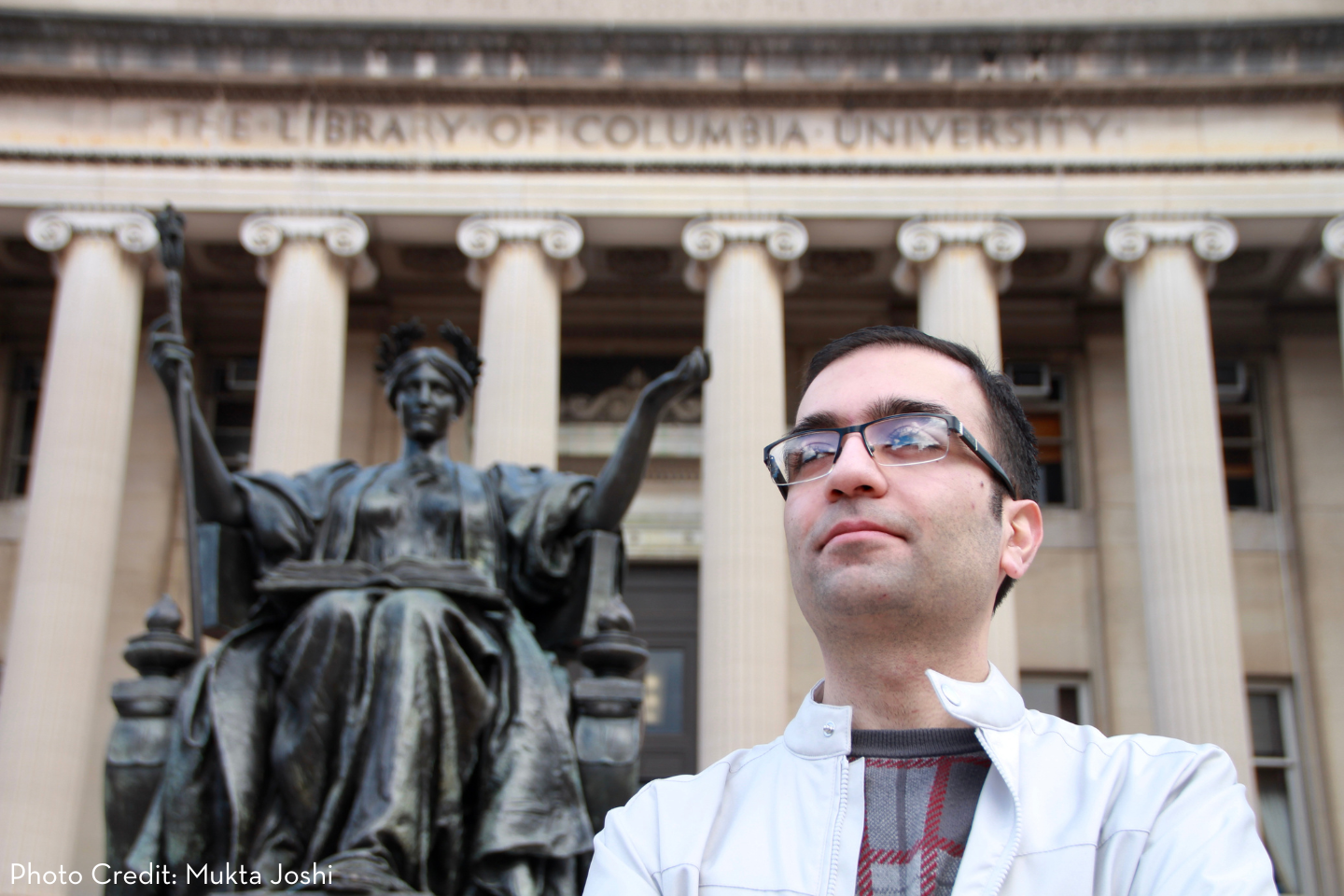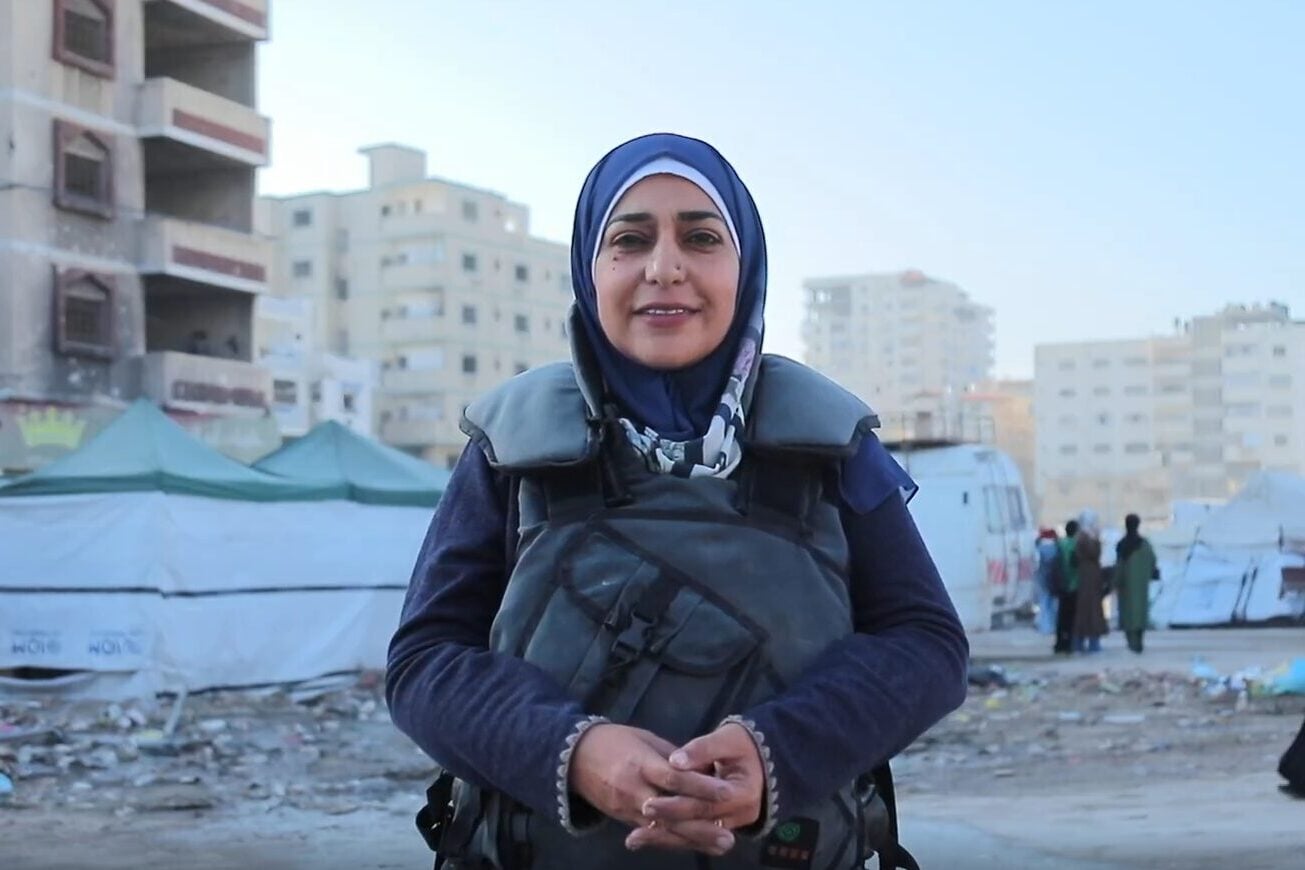
As much of the world debates the future of Gaza, largely excluding Palestinian voices, writers in Gaza are speaking urgently about preserving memory, protecting culture, and safeguarding ownership of their land.
In interviews with PEN America’s PEN/Barbey Freedom to Write Center, four Palestinian writers in Gaza reflected on the responsibility of telling their own story. During the interviews, one concern surfaced again and again: the need to protect culture on their terms.
The international discourse has been profoundly disconnected from Palestinian reality, portraying Gaza as a territory to be redeveloped. Writers Nahil Mohana, Maysoon Kuhail, Ali Abu Yaseen, and Nasser Rabah spoke to PEN America about what is actually needed—restoration and protection of cultural heritage.
“Gaza is not an empty piece of real estate to be redesigned. It is a land inhabited by stories, faces, and history,” playwright and award-winning novelist Nahil Mohana told the Freedom to Write Center.
Mohana, a novelist from Gaza City whose work reflects Palestinian resilience and hope, contributed to the anthologies Palestine is everywhere (2025) and Voices of Resistance: Diaries of Genocide (2025). In October 2023, she survived a terrifying attack on her home when a tank shell shattered her windows, striking her in the mouth and causing serious injuries that her family feared would be fatal.

For Mohana, Kuhail, Rabah, and Abu Yaseen, reconstruction is a process of who gets to decide what remains, what will be erased, and whose vision will shape the future of Gazans—and the only people who can make those decisions are Gazans themselves. Writers and artists have a distinct role in ensuring humanity survives this future, they say.
“We do not write for embellishment or documentation alone,” Mohana said, “but to prevent the erasure of the human being behind the maps and political plans.”
Nasser Rabah is a poet and the author of the 2025 New York Times Best Poetry Book of the Year Gaza: The Poem Said Its Piece. The collection includes poems written during the genocide, often describing raw feelings of the constant on-edge atmosphere.
“Writers in Gaza are the conscience of society and the voice of its conscious awareness—one that thinks in terms of the collective, not merely the personal or individual,” Rabah said.
PEN America’s report All That is Lost: The Cultural Destruction of Gaza documented the catastrophic impact of Israel’s military campaign on Gaza’s cultural life and infrastructure. Centuries-old cultural sites have been severely damaged or completely destroyed.
Now, Palestinian writers seek to reclaim what was lost, not to replace it.

Why Rebuild Theaters, Not Luxury Resorts?
Maysoon Kuhail is a writer, journalist, and a staunch advocate for independent reporting. She covers a range of local social and political issues, often highlighting the psychological impact of the occupation on Palestinians.
“The violence and ongoing displacement have never ceased,” said Kuhail when asked about a ceasefire that started in October 2025 but that has not stopped airstrikes and other attacks and never really resulted in an end to the war. “The role of the intellectual is not to observe the scene from a distance, but to question the concepts that slip in under glossy titles such as ‘development,’ ‘replanning,’ and ‘modernization.’ Gaza is not an empty space to be redrawn, but a layered history of relationships, memories, ownership, and symbols,” Kuhail added.
For these writers, the loss of historic buildings is not just concrete or rubble to be swept away for luxury developments or flashy landmarks. The loss of cultural heritage leaves a profound wound, an erasure of identity and history. “It is a rupture in narrative, a breach in memory, and an attempt to sever the bond between a person and their land,” Kuhail explains.
Actor and playwright Ali Abu Yaseen points out that the destruction is ongoing daily. Since the announcement of the ceasefire, nearly 600 Palestinians have been killed and more than 1,500 injured. “Gaza remains under siege, and the crossing [at Rafah] that was supposedly opened is merely news meant to mislead. No more than about 50 people are allowed to leave or enter Gaza each day, and they are subjected by the Israeli side to various forms of humiliation and mistreatment.” Abu Yaseen said.

The limitations at Rafah crossing are just one visible sign of the erosion of Palestinian life, others are all around writers PEN America spoke to who are seeing the loss of education, culture, and history before their eyes.
Abu Yaseen is the director of Ashtar Theatre, living in Shati Refugee Camp in Gaza. He has written and directed numerous plays and has mentored young Palestinian writers, providing psychological support and fostering healing through theatre during times of war.
Reflecting on the destruction of theaters, Abu Yaseen said, “It feels as though a part of the soul is being torn away, as if humanity itself is being destroyed and its death declared.”
He is no stranger to losing a cultural space, having lived through the destruction of Al-Mishal, a cultural center he co-founded, which was destroyed by the Israeli military in August 2018. Today, the community faces similar losses with the destruction of Rashad al-Shawwa and Arab Orthodox cultural centers in late 2023.
Who Tells Our Story?
Amid this devastation and prolonged struggle for survival, Palestinians must also grapple with how their stories are told and their history preserved. For writers in Gaza, the responsibility feels urgent.
“At a moment when outside forces seek to shape Gaza’s future without its people, writers and artists see their role as safeguarding meaning from being confiscated,” said Mohana.
This sense of duty is also felt by Abu Yaseen and Kuhail. “Playwrights also have a role in strengthening people’s sense of belonging and resilience,” Abu Yaseen said. He explained that through their writing, they raise awareness of ongoing threats to the Palestinian cause, from the occupation’s persistent effort to displace people from their land to narratives that deny Palestinians’ rights and centuries-long presence.

For Kuhail, the destruction of culture is inseparable from the destruction of memory. “Every text written, every painting created, every testimony recorded is an attempt to say that memory has not been completely destroyed,” she explained.
Ultimately, Palestinian writers and artists have been more than witnesses or recorders of history during the war, they have continued to create and perform, even in tents. They wrote books, staged plays, and kept their community alive.
“I was careful not to let the language slip into shouting or slogans,” Rabah said while reflecting on writing under siege. “I tried to preserve the nobility of the Palestinian spirit, one that must not appear broken, despite everything.” He translated more than five books, published poems and articles in leading American and European journals, and helped compile three poetry anthologies.
The Road Ahead
If the world listens to these writers as it should, it will become clear that rebuilding Gaza cannot be reduced to materials and plans. It must safeguard the cultural foundations that have sustained its people.
When asked about what kind of support they need, the writers called for assistance that respects and uplifts their voices.

Rabah called for mentorship to young Palestinian writers who “need interaction and engagement with mature literary and artistic experiences, both inside Palestine and abroad.”
Storytelling and writing are more than creative acts, they are vital tools of survival, ways to preserve memory and assert identity under extreme conditions.
“Culture in Gaza is not a luxury; it is a means of resisting erasure and a way of preserving collective memory for future generations,” said Mohana.
If the international community is to be involved, it must focus on support that strengthens Palestinian writers’ ability to continue their work and remain autonomous. Mohana, Kuhail, Rabah, and Abu Yaseen all emphasized the need to provide essential psychological and social resources, rebuild cultural sites, and create opportunities for their voices to be heard through publication and public platforms. The international community must listen and equip them with the tools to preserve culture and memory.
The path forward is undeniable: any effort to rebuild that sidelines Palestinian voices risks erasing the very history and identity that have allowed Gaza to endure. “Solidarity does not involve thinking on behalf of people, does not impose ready-made visions of their future,” said Kuhail. The future of Gaza belongs to its people, and particularly to its writers and cultural figures, who must lead the way.