This is part of PEN America’s ongoing “Snapshots of Censorship” project. Read more and share your story here.
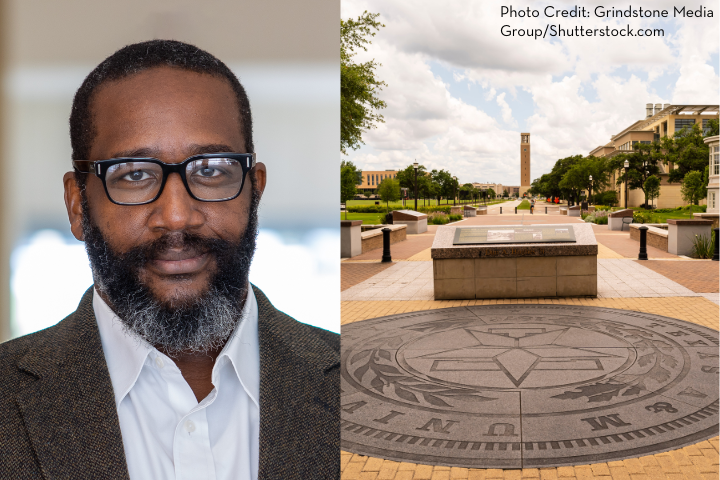
I have been a professor at Texas A&M University since 2011 and am now a full professor at the university’s Bush School of Government and Public Service. Late last year, our Board of Regents passed a policy that restricts how faculty can address topics such as race, gender, or sexual orientation in classes— course audits, it seemed, were inevitable. When it came to my Ethics in Public Policy class, a graduate course I have been teaching for six years, I sensed that I might be in for a long and arduous conversation. The class centers around the importance of critical discussion, civil disagreement, and ethical reasoning and often tackles questions relating to critical race theory, DEI, and gender identity as a part of classroom discussion.
In January, I received communication from my department head and later from the college dean and his senior associate dean asking specifically when and how I would discuss sexuality or “race ideology” in my class; I responded that these issues would come up throughout the class, rather than in specific instances. I explained that while I might share my perspectives on issues relevant to the course materials and learning outcomes during class discussion, there would be no expectations that students agree with me.
Despite my attempts at explanation, my class was cancelled. Department leadership insists that I was being uncooperative, that I willfully chose not to provide enough information to them, but this is a mischaracterization. My class was cancelled because it did not fit neatly into how the Board of Regents preferred classes to address (or skirt around) topics of gender and race. My repeated statement that I will cover these topics “throughout” my course could not have been more thorough, complete, and honest.
These new attempts by the administration to control curriculum at Texas A&M have affected at least 200 classes, leading several to be cancelled outright, including my own, and has led to the censorship of course material including certain readings from Plato in a philosophy class. However, this is likely the tip of the censorship iceberg. Potentially many more hundreds of courses were revised voluntarily and preemptively by faculty out of fear of being targeted by university administration.
As a professor – and one who helps train graduate students who hope to build a career of public service – I take ethics very seriously. To send future public servants into the world without fully grappling with the realities of race, gender, and sexuality in an ethics course is truly frightening. Ethics is not just what I teach, it is baked into how I teach, how I build my courses and facilitate class discussion. When academic freedom is attacked, when we are no longer allowed to speak about issues relating to race and gender in our classes, all of our students suffer, especially those from marginalized communities. The impact is not just theoretical. The ability of my students, all future leaders, to engage fully with questions of ethics will affect issues of life or death, and everything in between, for citizens in the communities where they will serve. I encourage my colleagues and allies to continue speaking out against this policy, not just for the Aggies and our community at Texas A&M, but for faculty and students across the state of Texas and for America’s democracy.