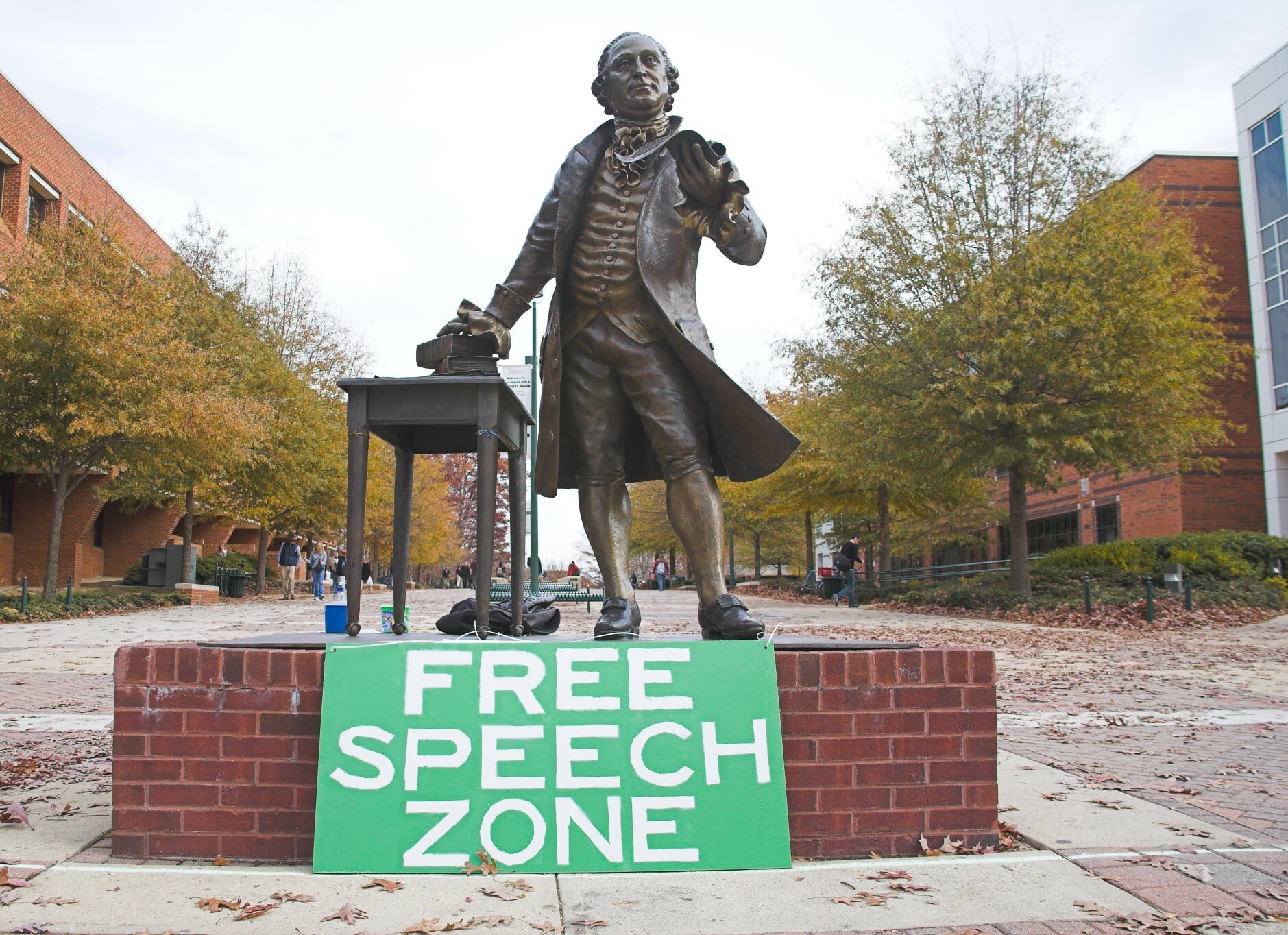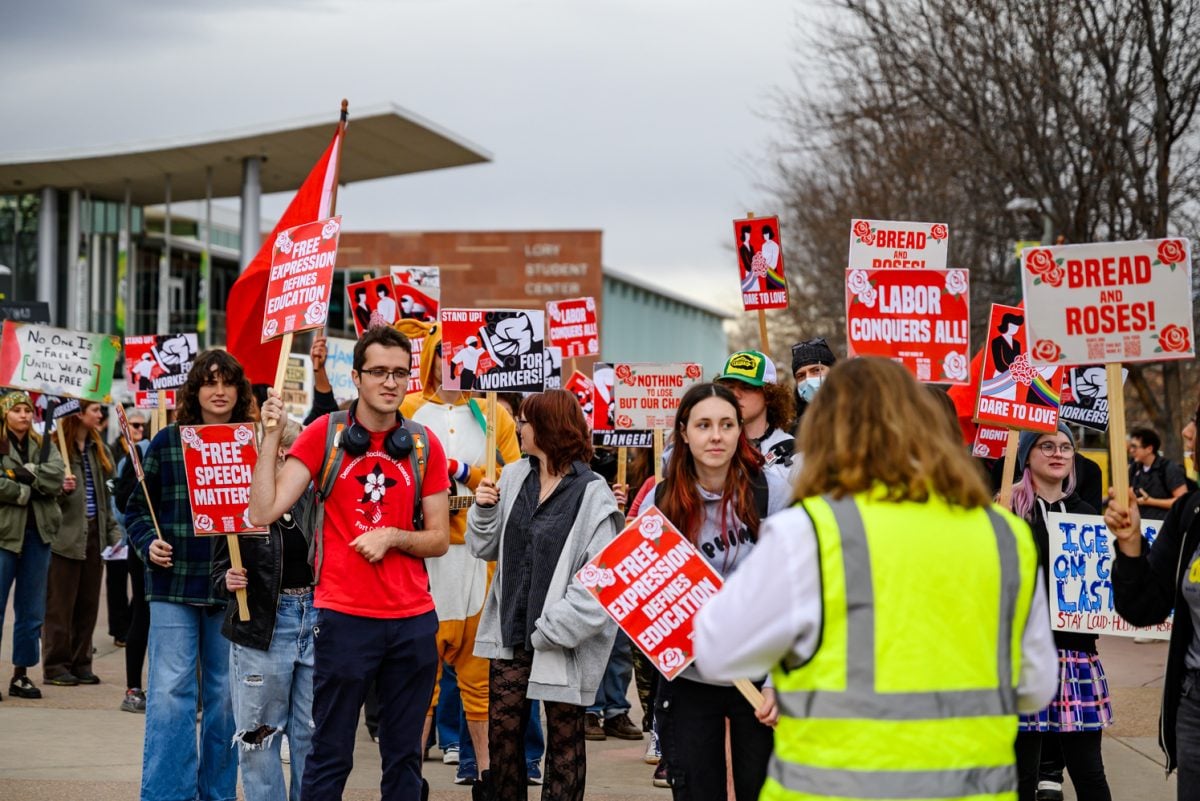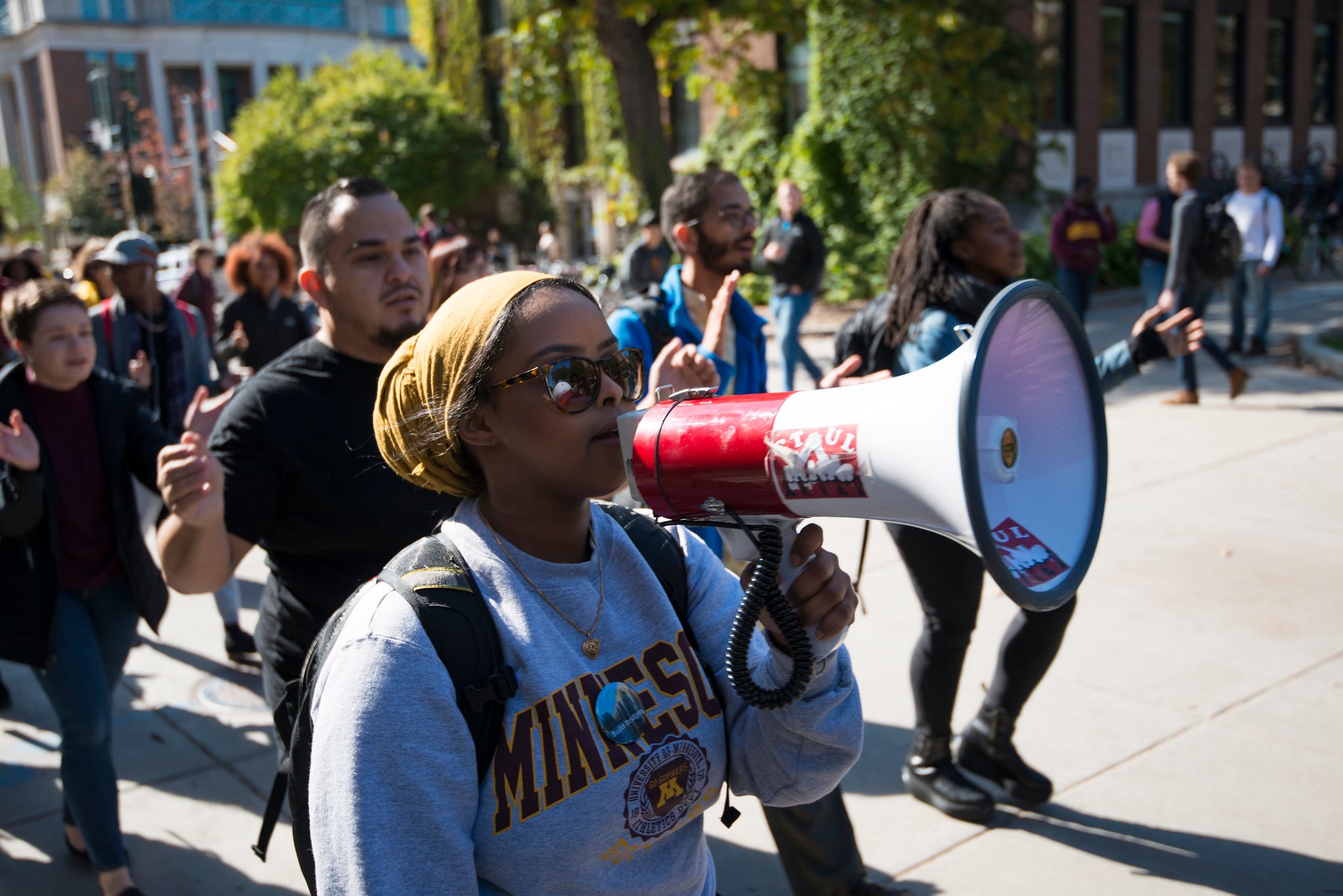
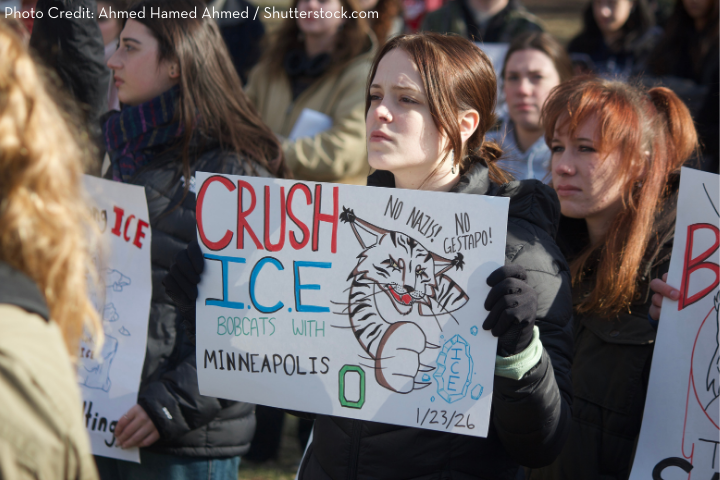
“The state is trying to shut us down,” said University of Texas-Dallas graduate student Alexander De Jesus, in response to a Texas law restricting protests on college campuses that took effect at the start of the academic year.
Texas’ SB 2972, designed to limit protests on state college campuses, includes a ban on “expressive activities” – both indoors and outdoors – between 10 p.m. and 8 a.m. and near the end of any term, as well as on the use of amplified sound or instruments such as drums. The law also includes restrictions on inviting speakers to campus, including a ban on any speakers during the last two weeks of any term. “If it gets too late, you’re not allowed to use the First Amendment on campus,” De Jesus said.
PEN America called the legislation a “stunningly aggressive legislative crackdown on campus protest.”
That 10 p.m. limit, along with restrictions on inviting speakers to campus and using amplified sound and drums in the last two weeks of the semester, was enjoined from being enforced by a federal district court, which issued a preliminary injunction in mid-October in a case brought by several student groups. The University of Texas System is appealing the ruling, but in the meantime the law cannot be enforced.
“The First Amendment does not have a bedtime of 10:00 p.m.,” the district court held. “The burden is on the government to prove that its actions are narrowly tailored to achieve a compelling governmental interest. It has not done so.”
The Texas law may be among the harshest passed since widespread demonstrations protesting the conflict between Palestinians and Israel broke out on campuses in spring 2024. But as students across the country engage in anti-ICE protests, they face a host of new restrictions, including not only tightened school policies, but also newly enacted state laws that seek, in a few states, to suppress dissent, sometimes going so far as to invoke criminal penalties.
Prior to the Texas law, the federal government began its own campaign against protest activities on campuses. Members of U.S. Congress introduced federal bills that would enact harsh penalties for protest activities, while the Trump administration has threatened to revoke federal funding for universities it accuses of allowing “illegal protests” – as it did with $400 million in grants to Columbia University before the school reached a settlement with the administration – and has detained and attempted to deport noncitizens who participate in them, including high profile cases like that of former Columbia grad student Mahmoud Khalil.
‘A Wake Up Call’ for Student Protesters
Students who did not follow the 2025 Texas legislative session were surprised that the state would attempt such a harsh crackdown on speech on campus. “For political students, they very quickly realized that the state is trying to silence dissent,” De Jesus said. “For other student groups that may not have been paying attention to the legislation, it was very much a wake up call.”
Gregorio Olivares Gutierrez, a third-year student and editor of the University of Texas-Dallas’ independent newspaper The Retrograde, which was one of the plaintiff student groups in the lawsuit challenging the Texas law, said the law was having its intended effect. Across his three years on campus, he said, “I’ve seen where UT went from a campus where protests were a regular thing, to now students wondering what might happen.”
Coupled with the highly publicized arrests of Khalil and Tufts University doctoral student Rümeysa Öztürk, along with threatening social media posts from the president and other government officials, the atmosphere on campuses this year is far more intimidating than in the past.
“There has been this big tone down,” Gutierrez said, as students see the results of mass arrests, suspensions and expulsions from campuses and even revocations of hard-earned degrees, as happened to dozens of students who protested at Columbia University in 2024.
“Students are aware of what’s going on, they’re pissed off about what’s going on,” Gutierrez said. “More students are afraid of going to events. They’re afraid to discuss politics, for fear they’d be recorded.”
If the overnight restrictions on expression are restored through the appeal, a range of student activities could not take place on campus.
One of the plaintiffs in the case was the Fellowship of Christian University Students, an interdenominational campus ministry with a chapter at UT Dallas, which said in the suit that it regularly hosts evening gatherings for students on campus that extend past 10 p.m. It also hosts morning meetings that start before restrictions are lifted at 8 a.m,. and invites ministers to speak on campus, including during the last two weeks of the semester. Others have noted that other nighttime religious events, like Muslim students celebrating Iftar, could not be held in public under the law’s ban on expressive activities after 10 p.m.. “The feedback I’ve been getting is like this perpetual fear,” Gutierrez said.
“The theme of this academic year is anxiety and fear,” said Kristen Shahverdian, program director of campus free speech at PEN America. “In speaking to students, faculty and staff around the country, the high profile arrests, coupled with a crackdown on expression, mean that the stakes for exercising one’s constitutional rights to free speech are too high, so most are opting out.”
Restrictions Follow 2024 Protests and Encampments
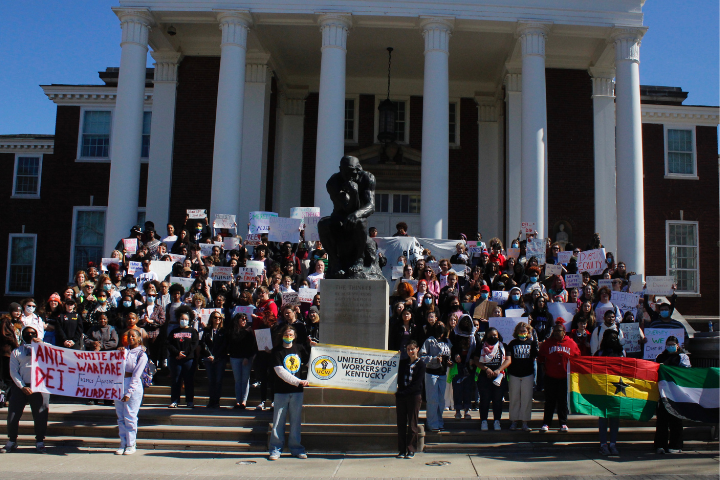
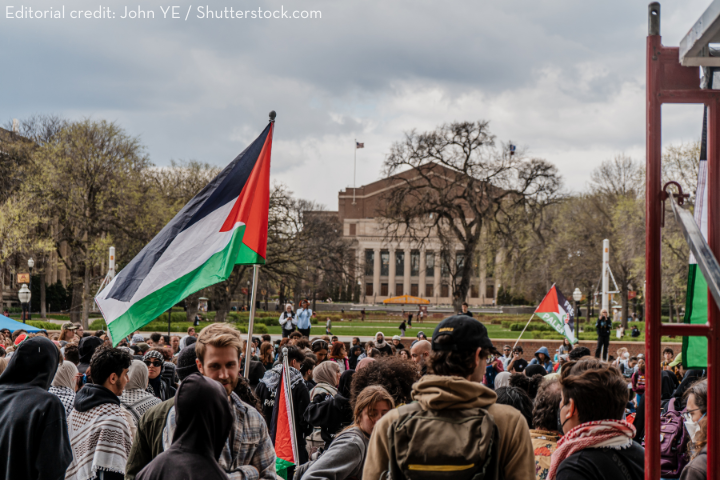
The hard line taken by both colleges and some state legislatures is a reaction to the widespread demonstrations over the Israel-Gaza war at U.S. colleges in the 2024 spring semester, particularly the encampments that began with Columbia University students setting up tents on their New York City campus on April 17, 2024.
The Columbia encampment was a catalyst. Within weeks, protests took place on almost 140 campuses, including at least 40 encampments set up on quads from Atlanta’s Emory University to UCLA. Roughly 3,000 students and other protesters were arrested on at least 61 campuses, and some schools canceled graduation ceremonies and other events for fear of disruptions.
PEN America expressed deep concern about universities’ responses and the use of excessive force against student protesters, and asked them to safeguard free speech, address alarming incidents of antisemitism and hate, and ensure a campus environment that is safe and open to all.
Before students returned to classes for the fall 2024 semester, many colleges and universities decided to crack down —often in response to legitimate accusations of antisemitism amid the 2024 demonstrations— tightening or resurrecting myriad rules on how protests could be conducted by limiting hours and locations, requiring permits for demonstrations to take place and in some cases demanding that students pre-register to take part.
Other measures included banning encampments on campuses and protests inside buildings, and barring the use of face masks to conceal identity. Even using chalk to write messages on sidewalks is now prohibited at some schools, among them Harvard University. In some cases, including at Emory University, these new rules were enacted without faculty input through shared governance channels.
The efforts succeeded in creating a chill that reduced the number of encampments and other large-scale protests during the 2024-2025 school year, with the total number of pro-Palestine student actions declining by more than 64 percent. Critics, including PEN America, noted that these excessive crackdowns on protected expression also did not effectively address antisemitism, which has surged around the country.
Legislation Seeks to Reign in Campus Protests
While some universities stepped back from draconian measures – including Indiana University, where the board of trustees voted to reverse a 2024 policy banning overnight protests and unapproved structures, state legislators stepped into the fray last year.
In Arizona, for example, the state enacted a law that bans overnight or “prolonged” encampments at state colleges and universities and makes individuals or groups who establish them, including registered students, who refuse to immediately dismantle any structure and vacate the premises criminally liable for trespass. Participants in such protests would also be financially liable for any damage, including the costs of removing an encampment, and subject to disciplinary action by the school.
Perhaps most disturbing, the law requires administration officials to “initiate legal action” and call in law enforcement, for any student or group that does not immediately dismantle an encampment and leave the campus, mandating the kind of escalation PEN America has repeatedly denounced as disproportionate and endangering students’ free speech.
Not all of the concerning measures that target protesters specifically aim at campus demonstrations, but a raft of new state laws could be used to punish students, faculty and staff who organize or take part in protests on or off university grounds.
New Jersey, for instance, created a new felony “incitement” offense that took effect in June with hefty fines that can be used to target protest organizers; North Dakota enacted a new criminal penalty for wearing masks to conceal identity while congregating in public; and Tennessee expanded law enforcement powers and other penalties that could apply to protesters. In 2025, at least 19 other states saw legislators introduce additional measures that either failed or are still pending , according to the International Center for Not-for-Profit Law’s U.S. Protest Law Tracker. Legislators in at least 8 states have introduced bills targeting protestors so far in 2026.
Federal Efforts to Curtail Protests
Members of the U.S. House of Representatives and Senate have also introduced bills that would enact harsh penalties for protest activities, particularly for noncitizens. Some target campuses specifically, such as blocking student financial aid for those who commit “riot”-related offenses and threatening federal accreditation for universities based on their protest policies.
Other bills threaten protest rights in every corner of the country, with a specific target placed on noncitizens, such as one that calls for deporting noncitizens convicted of protest-related crime and another that calls forvisa revocation and deportation of noncitizens who commit a “riot”-related offense. More generally, bills that could lead a protester wearing a mask or other disguise to be charged with a federal crime or that would increase the maximum penalty for participating in or inciting a “riot,” could be used to punish campus protesters. Though none of these have yet progressed, congressional legislators’ interest in chilling protest sends an alarming message.
Meanwhile, President Trump, who has deployed the National Guard to multiple cities with large-scale protests and repeatedly threatened to invoke the Insurrection Act, has suggested that students should be expelled or arrested for protesting, and said “agitators” will be imprisoned or deported for participating in what he deems “illegal protests.”
Taken together, these efforts to restrict protest and escalate penalties are likely to further chill free expression on campuses, and are putting many students in the position of weighing exercising their constitutional rights against their abilities to pursue their degrees and graduate.