
We’ve all seen it happen. A friend or colleague becomes a target of online bullying that seems to spin out of control.
Online abuse, the repeated or severe targeting of an individual or group online through harmful behavior, threatens free expression. It impacts authors, journalists, scholars, librarians, and so many others who rely on online spaces to do their work and to use their voices. Many of those who are attacked online report fear for their safety, damage to their mental health, and self-censorship: changing what they write about, stepping back from online spaces, or in extreme cases, leaving their professions altogether.
Research shows that strong social connections and support from allies and bystanders can significantly reduce the harms of online abuse and keep writers online. Viktorya Vilk, Director of Digital Safety at PEN America, said “Online abuse is so effective in pushing writers to self-censor because it feels targeted and profoundly isolating. Letting writers who face online abuse know that they aren’t alone, that the abuse isn’t their fault, and that they have support is a powerful antidote.”
To celebrate Safer Internet Day this February 10th, here are five steps that all users—including writers and journalists—can take to support those facing online abuse.
1. Check in with the person attacked online.
If you are a friend, colleague, or peer of someone facing online abuse, reach out to them privately. Let them know that the abuse isn’t their fault, and that you’re available to support them. Offer some concrete suggestions, if you can. Depending on your relationship, you could offer to bring ice cream, lend an ear, or help triage the abuse (see below for more ways to offer support).
Even if you don’t know the person facing online abuse, a supportive DM can help. Let them know that you stand with them and, if it feels appropriate, offer to uplift their work or help to report abuse (see below for more).
Here’s a template text that you can adapt:
“Hey (blank)! I saw what’s happening on (X, Instagram, etc.). Please know that what’s happening isn’t your fault, and that I’m standing with you. I’m here to support you–let me know if I can come over with some ice cream or chocolate, help you triage your accounts and report the abuse, or speak-up in your defense on (X, Instagram, etc.). Thinking of you, and hope you’re taking good care of yourself.”
2. Help monitor, document, and report the abuse.
Monitoring, documenting, and reporting abusive content is critically important, but doing it can be taxing on a targeted individual’s mental health. If you are close with someone facing online abuse, consider offering to help them triage the abuse so that they can take a break from their online platforms.
Many online platforms now have tools to make this easier to do. For example, Gmail, Facebook (pages, but not profiles), and Instagram (business pages) offer delegated access for allies to temporarily access and handle account features like messages and reporting. Twitch and Reddit offer formal “mod” roles alongside customizable features that allow allies to filter abusive and unsafe content for their communities in real time.
If you don’t personally know the target of online abuse, you can still report content that violates platform policies, which can help encourage platforms to take stronger and more timely action.
To learn more, check out our guides on documenting and reporting online abuse.
3. Share resources on digital safety.
It can be difficult, during a targeted harassment campaign, for individuals to sort through digital safety guidance and take steps to protect themselves. Sharing comprehensive, trauma-informed digital security guides and offering to work through them with the targeted person can reduce the burden. Here are a few resources we recommend:
- PEN America’s Online Harassment Field Manual
- PEN America’s guide on what to do if you’ve been doxed or added to a watchlist
- Coalition Against Online Violence’s Resource Hub
- Consume Reports’ Security Planner
If you’re a journalist, researcher, or author, these organizations below may also be able to offer further assistance:
| For journalists | For scholars & researchers | For authors |
|---|---|---|
| • IWMF Safety Consults & Emergency Funds | • Right To Be Expert Voices Together | • PEN America: [email protected] |
| • CPJ Emergency Response | • Your local AAUP or AFT chapter | • Equality Labs: [email protected] |
| • Right To Be Expert Voices Together | • PEN America: [email protected] | • Democracy Security Project |
| • RCFP Legal Hotline | • Equality Labs: [email protected] | • Democracy Protection Network |
| • Democracy Protection Network | • Democracy Protection Network | |
| • Democracy Security Project | • Democracy Security Project |
4. Speak-up in support of the person facing abuse.
Speaking up in support of a person targeted online can be a powerful form of allyship—but it comes with risks, as the abuser may turn their attention on you or escalate the abuse. It’s important to prioritize your own safety, and to check in with the affected person to see if they want you to speak up publicly.
If it feels appropriate to speak up, it’s best not to engage with the abusive content directly because you want to avoid driving more attention to it by retweeting or resharing harmful messages. Instead, focus on sharing positive and supportive messages. Here are some strategies you can try:
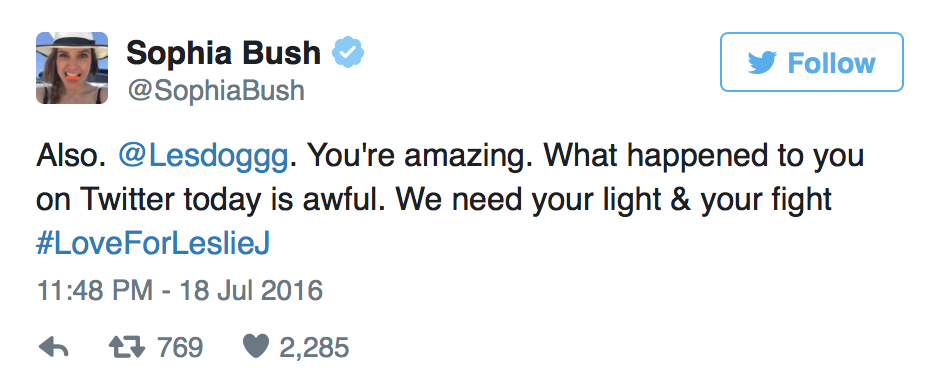
- Post a statement in support of the targeted individual on the platform where the abuse is happening. Here’s an example of actress Sophia Bush speaking up in support of actress and comedian Leslie Jones, who faced an onslaught of harassment for her role in “Ghost Busters.” Bush’s Tweet spreads positivity for Jones, avoids interacting directly with the abuse while still calling attention to the problem of online harassment, and encourages others to participate in uplifting Jones through the hashtag #LoveforLeslieJ.
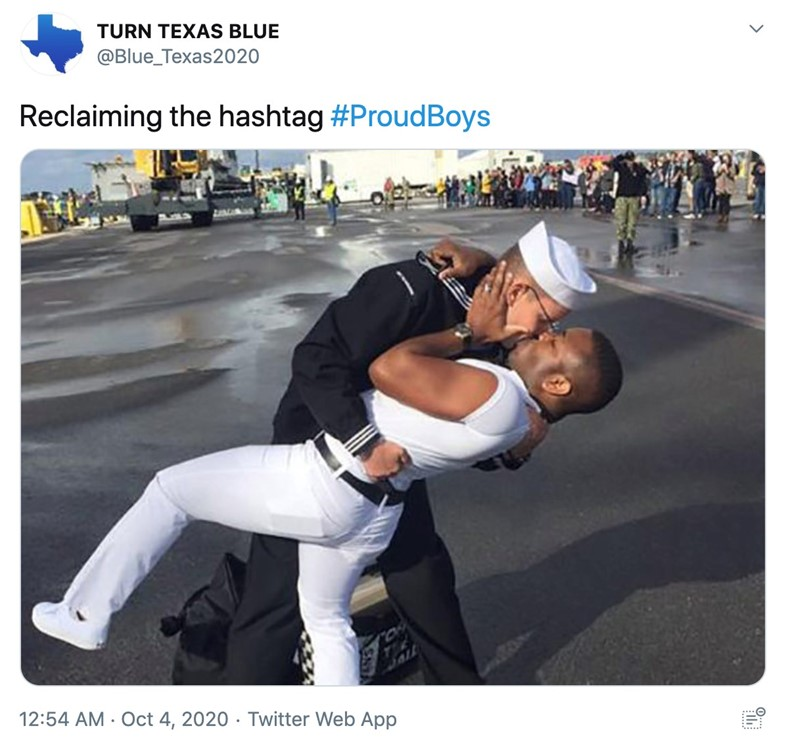
- Use humor, memes, or creative counterspeech to redirect attention away from the abuse. When #ProudBoys, a movement associated with anti-Muslim and misogynist hate speech, began to spread on Twitter, allies intervened and flooded the hashtag with photos of queer love.
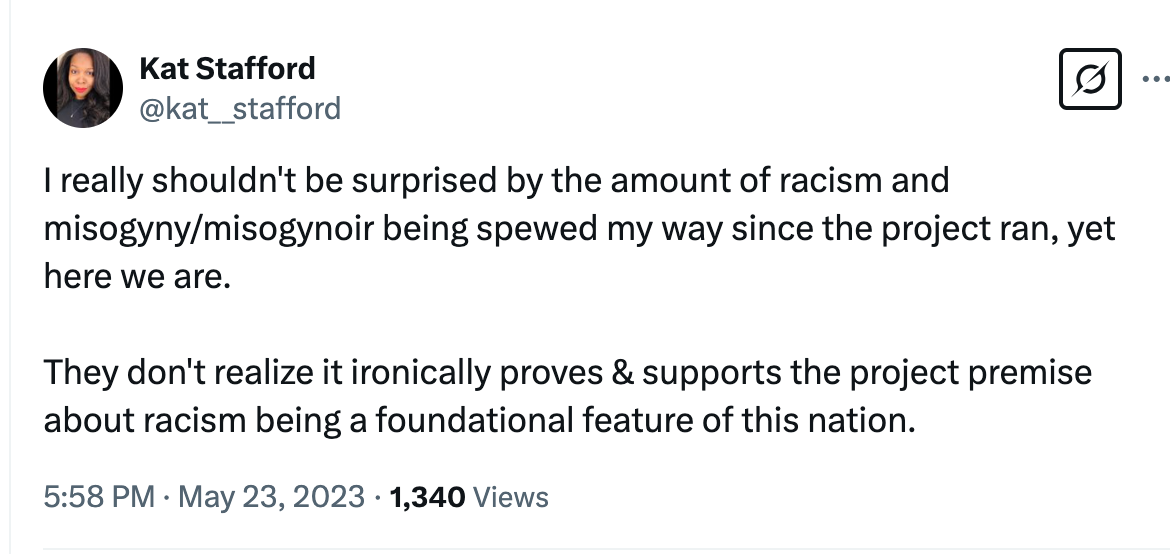
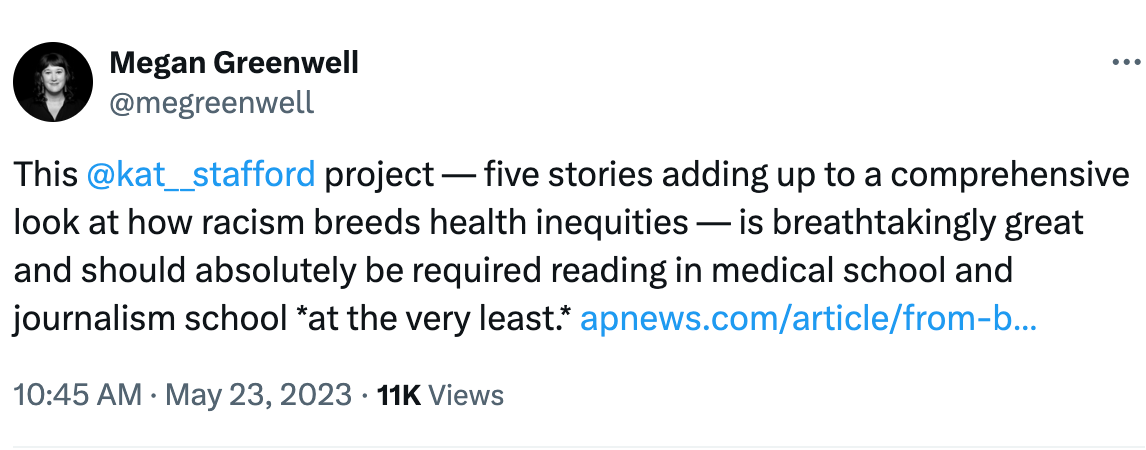
- Amplify the work of someone facing online abuse. Abuse can distract from what the targeted individual was trying to say or promote, and they might want to re-center the dialogue around the impact of their writing or research. If you do wish to uplift someone’s work or voice in the face of online abuse, here’s an example from Megan Greenwell:
5. Check in with yourself, too.
Witnessing online abuse, including threats of violence, hate speech, and graphic images, can take a very real toll on even the staunchest of allies. It is normal if you feel tired, distressed, or overwhelmed—to be a good online ally to others, it’s important to take care of yourself too. Check out our guide on self-care for more information about how to take care of yourself in the face of online harassment.