The latest federal program to fall victim to the Trump Administration’s war on words is the early learning program Head Start.
Court papers related to a suit brought against the U.S. Department of Health and Human Services (HHS) by state and city organizations that operate the highly regarded program for disadvantaged preschool children show that in November, a program director was sent a “complete list of words to make sure are not in your applications.”
Indeed, the papers show that a program specialist at HHS sent an email that contained a list of 197 words and phrases clearly titled “Words to limit or avoid in government documents.”
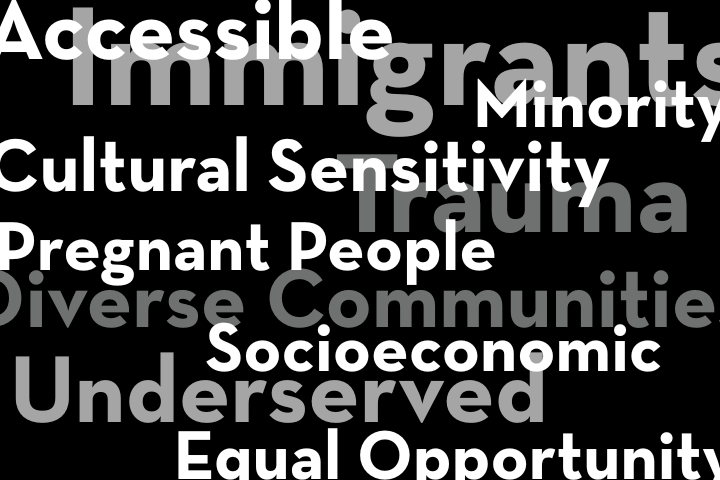
The list includes “accessible,” “cultural sensitivity,” “diverse communities,” “equal opportunity,” “immigrants,” “minority,” “pregnant people,” “trauma,” and “underserved.” The program aimed at poor children can’t even use “socioeconomic” in its grant applications.
In this case, the administration’s zeal to erase any and all efforts that could be classified as DEI ran up against the requirements for funding the program, leaving educators trapped in the middle and baffled about how they could provide the information required by law for their grants without using words the administration deemed unacceptable.
Despite White House denials earlier this year, this is the latest example of the chilling crackdown the administration has instituted on the very language that professionals use as they go about their work. Since March 2025, PEN America has compiled more than 350 words from “abortion” to “women” that the federal government under Trump declared off limits, scrubbing from government websites and documents and flagging them for review by federal agencies. This war on words is a key part of the Trump administration’s quest to purge all traces of diversity, equity, and inclusion from American society.
Given Head Start’s mandate to help young children from low-income families prepare for kindergarten, forbidding mention of words like “at risk,” and “inequalities,” is especially head-scratching.
The lawsuit through which the issue came to light has been brought by Head Start programs in Washington State, Illinois, Pennsylvania, Wisconsin and Oakland, California, against HHS, Secretary Robert F. Kennedy Jr., and other officials, claiming that the administration’s ban on DEI in federal programs makes it impossible for them to fulfill the programs’ statutory mandate. Represented by the American Civil Liberties Union, the Head Start programs claim this is an attempt to dismantle the program Congress created in 1965.
In a declaration submitted to the court on Dec. 5, “Mary Roe,” –the director of a Wisconsin Head Start who withheld her name because of fear of retribution– said the language restrictions made it impossible to “appropriately describe the scope of my Head Start Agency’s services and how we serve the most vulnerable children and families in our communities.”
“I fear that if I comply with these instructions, I will be forced to remove important substance from my Head Start Agency’s grant application that is necessary to comply with the Head Start Act, the Head Start Performance Standards, and the [grant] Application Instructions,” the statement said.
Among the requirements, Head Start programs must provide a summary of data about their communities that includes “demographic variables,” specifically including the number of “children with disabilities,” the educator said in her statement.
The problem is that “disabilities” is one of the banned words. As are “Black,” “Hispanic,” “Latinx,” “tribal,” and “Native American.”
“Without being able to use these terms, I am unable to accurately describe the results of my Head Start Agency’s community needs assessment, which is a foundational part of both the grant application and the development and ongoing improvement of our services,” she said.
The suit argues that Head Start providers got no official guidance as to what was considered a DEI initiative, an activity “advancing” or “promoting” DEI, or “discriminatory equity ideology” under the executive order. Nor were they instructed how to reconcile these banned words with their conflicting obligations under the Head Start Act to serve the “diverse needs” of their communities, including by providing “linguistically and culturally appropriate” services and supports for children with disabilities.
As a result, Head Start administrators are in “constant fear” that they might violate the executive order and lose their funding or their designation as Head Start providers, or that they will be subject to investigation for failure to comply, the suit maintains.
This attempt to censor words the administration doesn’t like is putting the people who provide essential services to more than 750,000 infants, toddlers and preschoolers in what Mary Roe called “an impossible situation.”
PEN America has warned that this attempt to eliminate words and phrases will limit the work supported by the federal government, including pushing professionals to self-censor. This case shows that is already happening, and could be impacting the most vulnerable members of our society.
We can say that, though Head Start staffers cannot. The phrase “vulnerable populations” is also on the list.