You may have heard the term “heckler’s veto” when a controversial speaker arrived on campus. Rather than protest outside or avoid the talk altogether, some may try to disrupt speech they find objectionable. Here’s why that’s a problem for free speech.
What is a Heckler’s Veto?
A heckler’s veto occurs when speech is totally blocked by opponents either through direct action—like blocking the door to a venue so an audience cannot enter—or by attempting to shout down or drown out the speech with other noise. The term can also be used when a governing body—like a university—cancels or restricts speech because of anticipated or actual negative responses.
Why Are Heckler’s Vetos a Problem for Free Speech?
Heckling or other disruptive actions during a speech can be acceptable if the interruptions are brief and the speaker can continue. In such cases, dissenting interruptions can be viewed as expressions of counter-speech, an essential component of a vibrant campus dialogue. However, when interruptions become frequent or prolonged to the point of silencing the speaker or preventing others from hearing the speaker, the expression can cross into a heckler’s veto, and a stronger response is warranted.
The below case studies illustrate recent examples of heckler’s vetoes, and suggest ways the disruption may have been avoided.
Hecklers Interrupt Rep. Jamie Raskin at University of Maryland
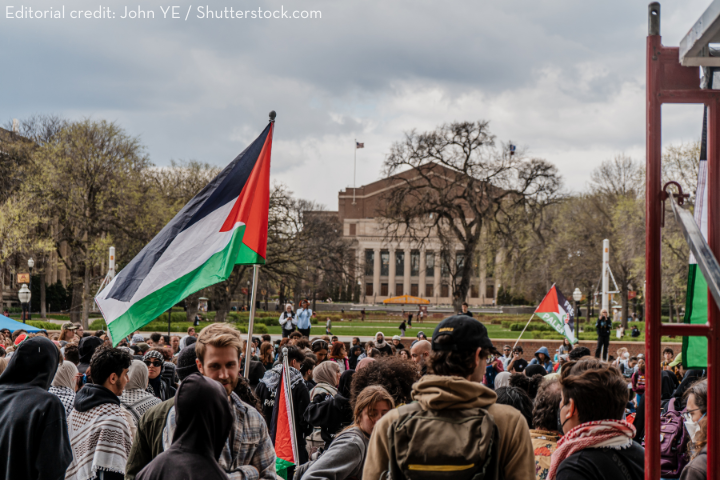
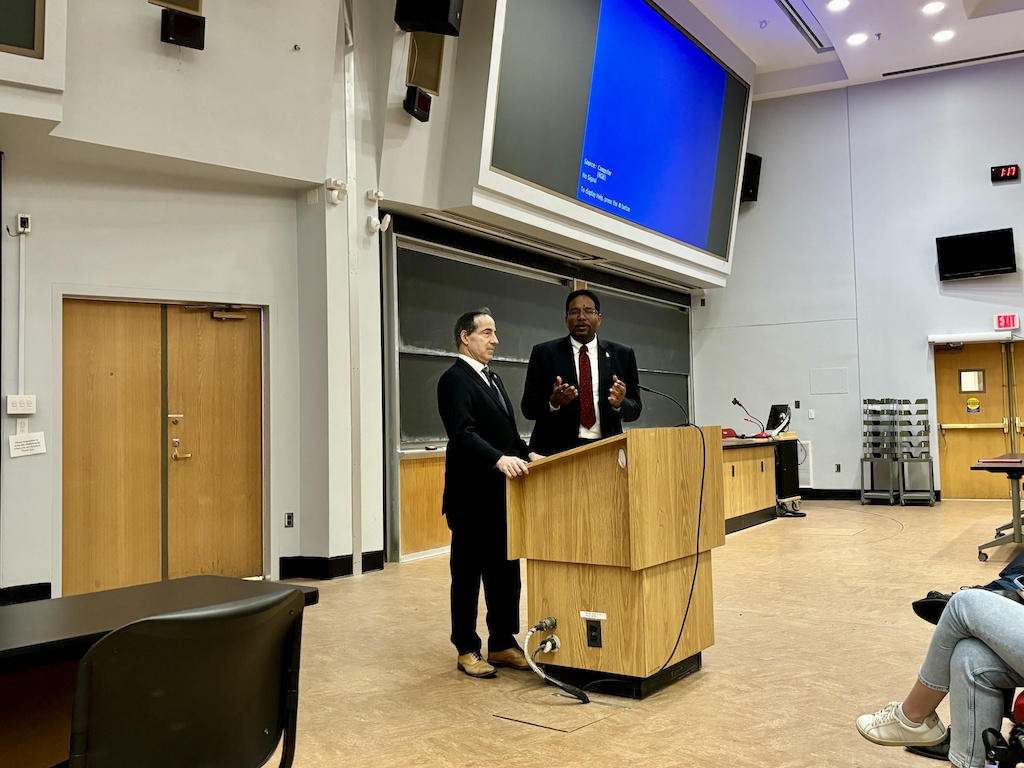
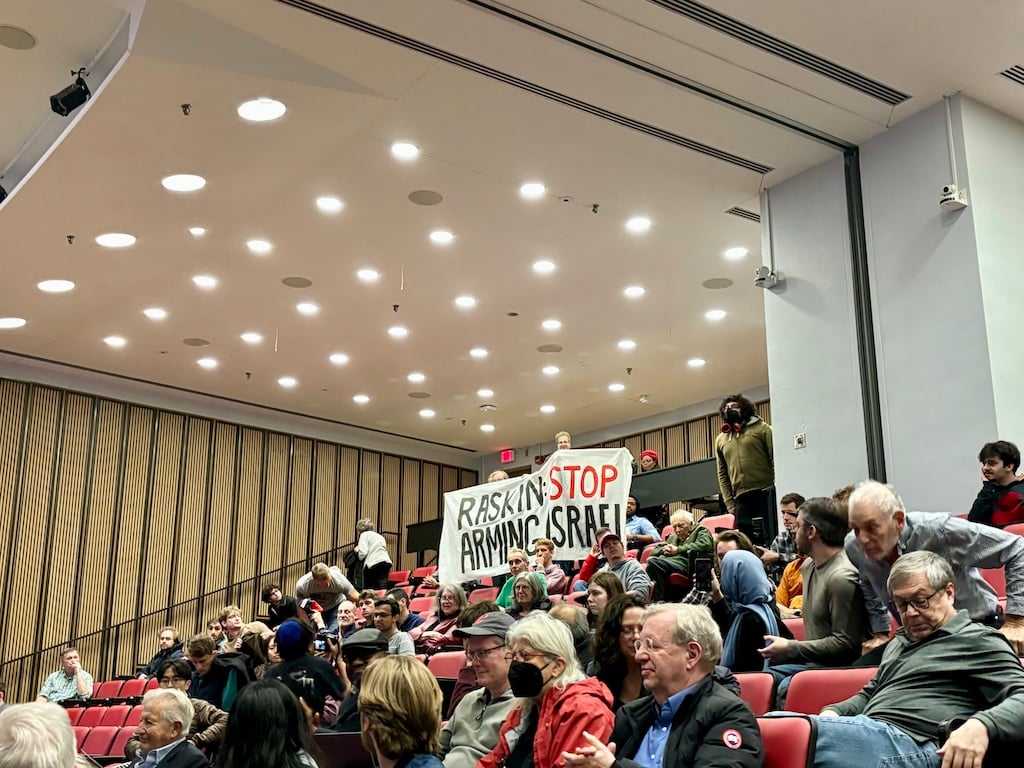
Maryland congressman and progressive Jewish Democrat Jamie Raskin was invited to give a lecture at the University of Maryland in March 2024, roughly six months after the start of the Israel-Hamas War that incited campus protests across the nation. The lecture was interrupted by attendees shouting that Raskin was “complicit with genocide” and questioning the removal of his name from House Resolution 902, an affirmation of “the State of Palestine’s Right to Exist.”
Raskin—who before his election to Congress was a constitutional law professor—explained to the protestors that he removed his name from the resolution because he had been listed as co-sponsor without his knowledge. When students supporting both Palestine and Israel persisted in obstructing his speech by heckling and arguing with one another, Raskin opened the floor to questions, stating he preferred civil dialogue to heckling. After a period of exchange, University President Darryll Pines ended the lecture early.
Raskin expressed disappointment that some protestors had exited: “I would have loved to invite them to have a conversation with me about what they were saying.” According to a statement from the university, after repeated warnings, ten protesters were removed from the event by University of Maryland Police and referred to the Office of Student Conduct.
What does PEN America think?
The interruption of Rep. Raskin’s speech and the response to that interruption underscore how fraught campus discourse can become around charged issues—in this case, the Israel-Hamas war. Pro-Palestinian protestors initially disrupted his speech in a manner that made it impossible for it to be heard by other attendees. Raskin’s pivot from planned remarks to a question-and-answer session showed a laudable effort to engage with his critics, but protesters should not engage in a heckler’s veto that prevents others from hearing the speaker. President Pines ended the resulting discussion quickly; instead, he could have taken on the role of moderator, facilitating a longer, more substantive exchange between Raskin and the protestors.
It is important that any warnings to students make clear what the school policies are, as well as the consequences for continued disruption. The removal of students by campus police and the recording of names for disciplinary action could have a chilling effect on future student speech.
Finally, given the prevalence of protests during this time, the university might have anticipated discord and leaned in. The event hosts could have prepared for potential dissension by speaking to relevant student groups before the event, listening to their concerns, apprising them of policies regarding speakers and protests, and offering them the opportunity to have their voices heard in an alternate forum.
Wake Forest University cancels two speaker events on Israel-Hamas War
In September 2024, Wake Forest University (WFU) shut down plans for a lecture by Rabab Abdulhadi, a Palestinian-American activist and scholar who had been scheduled to speak on the anniversary of the Oct. 7, 2023, attacks led by Hamas on southern Israel. President Susan R. Wente and Provost Michele Gillespie wrote in an email to the campus community that they had made “the conscious decision not to host events on this day that are inherently contentious and stand to stoke division.” Although Rabab Abdulhadi’s campus event was canceled, organizers held the talk without university funding at a church off-campus.
Four months later, in February 2025, the university canceled a second lecture to be led by American-born former Israeli Defense Forces (IDF) soldier Sam Fried. According to the chaplain, Chris Donald, whose office sponsored the event, the lecture was intended “to facilitate meaningful dialogue on the complexities of the Israeli-Palestinian conflict.” Donald told the student newspaper “after careful consideration of recent discussions and the online interactions, it was determined that this event would not meet those objectives.” He said his office tried to work out alternative options for the speaker, but the organizations involved decided not to move forward. The Chaplain’s office pulled the funding for the event after some opposition was voiced, including an op-ed by three professors calling Fried a “well known provocateur” and social media posts from WFU Free Palestine, a pro-Palestinian activism group, denouncing the event as “an institutional choice to amplify voices directly connected to military actions that have drawn international condemnation.”
What does PEN America think?
Canceling a confirmed and scheduled lecture based on the reactions (or anticipated reactions) of campus stakeholders is another example of a heckler’s veto. Stifling speech can never be the answer to painful or contentious issues, and it is critical that universities do not set this kind of precedent. In order for a university to maintain its social role as a promoter of dialogue and deliberation, campus events and speakers must be diverse, representing viewpoints from across cultural and political spectrums. PEN America called out both the Rabab Abdulhadi and Sam Fried cancellations with force when they occurred, stating, ”We must reject the idea that a university allowing someone to speak is an endorsement of everything they say.”
Both of these canceled lectures could have created moments for Wake Forest to model the kind of listening and engagement that are necessary on campuses, especially in contentious times. In the end, the entire community lost out on the chance to hear these vastly different perspectives and grapple with the challenging issues they present. University administrators, faced with heated criticism and concerns for safety, should choose to model the type of civic dialogue they ask of their students by reaching out to concerned parties before events, allowing space to hear the issues raised, and co-creating solutions—including expressions of protest and dissent—that respond to rather than silence conflict.
Disclaimer: The information on this webpage is provided for general informational purposes only, and may not reflect the current law in your jurisdiction. No information contained in this post should be construed as legal advice from PEN America or the individual author, nor is it intended to be a substitute for legal counsel on any subject matter.
Campus Free Speech Guide
Get principled guidance for how campuses can best remain open to all voices.
-
The Law and Campus Free Speech
-
Hateful Speech and Expression on Campus
-
Speakers and Events on Campus
-

Faculty Speech and Expression
-
Campus Climate
-

Protests on Campus