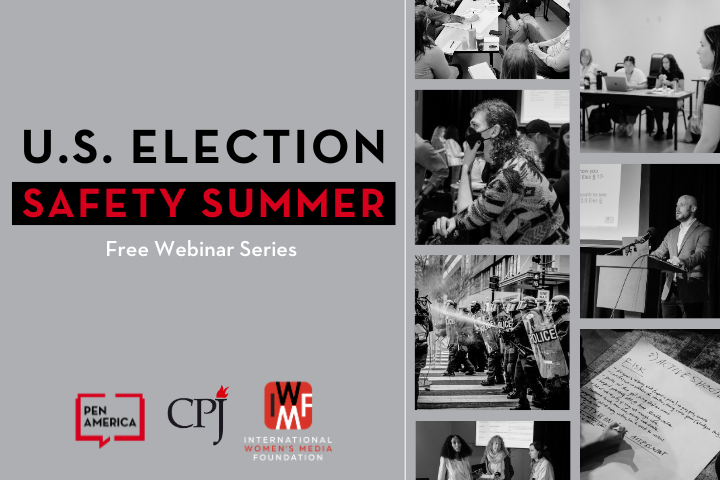
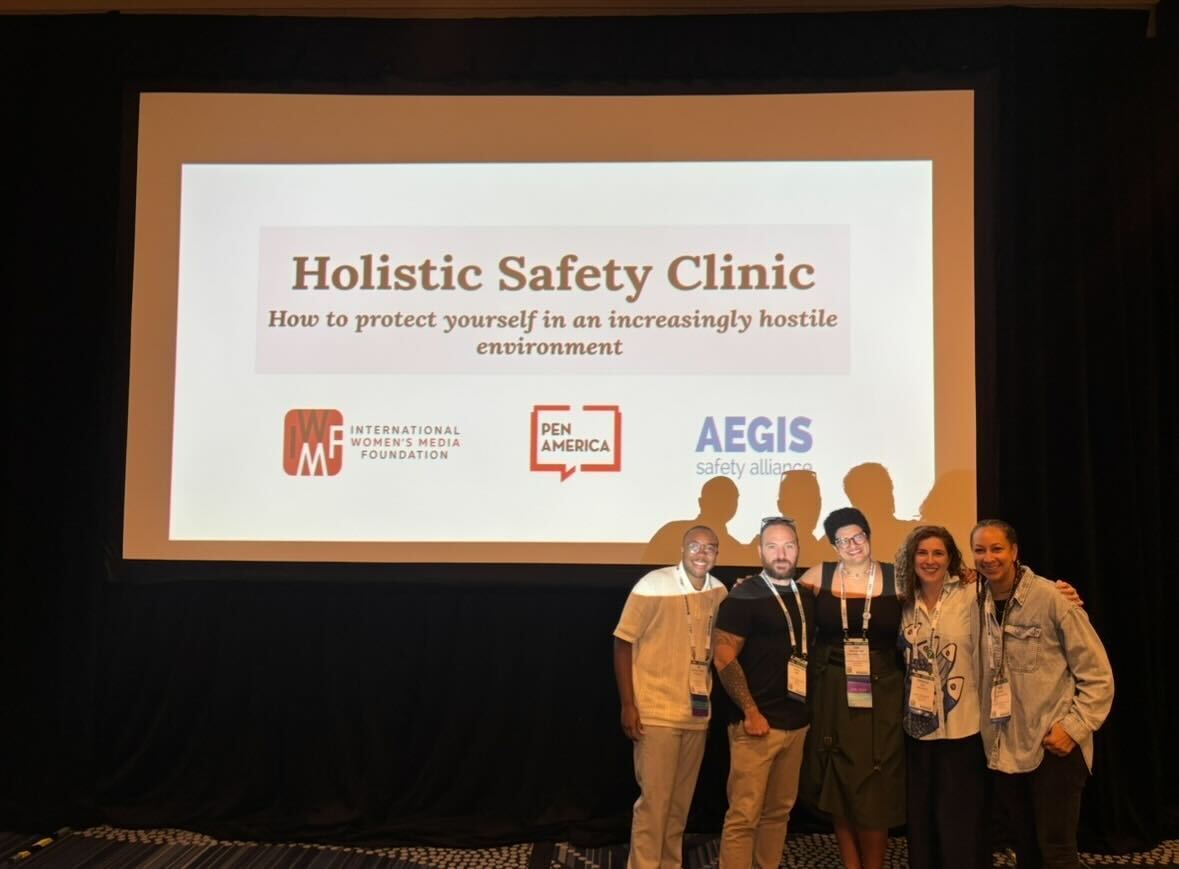
Amid escalating attacks on press freedom in the U.S., PEN America’s digital safety team crisscrossed the country in 2025 to talk about journalist safety. From the high desert of Albuquerque to the jazz capital of New Orleans, we offered resources, training, and support at 12 conferences reaching nearly 500 journalists—about half of the 1100+ writers we reached in the U.S. with our safety programming this year.
The need for more conversations about safety comes as journalists navigate an increasingly hostile political landscape, both online and off. According to a 2024 report from the International Women’s Media Foundation (IWMF), an estimated 30 percent of U.S. journalists reported facing digital violence, from abusive comments to death threats, because of their work during the 2024 election cycle. In response, some journalists censor themselves—changing their beat, altering coverage, or engaging less with online audiences—while others leave the industry entirely.
That’s why we joined forces with our press freedom partners in the U.S. Journalist Assistance Network to travel the country listening to journalists’ needs and offering guidance and resources. Throughout the year, journalists told us about their fear of being doxed or physically attacked for their reporting, about an increase in hateful speech based on perceived immigration status, and about a lack of support in their newsroom when they faced online abuse.
As the 2025 conference season comes to a close, we’re sharing three lessons we learned about protecting journalists, building resilience, and cultivating community in the wake of online harassment and threats.
Newsrooms should take a proactive approach to safety
Many newsrooms operate without the resources of an in-house safety team and without robust safety policies or protocols. This means that when a reporter is targeted—online or off—both the reporter and the outlet often have to scramble to figure out what to do. We recommend that newsroom leaders proactively put safety measures in place, including creating an internal channel where reporters can express safety concerns and ask for help and encouraging managers to regularly check in about safety with their staff and freelancers.
In a session at the National Association of Black Journalists’ annual conference, “To feed or not to feed the trolls: How to practice counterspeech safely,” we covered how newsroom leaders can help their staff weigh the pros and cons of speaking out publicly about online hate and harassment. The Haitian Times’ executive editor Macollvie Neel, who was subjected to a dangerous swatting incident, said the news outlet was caught off guard when they faced a coordinated harassment campaign following their 2024 election coverage of then-presidential candidate Donald Trump and his running mate J.D. Vance’s xenophobic remarks about Haitian immigrants. Looking back, Neel said it’s critical to include safety as part of the onboarding process for reporters to prepare for threats during the course of their work. She also took the unusual and impactful step of speaking out publicly about the attacks she and the outlet faced. Pre-emptive conversations around response tactics, including counterspeech, can streamline decision-making when dealing with safety attacks in real time.
Holistic safety clinics at conferences make safety experts accessible
While the journalism safety field is growing, major gaps remain—particularly for under-resourced journalists. Many leaders at small, local newsrooms expressed feeling overwhelmed and underprepared to protect their staff when safety concerns arose, especially with little to no budget for safety-related expenses. Freelance, independent, and hyper-local journalists said that they were often unsure who to turn to within their newsroom when facing online abuse. There were growing concerns, in particular, about the impact of the immigration crackdown on journalists’ coverage, as well as on their lives and families, and a palpable sense of anxiety about escalating legal and physical risks.
Conferences can connect under-resourced journalists like these with support. Freelance photographers, hyperlocal radio journalists, and managers overseeing coverage of Native Hawaiian and Pacific Islander communities were among the participants who joined safety clinics we organized with our partners. At the Collaborative Journalism Summit, National Association of Hispanic Journalists’s annual conference, and the Indigenous Media Conference, we joined forces with fellow press freedom organizations to help reporters and editors navigate legal concerns for reporting on ICE raids, best practices for using protective equipment like gas masks and goggles when covering protests, and tips to protect devices while reporting in the field. We engaged with journalists from a wide variety of backgrounds and with an even wider variety of safety concerns, underscoring the need for journalism conferences to spotlight safety and for press freedom groups to collaborate on programs that holistically address physical, digital, legal, and psychosocial attacks.
The industry needs to leverage community and peer support
The power of solidarity in journalism took center stage at the Online News Association (ONA)’s annual conference and the Mental Health and Journalism Summit. Online trolls, like most abusers, strive to isolate and intimidate their targets. Research shows that online harassment disproportionately targets women journalists, LGBTQ+ journalists, and journalists of color. If the journalism industry cannot marshall enough support and solidarity for journalists under attack, it risks losing the diverse voices it critically needs.
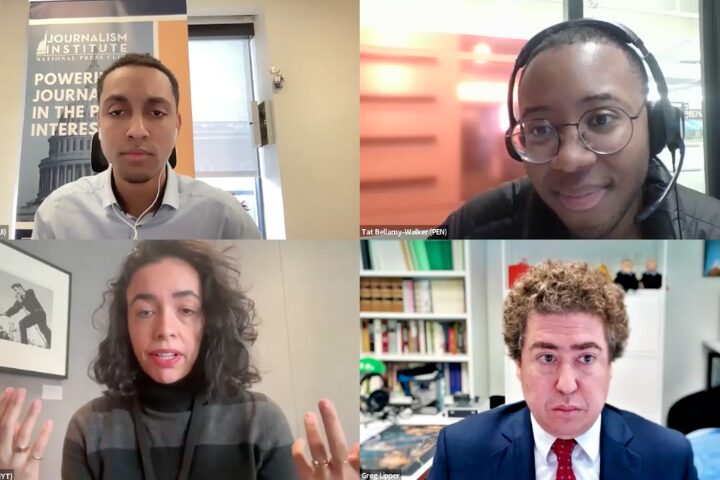
But there are ways to combat this. At [BLANK] is Future of Journalism, an improv-style game show held annually at ONA, PEN America’s former program manager, Tat Bellamy-Walker, spoke about the value of peer support and tapping into social networks when facing online abuse. Bellamy-Walker recommended that journalists create a rapid response team—a group of three to five trusted contacts that they can call on to navigate online harassment, from monitoring social media accounts during a harassment campaign to providing a temporary place to stay during a severe doxing incident. For journalists unable to attend our conference sessions this year, be sure to check out our safety programming, including our Field Manual Against Online Harassment, our Digital Safety Trainings, and our Digital Safety Snacks.