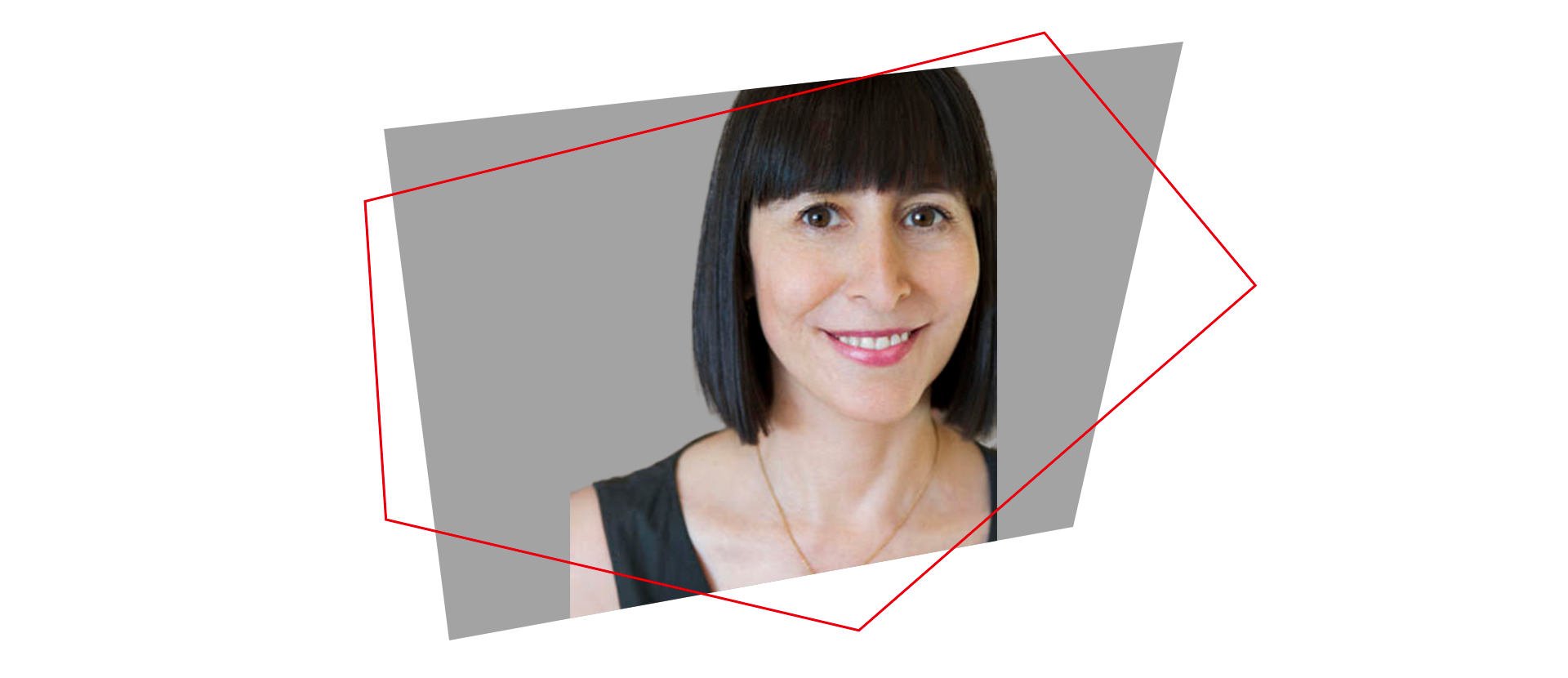
The Pulitzer Prize. The Booker Prize. The National Book Award. The MacArthur Fellowship. The Dublin Literary Award. The PEN/Jean Stein Book Award. The New York Public Library Young Lions Award. The Thurber Prize for American Humor. The Shirley Jackson Award. These are just some of the awards that authors represented by Renée Zuckerbrot, an agent at Massie McQuilkin & Altman, have been nominated for or won.
But literary prowess aside, the authors have little in common: Zuckerbrot represents writers at all stages of their careers, from debut to well-established, as well as those working in a wide array of genres, including commercial and literary fiction as well as nonfiction.
In conversation with Abhigna Mooraka, coordinator for membership and national engagement, for this Member Spotlight, Zuckerbrot discusses what draws her to a manuscript, the effects of the industry’s financial challenges on agents and editors today, and the joy of literary community.
How long have you been an agent, and how did you get your start?
I’ve been an agent for about 20 years. Before working as an agent, I worked as an editorial assistant at Putnam, then as an editor at Doubleday. When I was an editor, there were a number of books I was not allowed to offer on, and I kept wondering, “Is editorial the right place for me, or should I become an agent?”
I decided to try agenting since all my agent friends were really happy. They kept whispering, “Be an agent! Be an agent!” You get to work on whatever you want, or at least you get to make an offer of representation for whatever you want, which is not the case when you’re an editor. As an editor, you have to get your boss’s approval — that’s the first step. Then, if there’s an auction, you have to get approval to offer more money for each round of the auction. So it’s a very different sort of way to hook up with a writer. As an agent, you can always throw your hat in the ring, and it’s true you won’t always get chosen, but you don’t have to jump through as many hoops. I like the freedom of being able to offer representation to writers whose work I admire.
You have such a diverse range of clients and work with writers working in both fiction and nonfiction. How did you develop the skill of reading and editing across genres?
Thank you. I think it goes back to when I was a kid. I was obsessed with Mozart, and one of my favorite books was this biography for kids about Mozart. I was also really interested in science and read a lot of books for kids about science. Planet of the Apes was my favorite movie growing up, so I read science fiction and books that had genre elements to them. But I also read a lot of straight-up fiction. I was always a reader, and in high school, I had a teacher who loved short stories, and next thing I knew, I was on a steady diet of short fiction. In my first job in publishing, I was lucky enough to work for an editor at Putnam named Stacy Creamer, who also loves short stories and published a couple of terrific short story writers. While I was at Doubleday, short story collections were starting to have a moment. When I became an agent, I thought, “Well, no one’s going to say ‘No’ to me now, so I can take on short story writers.” And I did.
What are you drawn to in a manuscript?
When I’m reading, I don’t go in thinking, “I need genre fiction,” or “I need something that’s straight-up literary.” I just start reading, and I think: Is the voice captivating? I’m definitely a sucker for first-person POV. Line by line, I’m thinking about beats, rhythm, language, and imagery. I also think: “Is this writer giving me access to a world I’m unfamiliar with? Is this writer showing me a world I thought I knew but shaking up my expectations?”
I don’t have your life experience, and you don’t have mine. My life experience is what I can bring to reading a manuscript. I have expectations about friendships, family relationships, romantic relationships, work, politics, culture, living in New York City, having a dog. All of these expectations are based on my own lived life. There’s nothing more wonderful than reading a book and thinking, “Oh, wait. I need to reconsider long-held assumptions because my life has been a bit circumscribed.” I think storytelling can do that, writing especially.
It can be a little unpleasant when you’re reading something and think, “I got that wrong. I need to actually rethink certain assumptions.” But life can’t always be comfortable. Friction is what causes change. You get pearls from the friction of sand in a shell, and friction can serve the same purpose in life.
The role of an agent is collaborative in nature: You’re in dialogue with multiple parties within the industry. What is your approach to building these relationships?
The best kind of relationship between agents and writers is collaborative. Before I offer representation to a writer, I like to have a phone call to talk about my ideas for revision, the way I see the book in the marketplace, and the publishers and editors I would pitch their work to. If those things aren’t in alignment with the writer’s vision for the book, it’s going to be an uphill battle, and I’m probably not the right agent. And that’s okay.
I want there to be collaboration with the understanding that my name is not going to be on the cover of the book. It’s not my book — I’m just helping to get it ready for the marketplace. When I send it out with a description like, “I’ve got the most propulsive thriller, you won’t be able to stop turning the pages,” I want the editor on the other end to call me up and say, “Yes, this is a propulsive thriller!”
By the time I send something out to an editor, the writer and I have worked together, and the writer has come to rely on me, and now the next step is for my writer to have that same relationship with their editor. So I begin the process of saying, “Yes, you can always ask me, but you can also ask your editor.” I want my clients to feel as comfortable with their editor as they feel with me. And I’m not abdicating my responsibilities — I’m being CC’d on everything.
There’s nothing more wonderful than reading a book and thinking, “Oh, wait. I need to reconsider long-held assumptions because my life has been a bit circumscribed.” I think storytelling can do that, writing especially.
So you’re like a matchmaker in that sense. You’re fostering relationships by yourself, but also making sure there’s a separate relationship that’s being fostered.
Yes! I want the writer to have faith in their editor. I want the two of them to have a long-term relationship, if possible. It’s nice if you can continue to publish with one editor over a period of your career. It’s getting harder and harder given all the changes going on inside publishing houses, but that’s the goal.
Can you talk more about that? What are you seeing in the current literary and publishing landscape?
It’s expensive to run a large publishing house. When publishing companies have overlords, they have to earn their keep. And when they don’t earn their keep, the overlords start scaling back — not only in editorial but in publicity, marketing, sales, operations, everything. But it really does take a village to get one book out into the marketplace. And when you see people being let go, it can feel like publishers aren’t all that optimistic.
I think editors, understandably, are more cautious. If your P&L is going to be evaluated at your yearly review with questions like, How much have you spent? How much have your books earned?, of course you’re going to be cautious. I think advances are going to start to come down. They already are, in some spheres. As a former editor, I get that. But editors are still publishing with enthusiasm and rigor, and they are spending money. There are book tours. They’re not the 30-city book tours of yore, with a few exceptions, but they’re still sending writers out to meet booksellers, which I think is really important.
We’re just seeing a little hesitancy where some editors may want more of a sure thing. But once again, it’s not a criticism. I have to do that on my end too. I get a lot of people sending me queries for short story collections, and they have no publication credits, and I think, “Okay, I’d have to start from scratch, sending out stories from their collection to build their publication history.” I prefer to have writers approach me with two or three stories published. They don’t have to be at the New Yorker — there are plenty of amazing quarterlies that have published great work. My time is limited, so I have to choose wisely.
I’m sure you’re reading manuscripts and going through slush piles all the time. Do you have time to read for pleasure? And if you do, is it aligned with what you read for work?
I do, and not only am I reading queries — some from clients, some from other writers, some from MFA department heads — but I’m also reading and rereading my clients’ work. And then, for some inexplicable reason, I’m in a book club. For our next book club meeting, I’m reading The Copenhagen Trilogy by Tove Ditlevsen, and it’s really good. I also try to read a lot of nonfiction. I read Careless People by Sarah Wynn-Williams. I have so little interest in tech, but I would recommend this book to everyone since it’s a story about misguided ambitions and what happens when plans for an online utopia start to fall apart. And then the other nonfiction book I recently read is A Flower Traveled in My Blood by Haley Cohen Gilliland, about the abuelas in 1970s Argentina who were protesting the disappearance of college students who were being kidnapped off the streets in broad daylight. I also read an amazing work of historical fiction, Isola by Allegra Goodman. Sometimes historical fiction can be a little sluggish, but this was a page-turner.
Writers work in solitude. They’re in their bubble wondering, Is this any good? It’s nice to be able to take them out of their writing silo and say, “Look! The world is embracing you.”
What is your favorite thing about being an agent? What are the challenges?
I have two favorite things. One is, for lack of a better word, “discovering” a writer. Although by the time I’ve “discovered” someone, they’ve either gone through an MFA program, or they’ve published some stories and/or essays, so I haven’t really discovered them. Someone else has. But still, when I’m reading something I love, I start thinking, “Wow. I have something really special here. I see where it goes on the bookshelf, but it’s still doing its own thing.” It’s like I have a secret. There might be five or six other agents who feel like they have this secret as well, but book editors don’t yet know about this. That’s really energizing and fun. And the second thing is sharing good news with a client, whether it’s a book deal, news of a longlist or shortlist nomination for an award, or an offer for TV or film or translation. Writers work in solitude. They’re in their bubble wondering, Is this any good? It’s nice to be able to take them out of their writing silo and say, “Look! The world is embracing you.”
The challenge is more industry-wide. It’s not just me. When I sell a book, there’s a whole team — publicity, sales, marketing, editorial, all the assistants, the jacket designer… and the challenge is: How do we make sure that we are positioning this book in a way that it will find its readers? When I walk into a Barnes & Noble, it’s exciting to see stacks of books, but I’m also thinking, “Well, how is anyone going to find my clients’ books? There are so many stacks!” The indies curate more because they don’t have room for stacks, and they’re local, so they buy for their customers. Positioning becomes key. And that’s our challenge.
Is there a genre that you’d like to represent but haven’t had a chance to yet?
I would actually like to represent more history. I’ve worked on cultural history and books that have historical elements both as an agent and as an editor, but I would like to work on something that’s straight-up history. I represent book club fiction, but I wouldn’t mind a pure romance, something a little frothy but still smart. I think so much of my fiction is dark that no one ever sends me frothy, feel-good fiction. I’m also looking to add more popular science writers to my list.
You previously served on PEN’s Membership Committee. What was that like?
I remember writers had to apply and be vetted, and those of us on the membership committee were thinking, “Why are we making it so hard to join PEN?” We wanted to get rid of the gatekeeping, and we wanted more young professionals, including assistants, to join. Who knows what they might bring? So we opened up membership. At the time, we were toying with the idea of PEN ambassadors from all over the country, in Cleveland, Tulsa, Savannah, and every place in between.
We do have chapter leaders now!
Yes, and I’m delighted to hear this. PEN is doing particularly good work against book banning, silencing writers and dissidents. The Literary Awards are phenomenal — they shine a spotlight on emerging and established writers who are doing interesting work — and the World Voices Festival is always great.
What does your literary community look like? Who are the people that make it and bring you joy?
I’m really fortunate at MMQA to work with a bunch of really smart, thoughtful, fun, charismatic agents who represent terrific books. Obviously, I get joy when my clients and my colleagues’ clients do well, and then when the editors or the publishers I’m working with have success. Any time a book is sold for TV or film, it makes me really happy because I think, “They’re looking to books for IP!” I get joy reading about certain triumphs. For example, when a writer initially has trouble finding an agent or a publisher, and then their book takes off. Going to parties and hanging out with people who are curious — seriously curious — about the world outside themselves. People who want to know about other life experiences, other cultures. That brings me joy. I feel like I’m surrounded by groups of curious, smart, thoughtful, and intelligent people who have good intentions.